The Sunday Potthesundaypot.com/recipes/pho-ga/
Phở Gà: Hanoi Chicken Pho with a Clear Ginger Broth
By The Sunday Pot Kitchen Updated
- • Char the onion and ginger, and blanch the chicken first, for a clear broth
- • Poach the whole bird for 35 to 40 minutes, until the thigh reads 165°F (74°C)
- • Simmer the bones 1 hour more, never at a hard boil
- • Season with fish sauce at the end, not at the start
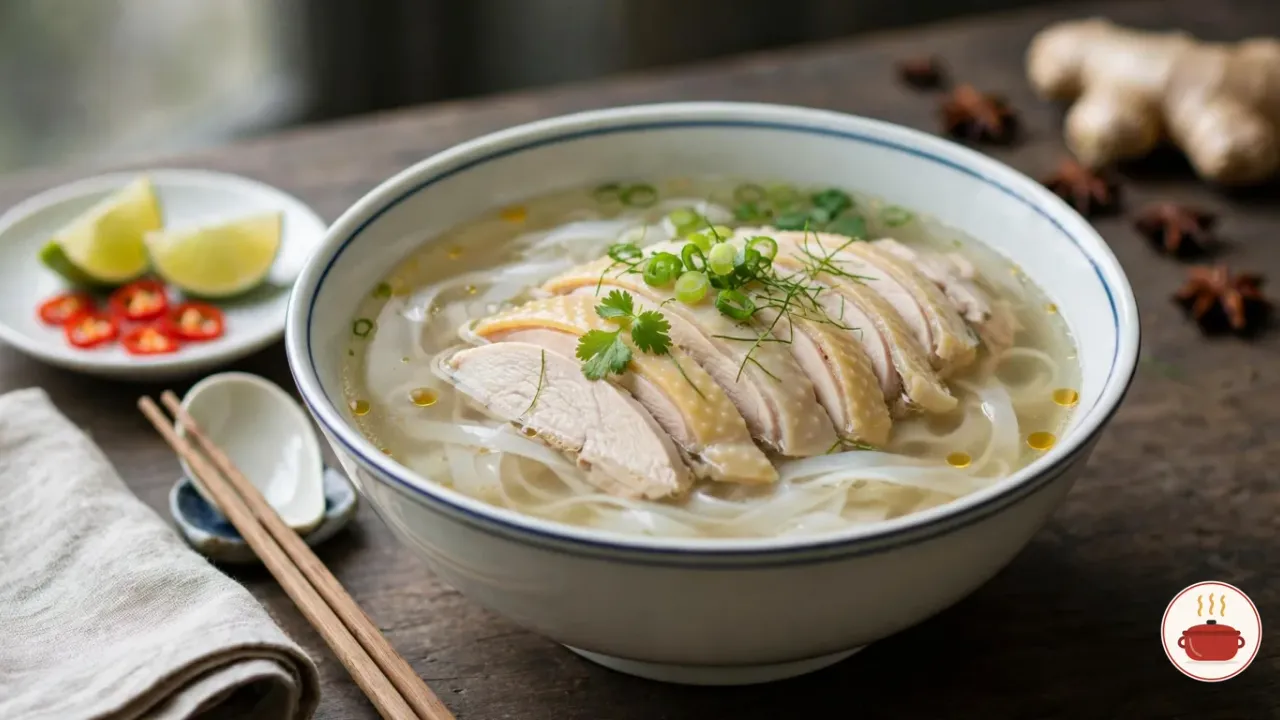
- • Hanoi style: no star anise or cinnamon, and lime leaf threads on top
Ingredients
6 bowlsInstructions
Phở gà is Vietnam’s chicken noodle soup, and Hanoi makes it plainest. A whole chicken poaches with charred onion and ginger into a clear, golden broth. It goes over soft rice noodles and sliced chicken with its skin. Scallion, cilantro and hair-thin threads of lime leaf finish the bowl. It takes about 2½ hours.
What phở gà is
Phở, made with chicken
Phở is a broth with flat rice noodles, born in northern Vietnam in the early 20th century. Beef came first, and it is still the favorite. The cookbook author Andrea Nguyen says chicken phở ranks second. A good phở gà is lighter than the beef soup, with a sweet chicken flavor and the scent of ginger rather than spice.
Born in 1939, on days without beef
Phở gà appeared in Hanoi in 1939, the phở historian Trịnh Quang Dũng wrote in Tuổi Trẻ in 2017. That year no beef was sold on Mondays and Fridays, so the phở shops turned to chicken. In an earlier article, he wrote that it is unclear why the beef stopped.
Andrea Nguyen thinks it was probably a government ban meant to control the slaughter of draft animals. Purists first called chicken phở “un-pho-like”, she writes. It won them over anyway, and some shops chose to sell nothing else.
Lime leaf, the Hanoi signature
Trịnh Quang Dũng credits the garnish with winning people over. Scallion, cilantro and threads of lime leaf gave the plain chicken broth “a new life”, he wrote. VnExpress’s food section calls lime leaf indispensable with phở gà. Hanoi cooks use the leaf of the small local lime, cut so fine it looks like green thread.
Hanoi and Saigon
The two cities make different bowls. Purists in Hanoi use no cinnamon or star anise, only charred onion, ginger and the roots of cilantro and scallion. Southern cooks add warm spices, a sweeter broth, bean sprouts, a plate of herbs, and hoisin and chili sauce at the table. Many Hanoi home cooks still add a star anise or two, so treat “no spice” as the purist line, not a rule.
Why phở gà is in the news in 2026
Two Hanoi chicken phở shops join the MICHELIN Guide
On 4 June 2026, the MICHELIN Guide Vietnam named its 2026 selection. Among 11 new Bib Gourmand addresses, its good-value label, was Phở Hà Hàng Hòm, “a no-frills phở gà spot”. Its “native fowl is gently simmered to retain a chewy tenderness”, the inspectors wrote. Phở Gà Huyền Hương, on Bảo Khánh street, joined the guide’s Selected list.
Hanoi now counts five chicken phở shops in the guide since its 2023 debut, VietNamNet reported in June. Phở Gà Nguyệt keeps its Bib Gourmand. One listed shop, Phở gà Tiến, uses “neither cinnamon, star anise nor monosodium glutamate”, DTiNews reported. It seasons with fish sauce, dried shallots and grilled ginger alone.
A craze among Chinese travelers
By September, Hanoi chicken phở had “become a hot topic on Xiaohongshu”, the Chinese social app, VietNamNet wrote. Travelers posted photos and reviews of the best-known shops, and some complained about the prices. A bowl at the Michelin-listed shops costs from about 50,000 to 160,000 đồng, roughly US$2 to US$6.
A phở festival and a heritage listing
In March 2026, about 50 phở makers from all three regions cooked at a three-day Phở Festival. It took place in Ninh Bình province, in the former Nam Định area. Both Hanoi phở and Nam Định phở joined Vietnam’s national intangible heritage list in 2024. The festival was billed as a step toward a UNESCO bid.
The figure that is missing
No 2026 sales, search or survey number exists for phở gà itself, in any source we read. The year’s news is about restaurants, travelers and heritage, not numbers.
What goes into phở gà
We compared 35 phở gà recipes. Twenty come from Vietnamese sources in Vietnamese, such as VnExpress, Thanh Niên, Tuổi Trẻ, VietNamNet and Món Ngon Mỗi Ngày. Fifteen are in English, from cooks such as Andrea Nguyen, Helen Le, Vicky Pham, Delightful Plate and RecipeTin Eats.
The chicken
All 20 Vietnamese recipes poach the chicken and lift it out before the broth is finished. Twelve ask for a free-range gà ta or a hen. A hen that has laid once or twice is ideal, VnExpress says. No recipe asks for an old boiling fowl, and one warns it is too tough. The median bird weighs 1.5 kg, about 3⅓ lb.
Charred onion and ginger
Charring is nearly universal: 25 of the 26 recipes that make broth from scratch char the onion and the ginger. It adds sweetness and a light smokiness. Rinse off the loose black bits, Andrea Nguyen advises, or the broth turns dark.
Spices or none
Star anise splits the recipes. Eleven of the 20 Vietnamese recipes use some, and seven say plainly to leave it out. Coriander seed appears in 13 of the 15 English recipes but in only 10 of the Vietnamese ones. Several Vietnamese cooks use cilantro roots instead. Fennel shows up only in three English recipes.
Water, time and fish sauce
The from-scratch recipes use a median of 2.9 liters of water per kilo of chicken and simmer for a median of 84 minutes in all. Fish sauce runs about 1.3 tablespoons per kilo. Restaurants go much further: Phở Gà Nguyệt simmers pork bones for 10 to 12 hours before the chicken bones go in.
MSG and garnishes
Thirteen of the 20 Vietnamese recipes add MSG or a chicken seasoning powder, against only two of the English ones. The FDA considers MSG “generally recognized as safe”, so add ½ teaspoon if you like.
Lime leaf goes into 12 of the 20 Vietnamese bowls but only 4 English ones. A plate of herbs, the southern habit, appears in 9 English recipes and only 4 Vietnamese ones.
How to make phở gà with a clear broth
Blanch first
Boil the chicken for 3 minutes in plain water, then pour the water away. It carries off the blood and scum that would cloud the broth. VnExpress calls this the secret of a clear pot.
Never let it boil hard
“Avoid a hard boil, or the broth will turn cloudy,” Andrea Nguyen warns. Vietnamese cooks say the same: a rolling boil makes it murky. Keep a few lazy bubbles breaking at the surface, and skim often in the first 15 minutes.
Poach, then chill the bird
Lift out the chicken as soon as the thigh reaches 165°F (74°C), the USDA’s safe temperature for poultry. A short ice bath tightens the skin, which Hanoi cooks want firm and golden, never browned.
Fish sauce goes in last
Season at the end. Simmered for long, fish sauce can turn the broth sour, Vietnamese cooks warn, and it loses its savor. Taste the broth hot, and make it a little saltier than a soup you would sip on its own.
Cook the noodles apart
Soften the noodles in a separate pot of boiling water, not in the broth, or their starch clouds it. Fresh noodles need only a quick dip; soaked dried ones need 15 to 30 seconds.
Serving phở gà
Serve phở gà in deep, warmed bowls, with the broth at a boil when it goes on. In Hanoi the table holds lime wedges and sliced chili, and little else. Hoisin and sriracha are a southern and overseas habit. Some Hanoi shops add soft-boiled unlaid eggs, trứng non, from the hen.
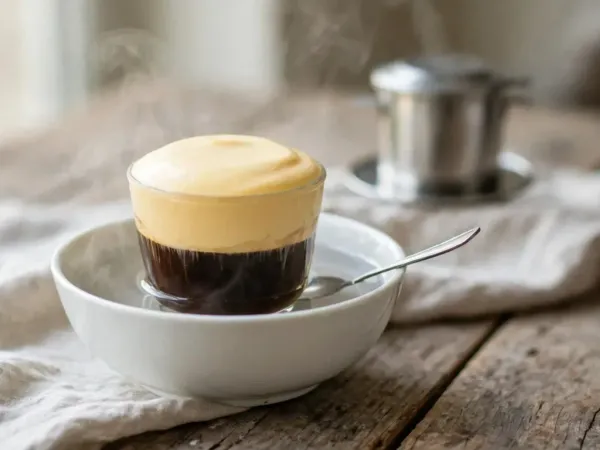
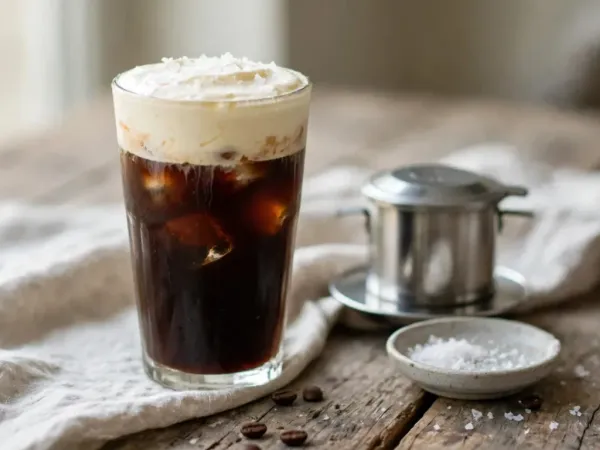
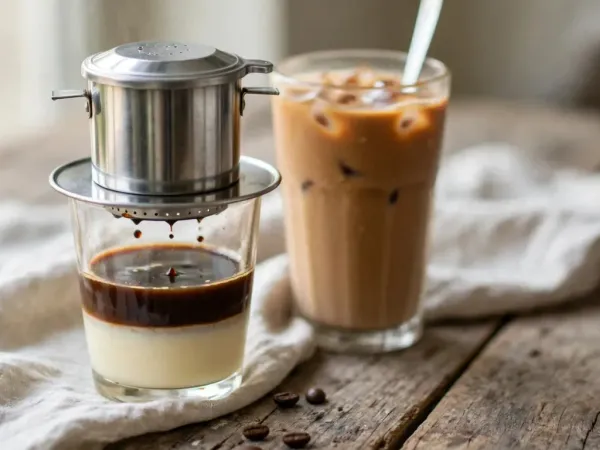
For more from Hanoi, finish with a Vietnamese egg coffee, or make a Vietnamese coffee with a phin filter. For other chicken soups, try Northern Thai khao soi, with coconut curry, or Japan’s mizutaki, a milky chicken hot pot.
Storing, safety and nutrition
Make it ahead
The broth keeps better than the bowls. Cool it fast: ladle it into several shallow containers, as the USDA’s leftovers guide recommends for large batches. Get it into the fridge within 2 hours. The chilled fat sets on top and lifts off easily.
Chilled, the broth and chicken last 3 to 4 days; frozen, about 3 months. Store the noodles on their own. Reheat the broth until it boils hard, then build the bowls.
Bean sprouts
Raw sprouts can carry Salmonella and other bacteria. The FDA advises anyone at higher risk of food poisoning to avoid them raw or lightly cooked. Blanch them for 30 seconds, or leave them out, as Hanoi cooks do.
Calories and allergens
One bowl has about 580 calories, with 38 g of protein, 17 g of fat and 62 g of carbohydrate. Our estimate draws on USDA nutrient data for cooked chicken, rice noodles and fish sauce, and assumes you skim some fat. Sodium is about 1,600 mg, mostly from the fish sauce and salt.
Fish sauce is made from fish, a major food allergen. Rice noodles hold no wheat, but check the label of any seasoning powder.
Fixes for cloudy, bland or greasy phở gà
- Cloudy broth: it boiled hard, or the chicken was not blanched. Strain it through cheesecloth; next time keep it at a bare simmer.
- Bland broth: too much water or too short a simmer. Reduce it by a quarter, uncovered, and season again with fish sauce.
- Dark broth: burnt bits from the charred onion or ginger. Rinse them well before they go in.
- Greasy: skim more fat, or chill the broth and lift it off.
- Dry, stringy chicken: it poached too long. Lift it out at 165°F (74°C) and chill it at once.
- Mushy noodles: they soaked too long or sat in the broth. Dip each portion briefly just before serving.
Substitutes for hard-to-find ingredients
- Free-range chicken: a regular whole chicken, plus 1 lb (450 g) of wings or backs for body.
- Lime leaves: makrut lime leaves, frozen or fresh, cut very fine. Without them, use extra lime and cilantro.
- Cilantro roots: cilantro stems and the white roots of the scallions.
- Dried rice noodles: fresh phở noodles, rinsed in hot water.
- Fish sauce: salt, though the broth loses some depth.
Frequently asked questions
What is the difference between phở gà and phở bò?
Phở gà is made with chicken and a lighter broth of charred onion and ginger. Phở bò is beef phở, with a longer-simmered beef bone broth and more spice.
Does chicken pho have star anise?
In Hanoi’s purist style, no. Southern cooks and many home cooks add star anise and cinnamon. Seven of the 20 Vietnamese recipes we compared leave star anise out.
What is the green garnish on Hanoi chicken pho?
Thin threads of lime leaf, with sliced scallion and cilantro. The lime leaf is the mark of Hanoi phở gà.
How do I keep the broth clear?
Blanch the chicken first, never let the broth boil hard, skim often, and cook the noodles in separate water.
How long does chicken pho take?
About 2½ hours from start to bowls, with 1 hour 50 minutes of simmering. Restaurants simmer their broth for much longer.
Can I make phở gà ahead?
Yes. Make the broth and poach the chicken a day or two ahead, chill both, and lift the fat off the broth before reheating it.
Is phở gà gluten free?
Rice noodles, chicken, fish sauce and herbs hold no gluten. Check the labels of fish sauce and any seasoning powder, which can contain wheat.
Which Hanoi phở gà shops are in the MICHELIN Guide?
In 2026, Phở Hà Hàng Hòm became a new Bib Gourmand and Phở Gà Huyền Hương joined the Selected list. Phở Gà Nguyệt kept its Bib Gourmand.
Tags: Sunday dinnerchickensoupnoodlesmake aheadgluten freedairy free