The Sunday Potthesundaypot.com/recipes/yorkshire-parkin/
Yorkshire Parkin: Oatmeal, Treacle and Ginger Bonfire Cake
By The Sunday Pot Kitchen Updated
- • Use medium oatmeal, not rolled oats, for the classic close, chewy crumb
- • Melt the butter, treacle, syrup and sugar gently, without boiling
- • Bake at 325°F (160°C) for 50 to 60 minutes in an 8-inch (20 cm) square tin
- • Wrap it and keep it 3 to 5 days before eating, so it turns sticky
- • Wrapped in an airtight tin, it keeps for up to 2 weeks
Ingredients
16 squaresInstructions
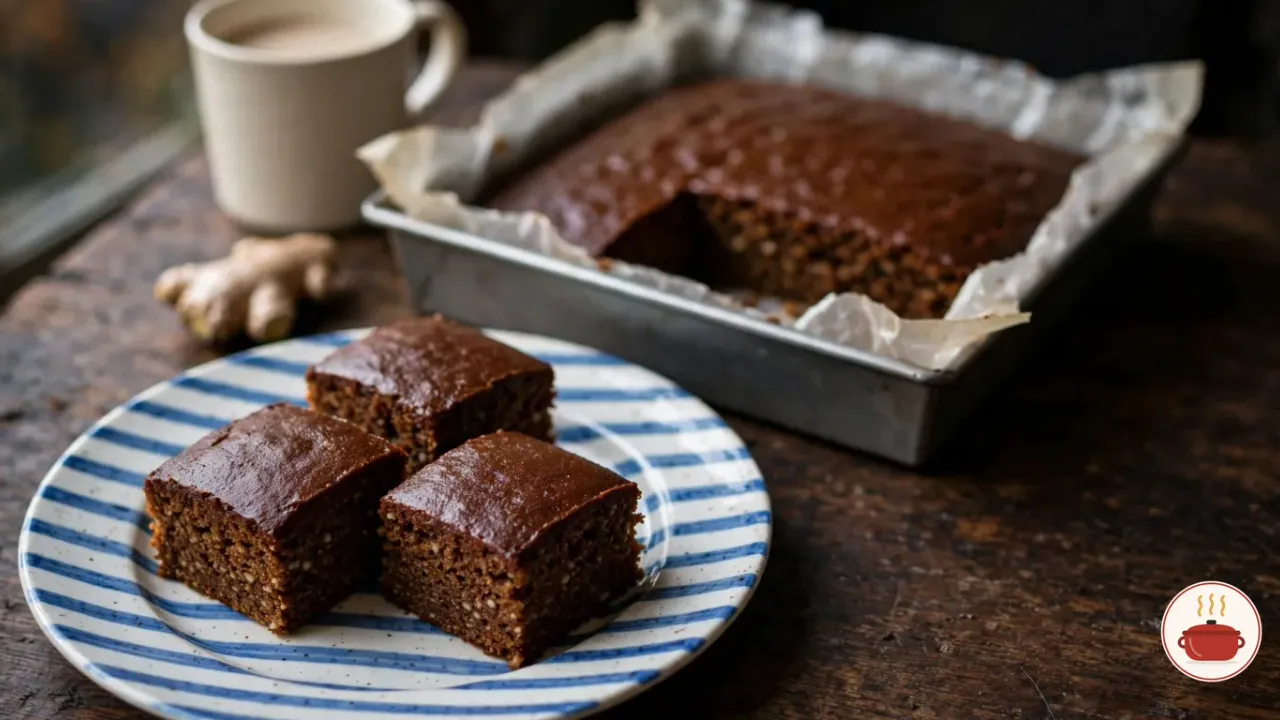
Yorkshire parkin is the dark, sticky ginger cake of Bonfire Night in northern England. Oatmeal, black treacle, golden syrup and ginger bake into a dense slab. It then rests for a few days, until the top turns soft and tacky. This recipe makes 16 squares in about 1 hour 20 minutes, plus 3 to 5 days of patience.
What Yorkshire parkin is
Oatmeal gingerbread
Parkin is a gingerbread made with oatmeal, from Yorkshire and Lancashire. The oatmeal gives it a close, chewy crumb, nothing like a light sponge. Treacle makes it dark, and a few days in a tin make it moist. Food writer Carol Wilson calls it “dark, spicy, solid gingerbread” in her BBC Good Food guide. She adds that Bonfire Night in the north “would be unthinkable without parkin”.
Old words in print
Parkin is older than its recipes. The Dialect of Craven, an 1828 glossary from the West Riding of Yorkshire, defines it as “a cake made of treacle and oat meal”. You can read it in the Internet Archive’s scan. Lancashire had an older name, tharcake, which turns up in a dialect book of 1740. The word comes from an Old English term for unleavened bread.
The oldest printed recipe we found is in Anne Cobbett’s The English Housekeeper, in its 1851 edition. It mixes 4 lb of meal with 2 lb of treacle, sugar, butter and ginger, plus “a tumbler full of brandy and rum”.
Bonfire Night and Parkin Sunday
By the 1870s, parkin belonged to the fifth of November. The clergyman Sabine Baring-Gould added a note on it to William Henderson’s folklore book of 1879, now in the Internet Archive. On that day, he wrote, parkin, “a sort of pepper-cake, made with treacle and ginger, is found in every house in the West Riding”. He thought it began as part of the All Saints feast. The Sunday after All Saints, he added, was called Parkin Sunday.
Joseph Wright’s English Dialect Dictionary of 1898 to 1905 agrees: parkin is “a cake made of oatmeal and treacle, gen. about November 5th”. In 19th-century Leeds, Carol Wilson writes, the fifth of November was known as Parkin Day.
Where the name comes from
Nobody knows. One reference book suggests a pet form of Peter, or Piers. A popular story dates the first mention to a 1728 court case in the West Riding, over oatmeal stolen to make parkin. We could not find that record or any historian’s account of it, so treat it as unconfirmed.
Yorkshire or Lancashire?
Modern writers draw a line between the two counties. Yorkshire parkin, they say, uses black treacle and more oatmeal than flour. Lancashire parkin uses golden syrup and more flour.
Old books do not agree. Lilian Clarke’s “Ideal” Cookery Book of 1905, on Project Gutenberg, prints both side by side. Her Yorkshire parkin has equal oatmeal and flour; her Lancashire one has three times as much oatmeal as flour. Both use treacle, and neither uses golden syrup.
Why parkin matters this Bonfire Night
Bonfire Night falls on a Thursday
Bonfire Night, or Guy Fawkes Night, marks a failed plot to blow up Parliament in 1605. In 2026, the fifth of November falls on a Thursday, so many public displays move to the weekends on either side. A slab baked this weekend is ready, and sticky, by the night itself.
England’s smallest oat crop since 2012
The oats in this year’s parkin come from a poor harvest. On October 8, 2026, the UK farm ministry, Defra, put England’s oat crop at 527 thousand tonnes, down 29% on 2025. “This is the smallest harvest of oats since 2012,” its provisional estimates say. Hot weather and little rain cut the yield, and farmers sowed a fifth less land with oats.
Sugar costs more, but not yet in UK shops
World sugar prices rose in 2026. The FAO Sugar Price Index averaged 114.0 points in September, 14.7% higher than a year before. British shoppers have not felt much of it yet. In the year to August 2026, UK prices for sugar, jam, syrups and sweets rose just 0.6%, the Office for National Statistics reported.
No count for the cake itself
We found no 2026 number for parkin: no sales figure, survey or festival. Parkin is a home bake, and its moment comes round each autumn whatever the data says.
What goes into Yorkshire parkin
We compared 35 parkin recipes, 32 of them from British sources. They include BBC Good Food, BBC Food, The Guardian’s Felicity Cloake and Dan Lepard, the Great British Bake Off, Bettys of Harrogate and Nancy Birtwhistle. Eight are older texts, among them Spons’ Household Manual of 1894 and a handwritten recipe kept by Leeds Museums and Galleries. We left out gluten-free, free-from and biscuit versions, which leaves 31 cake recipes.
Oatmeal, not rolled oats
The median recipe uses equal weights of oatmeal and flour. Fourteen use more oatmeal than flour, and 11 use more flour. Medium oatmeal is the usual grade, named in 12 recipes; only one asks for rolled oats, and none for pinhead. Oatmeal is chopped oats, Cloake explains, not rolled ones, and it gives parkin its chewy texture. Four of the old recipes use oatmeal alone, with no wheat at all.
Treacle and golden syrup
Here parkin has changed most. Seven of the eight historical recipes sweeten with treacle alone. Golden syrup “came on to the market in the 1880s”, Cloake writes in The Guardian, and it soon replaced part of the treacle. Today 15 of the 23 modern recipes use more golden syrup than treacle. This recipe uses both, with a little more syrup, for a dark cake that is not bitter.
Ginger and spice
The median recipe uses 1 tablespoon of ground ginger. Nine add mixed spice, and eight add nutmeg or mace. The old recipes are spicier, with about half as much ginger again for the same weight of oats and flour.
Butter, egg and milk
Most modern recipes use butter; only 3 of the 31 use lard or dripping, the old fat. Twenty-four add an egg, and 24 add milk. Most of the old recipes have no egg, and Cloake found the oatmeal-only ones flat and brittle.
Oven and time
The median oven is 325°F (160°C) and the median time 55 minutes, in a tin about 8 inches (20 cm) square. The old books only say “a slow oven”.
The wait
Parkin is best a few days after baking. The recipes ask for a median rest of 3 to 5 days. Spons’ Household Manual, on Project Gutenberg, says parkin “is not fit for eating for 2-3 days”. The Leeds recipe says to make it “a fortnight before being eaten”. Treacle and golden syrup hold on to water, so the cake softens and the top turns sticky as it sits.
How to bake Yorkshire parkin that is dense and sticky
Melt, don’t boil
Warm the butter, treacle, syrup and sugar only until the sugar dissolves. If it boils, the sugar starts to turn to toffee and the parkin can bake hard.
Weigh the treacle
Black treacle is heavy and clings to spoons. Set the pan on your kitchen scale and pour the treacle and syrup straight in. A spoon warmed in hot water helps if you measure by volume.
Bake low and slow
At 325°F (160°C) the edges stay soft while the middle cooks through. Parkin often sinks a little in the centre as it cools. That dip is normal, and some cooks like the stickier middle it leaves.
Wrap it while you wait
Wrap the cooled slab in parchment and foil and store it in a tin at room temperature. Some bakers warn that the fridge makes it hard.
Serving parkin
Cut parkin into squares and eat it with a mug of tea, outdoors by the bonfire if you can. Some Yorkshire cooks serve it with a slice of Wensleydale cheese. The children’s writer Alison Uttley remembered it buttered, for tea. Warm it for a pudding, with hot custard.
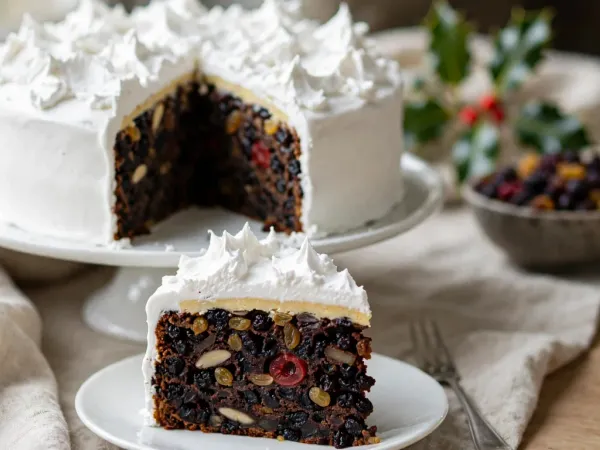
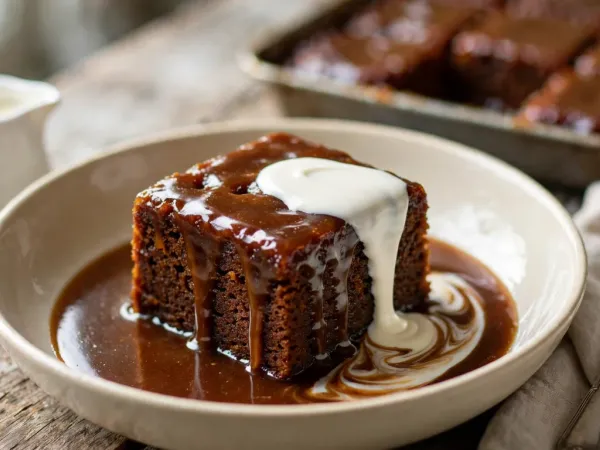
For another treacly British pudding, make sticky toffee pudding. If parkin season sets you thinking of Christmas, bake a British Christmas cake to feed through November. Martinmas, on November 11, brings another autumn feast: Poland’s St. Martin’s roast goose.
Storing, safety and nutrition
How long it keeps
Wrapped in parchment and foil in an airtight tin, parkin keeps for up to 2 weeks at room temperature. BBC Good Food, the Bake Off and the British Dietetic Association all give that limit. Cloake keeps hers up to three weeks and says it keeps improving. Dense cakes like parkin freeze well when wrapped tightly, though we found no official freezer time.
Raw batter
Parkin batter holds raw flour and raw egg, so don’t taste it. “Germs are killed only when flour is baked or cooked,” the CDC warns.
Oats and gluten
Oats and wheat both count as cereals containing gluten in the UK’s list of 14 allergens, as the Food Standards Agency sets out. Oats contain no gluten themselves, but they are often contaminated with wheat, barley or rye, the NHS explains. For a gluten-free parkin, use oats labelled gluten-free and a gluten-free flour blend. Parkin also contains milk and egg.
Calories and sugar
One square has about 225 calories, with 3.5 g of protein, 9 g of fat and 33 g of carbohydrate, of which about 18 g is sugar. Sodium is about 110 mg, from the raising agent and salt. We built these estimates from USDA FoodData Central values for oats, flour, butter, molasses, cane syrup, brown sugar and egg; USDA has no entry for black treacle or golden syrup, so molasses and cane syrup stand in for them.
Fixes for hard, dry or sunken parkin
- Hard and dry: it baked too long, or the syrup boiled. Wrap it and wait another 2 or 3 days; it softens as it rests.
- Crumbly, falls apart: too much oatmeal, or coarse oatmeal. Use medium oatmeal and equal weights of oats and flour.
- Sunk badly in the middle: the oven was too hot, or the tin too small. A slight dip is normal.
- Bitter: too much black treacle. Swap some of it for golden syrup next time.
- Not sticky: it needs more time. Keep it wrapped in its tin for a few more days.
Substitutes for hard-to-find ingredients
- Black treacle: unsulphured molasses; blackstrap molasses is more bitter, so use half and make up the rest with golden syrup.
- Golden syrup: light corn syrup or honey, though the taste changes.
- Medium oatmeal: rolled oats, pulsed in a food processor until they look like coarse sand.
- Self-raising flour: all-purpose flour with 2 teaspoons of baking powder.
- Butter: lard or dripping, as in the oldest recipes.
Frequently asked questions
Why is parkin eaten on Bonfire Night?
It has been the West Riding’s fifth of November cake since at least the 1870s, when folklore writers found it “in every house”. Its link with early-November feasts may be older.
What is the difference between Yorkshire and Lancashire parkin?
Modern writers say Yorkshire parkin uses black treacle and more oatmeal, and Lancashire parkin golden syrup and more flour. Old cookbooks don’t follow that rule, so treat it as a loose habit.
Why do you wait days before eating parkin?
The treacle and golden syrup draw moisture into the crumb. After 3 to 5 days in a tin, the cake turns softer and the top turns sticky.
Can I use rolled oats for parkin?
Yes, but pulse them first in a food processor. Whole rolled oats give a looser texture, closer to a flapjack.
Is parkin the same as gingerbread?
It is a kind of gingerbread, made with oatmeal. It is denser and chewier than a flour-only ginger cake.
How long does parkin keep?
Up to 2 weeks, wrapped in parchment and foil in an airtight tin at room temperature.
Can I eat parkin the day it is baked?
You can, but it will be firm and a little crusty on top. It is at its best after a few days’ rest.
Is parkin gluten free?
No. It contains wheat flour and oats. Make it with gluten-free oats and a gluten-free flour blend for a gluten-free version.