The Sunday Potthesundaypot.com/recipes/tom-yum-kung/
Tom Yum Kung: Thai Hot and Sour Shrimp Soup, Clear or Creamy
By The Sunday Pot Kitchen Updated
- • Fry the shrimp heads and shells, then simmer them for 10 minutes for a quick stock
- • Bruise the lemongrass, galangal and lime leaves and simmer them gently for 5 minutes
- • Cook the shrimp for only 1 to 2 minutes, until pink and opaque all the way through
- • Add the lime juice off the heat; boiling it makes the soup bitter
- • Clear means no milk; for the creamy version, add evaporated milk and more chili jam
Ingredients
4 servingsInstructions
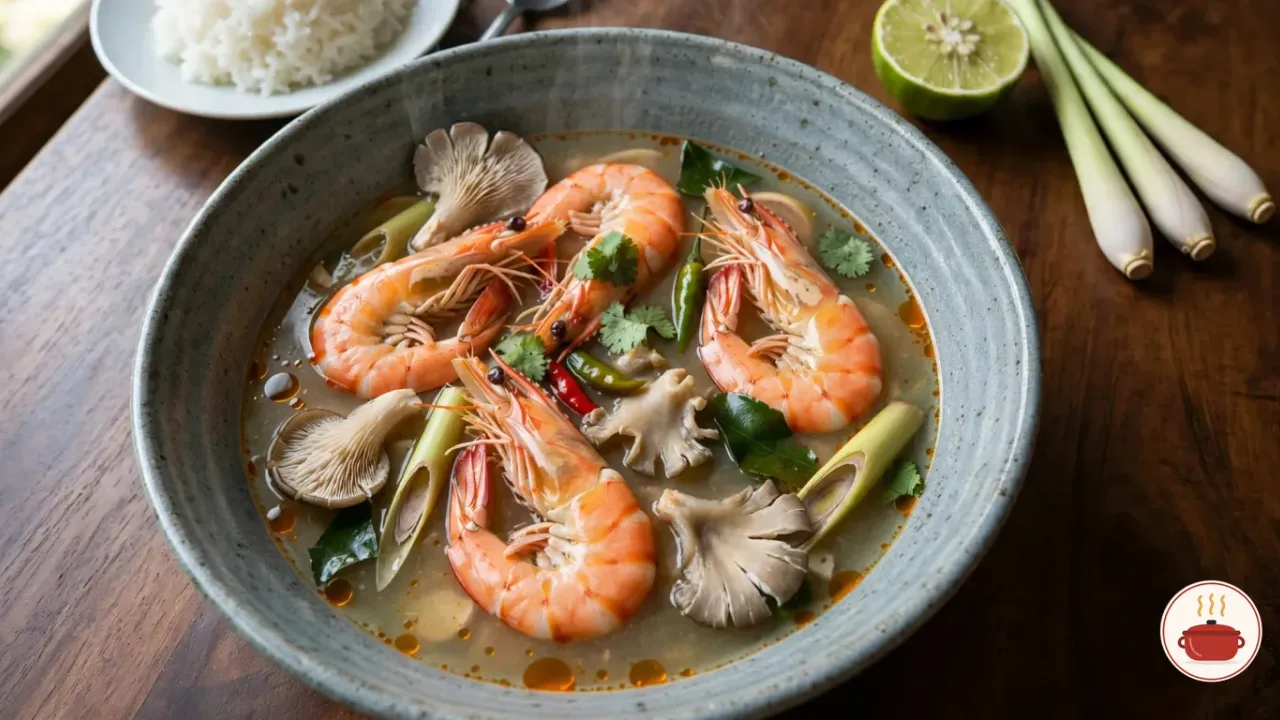
Tom yum kung is Thailand’s hot and sour shrimp soup: shrimp poached in a broth of lemongrass, galangal and makrut lime leaves, seasoned with fish sauce, chilies and lime juice added off the heat. The clear version is called nam sai, and the creamy one, with milk and chili jam, nam khon. It takes about 45 minutes for 4 bowls.
What tom yum kung is
Sour first, then salty, then hot
Tom means to boil and kung is shrimp; yum is the Thai word for a tangy, mixed salad. The soup is quick: the herbs simmer for a few minutes, the shrimp for one or two. Nothing is fried or ground into a paste, unless you add a spoon of chili jam.
The balance matters more than the method. Pailin Chongchitnant of Hot Thai Kitchen says tom yum should lead with sour. Chef Ou Sittikorn Chantop of the one-star restaurant AKKEE wants it fragrant with lemongrass, lime leaf and shrimp fat. He told the MICHELIN Guide that it must not be sweet (our translation).
Nam sai and nam khon
At a Thai restaurant or stall, you are often asked which you want. Nam sai means clear water, and nam khon means thick water. In Thai usage, the difference is milk, not chili paste. The Thai food site KRUA.CO puts 2 tablespoons of nam prik pao in its clear version.
The creamy version adds evaporated milk, and sometimes coconut milk. “Modern day Thais have come up with a ‘creamy’ or nam kon variation,” Chongchitnant writes in her creamy tom yum recipe. She uses evaporated milk because coconut milk “will come through in a major way”.
Why the creamy version appeared
Chef Nooror Somany Steppe, who founded the Blue Elephant restaurants, gave her account to the MICHELIN Guide Thailand in 2023. In her childhood, she says, tom yum kung meant the clear soup. Its richness came from the orange fat in the heads of river prawns.
River prawns grew expensive, and sea shrimp carry less of that fat. So cooks added milk or coconut milk, plus more chili jam, and the creamy soup was born. That is one chef’s memory rather than a dated record, but it is the best Thai explanation we found.
Where tom yum comes from
The first Thai cookbook
No one knows who invented tom yum kung. The earliest printed tom yum we could trace is in Tamra Kap Khao, often called the first Thai cookbook. It was printed in 1890 or 1891, a Thai academic paper in the Journal of Social Science and Buddhistic Anthropology explains. Its tom yum dishes use fish, eel, mushroom and chicken, not shrimp.
A shrimp tom yum appears in a Thai periodical of January 1890, according to Thai PBS. It is called a “Khmer tom yum”, with pork, dried fish, pickled garlic and cucumber. That recipe “has almost nothing in common” with today’s soup, the broadcaster notes (our translation). We have not seen the 1890 page ourselves.
UNESCO heritage since 2024
On December 3, 2024, UNESCO inscribed tom yum kung on its Representative List of living heritage. The committee met in Asunción, Paraguay, and it was December 4 in Thailand, the Thai government’s news office noted.
The nomination traces the soup to Buddhist riverside communities of the Central Plains. They “traditionally avoided killing large animals”, it says, and ate the freshwater prawns that were plentiful there. Thailand had put the dish on its national heritage list in 2011, UNESCO’s decision records.
A soup that named a crisis
Tom yum kung even gave its name to an economic crash. The Bank of Thailand calls the 1997 Asian financial crisis the “TomYam Kung Crisis”. It began on July 2, 1997, when Thailand floated the baht.
Why tom yum fits this November
MICHELIN Thailand turns ten
The MICHELIN Guide Thailand 2027 will be revealed on Tuesday, November 10, 2026. It marks ten years of the guide in Thailand, and the stars come one week after the Bib Gourmand list.
Loy Krathong on November 24
Two weeks later, on Tuesday, November 24, Thais float candlelit baskets on rivers and canals for Loy Krathong. It falls on the full moon of the twelfth lunar month, Thai PBS reported on October 22. A pot of soup made from river prawns suits a festival held at the water’s edge.
Sour flavors in the 2027 forecasts
Sour is having a moment in the trend reports. The organizers of Natural Products Expo West list “pucker power” among their trends for 2027, published on October 21. Sales of pickle-flavored snacks jumped 30% in a year, against 3.8% for all snacks, according to the market researcher Circana. The forecast does not name tom yum, but few soups lead with sour as plainly.
Fewer shrimp exports
Thai shrimp farming has had a hard few years. Kasikorn Research, a bank research unit, forecast in December 2025 that 2026 export value would fall 3.6%, to $1.075 billion. It would be the fourth yearly drop in a row, with US tariffs and competition from Ecuador among the reasons.
No figure for the soup itself
We looked for a 2026 sales figure, survey or menu count for tom yum kung and found none. The news this autumn is the calendar, the trend reports and the shrimp trade, not the soup.
What 30 tom yum recipes agree on
We read 30 published tom yum kung recipes in full. Twenty are by Thai authors, 17 of them in Thai: two MICHELIN Guide chefs, KRUA.CO, Gourmet & Cuisine magazine, Kapook, Sanook, MThai and home cooks on Wongnai and Cookpad. The rest include Leela Punyaratabandhu of She Simmers, Pailin Chongchitnant, RecipeTin Eats, SBS Food, America’s Test Kitchen and Saveur. Seven are clear with no chili paste, 9 are clear with chili jam, and 14 are creamy.
Lemongrass, lime leaf and galangal
All 30 use lemongrass and makrut lime leaves. Galangal is in 26; a few chefs who cook with river prawns leave it out. Per liter of liquid, the median is 2 lemongrass stalks, about 7 slices of galangal and 6 lime leaves. The herbs simmer for a median of 5 minutes.
Lime juice goes in off the heat
Twenty-two recipes add the lime juice off the heat or in the serving bowl, including 16 of the 20 Thai ones. The reason is taste. Lime in boiling liquid turns the soup bitter, the Thai site MThai warns. In the creamy version, waiting until the bubbling stops also keeps the milk from curdling.
Shrimp, barely cooked
Nearly every recipe adds the shrimp last and pulls the pot off the heat as soon as they turn opaque. The median is about 300 g of shrimp per liter of broth. Fifteen recipes make a stock from the heads and shells; the others use chicken broth, pork broth or water.
Equal parts lime and fish sauce
The seasoning is close to one to one. Per liter, the median is about 3.7 tablespoons of fish sauce and 4.2 tablespoons of lime juice. Half the recipes add a little sugar, and Chef Ou adds none.
Which milk for nam khon
Of the 14 creamy recipes, 7 name evaporated milk as the first or equal choice. Four use coconut milk alone, and 2 use fresh milk. Typical amounts come to 150 ml of milk and 2½ tablespoons of chili jam per liter. Coconut versions are not wrong: the Royal Institute dictionary allows tom yum boiled “in water or in coconut milk”.
How to balance tom yum kung
- Keep it at a gentle simmer. A hard boil clouds the broth and toughens the shrimp. The Gourmet & Cuisine recipe by Chef Pong Payut Kongsuwan of Laem Charoen Seafood says the liquid should never boil furiously.
- Bruise the herbs. Crushed lemongrass, torn lime leaves and lightly crushed shallots release more scent in 5 minutes.
- Season in two stages. Add most of the fish sauce in the pot and the lime juice off the heat, then adjust.
- Taste in the order Thais do. Sour first, then salty, then hot, with no obvious sweetness.
- Crush the chilies. Bruised bird’s eye chilies give heat at once; whole ones barely do.
- Use the shrimp fat. With river prawns, fry the orange fat from the heads and stir it in at the end, as Chef Ou does. It makes the clear soup rich without milk.
Ways to vary tom yum
- River prawn tom yum: the old Central Plains ideal, with big prawns and their orange head fat. KRUA.CO has a river prawn version whose broth turns orange from it.
- Tom yum pla: fish in place of shrimp. Fish tom yum is what the earliest cookbook shows.
- Coconut milk nam khon: sweeter and rounder; use the same amount as the evaporated milk.
- Tom yum pak ro: a clear tom yum from Songkhla in the south.
- Mixed seafood: squid and mussels with the shrimp. Add them for the last 2 minutes.
Serving tom yum kung
In Thailand, tom yum is part of a meal, eaten with jasmine rice rather than as a starter. A Thai omelet or a stir-fry suits it. Set the pot down where everyone can reach it, and spoon the broth over your rice a little at a time.
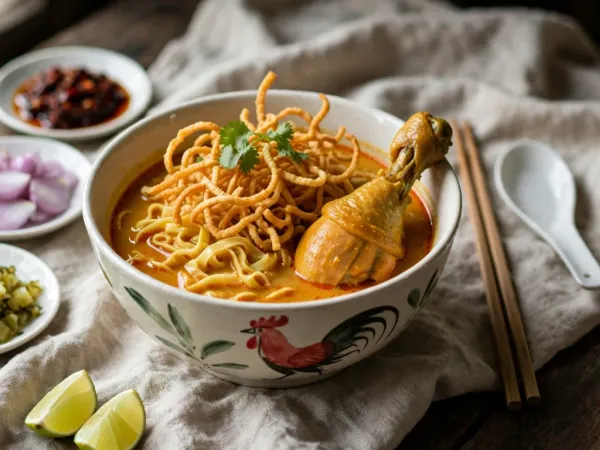
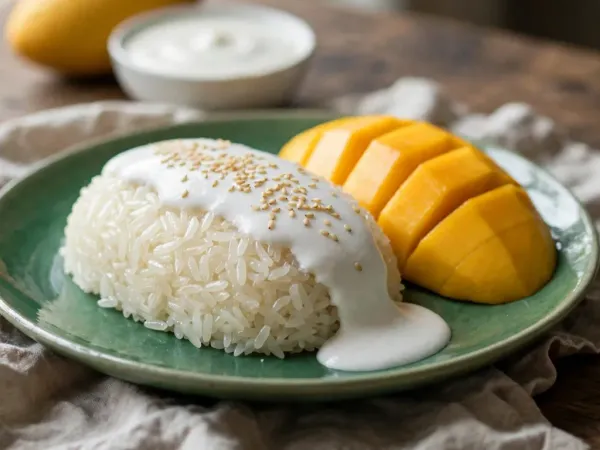
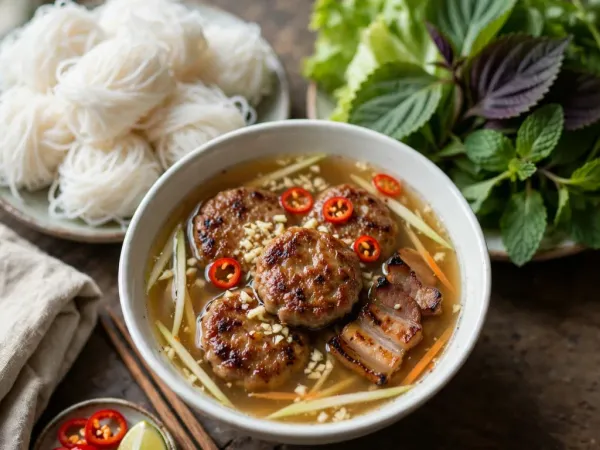
For more Thai cooking, try northern khao soi, and finish with mango sticky rice. If you like light, fragrant broths, the Vietnamese chicken soup phở gà is another.
Storing, safety and nutrition
Buying and storing shrimp
Raw shrimp should look clear and pearly and smell of little or nothing, the FDA advises. Refrigerate it no warmer than 40°F (4°C), and cook it within 2 days or freeze it. Thaw frozen shrimp overnight in the fridge, or sealed in a bag in cold water.
Safe, tender shrimp
Most seafood should reach 145°F (63°C). For shrimp, the FDA’s test is simple: the flesh turns “firm, pearly, and opaque”. Cut the largest shrimp in half to check. If the middle still looks glassy, put the pot back on a low heat for a minute.
Leftovers
Tom yum is best eaten at once, because reheated shrimp turn rubbery. Get leftovers into the fridge, in shallow containers, no more than 2 hours after cooking; they keep for 3 or 4 days. Lift out the shrimp, bring the broth to a boil, and return the shrimp off the heat. Leftovers should be hot all through, at 165°F (74°C). Add fresh lime and herbs after reheating.
Allergens and chilies
A bowl can hold four major allergens. Shrimp is a crustacean shellfish, and most nam prik pao contains dried shrimp too. Fish sauce is fish, the creamy version contains milk, and some chili jams contain soy. US law names all four among the nine major food allergens.
Wear gloves to crush the chilies, or press them with the flat of a knife, and keep your hands away from your eyes. The lemongrass, galangal and lime leaves stay in the bowl, but they are too woody to eat. Tell children before they bite into them.
Nutrition
One bowl of clear tom yum, made without chili jam, has about 100 calories, 17 g of protein and 8 g of carbohydrate. The creamy version adds about 55 calories and 3 g of fat. We worked these out from USDA FoodData Central values for shrimp, fish sauce, mushrooms, lime juice and evaporated milk. The chili jam has no USDA entry, so it is not counted.
The soup is salty: about 1,640 mg of sodium per bowl, nearly all from the fish sauce. If you watch your salt, start with 3 tablespoons of fish sauce and add more at the table.
Fixes for bitter, flat or curdled tom yum
- It tastes bitter: the lime juice boiled. Add it off the heat next time; for now, a pinch of sugar helps.
- It tastes flat: add lime and fish sauce, a teaspoon at a time, until the sour comes first.
- The shrimp are tough: they cooked too long. Pull the pot off the heat as soon as they turn opaque.
- The creamy broth split: it boiled after the milk or lime went in. Keep it below a simmer.
- It is too hot: add more broth or a spoon of evaporated milk, and leave the chilies out of the bowls.
- No scent of herbs: bruise them harder and simmer them a few minutes longer before the shrimp go in.
Substitutes for missing ingredients
- Galangal: frozen or dried galangal slices. Fresh ginger tastes different, so use less of it.
- Makrut lime leaves: frozen leaves work well; strips of lime zest are a weak stand-in.
- Straw mushrooms: oyster, king oyster or button mushrooms.
- River prawns: any large head-on shrimp, such as tiger or white shrimp.
- Evaporated milk: coconut milk or whole milk.
- Nam prik pao: skip it, and the clear soup tastes lighter and sharper.
Frequently asked questions
How is tom yum different from tom kha?
Tom yum is a sour, spicy broth, clear or with a little milk. Tom kha is a separate coconut milk soup led by galangal, usually made with chicken.
Nam sai or nam khon: which is which?
Nam sai is the clear soup, and nam khon the creamy one, with evaporated milk or coconut milk and more chili jam.
Why do you add the lime juice off the heat?
Boiling lime juice makes the soup bitter. Most Thai recipes we read add it off the heat or in the bowl.
Is tom yum kung spicy?
Usually, yes. Thai recipes use about 8 bird’s eye chilies per liter. You can use 2 or 3 and serve more on the side.
Do you eat the lemongrass and galangal?
No. They flavor the broth and stay in the bowl as a garnish, but they are too tough to eat.
Is tom yum kung dairy free?
The clear version is. The creamy version contains evaporated or fresh milk; use coconut milk instead to keep it dairy free.
Can I make tom yum kung ahead?
Make the shell stock and infuse the herbs up to a day ahead. Add the shrimp, milk and lime just before you eat.