The Sunday Potthesundaypot.com/recipes/causa-limena/
Causa Limeña: Peru's Layered Yellow Potato Starter
By The Sunday Pot Kitchen Updated
- • Boil 2¼ lb (1 kg) of yellow potatoes in their skins and press them while hot
- • Season the potato with ají amarillo paste, lime juice, oil and salt
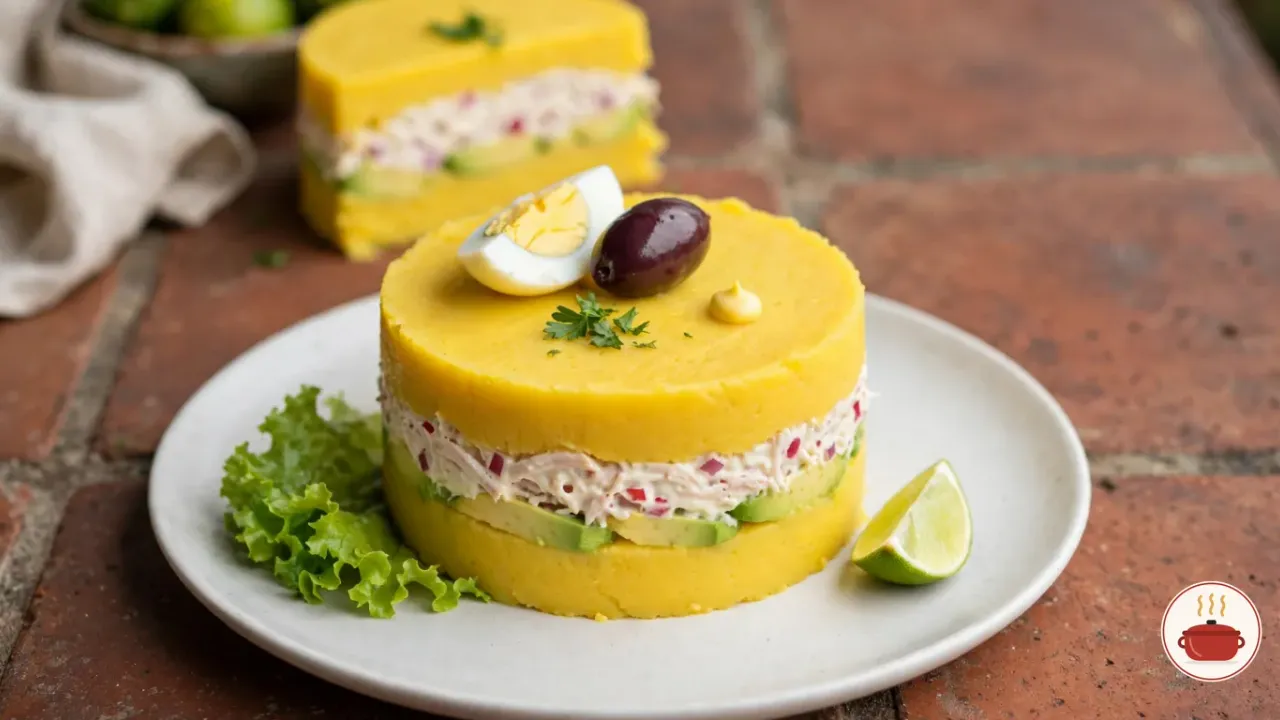
- • Fill it with poached chicken in mayonnaise and thin slices of avocado
- • Chill the causa for 1 to 2 hours in a ring mold
- • Serve it cold with egg, black olives and lettuce
Ingredients
6 starters or 4 mainsInstructions
Causa limeña is a cold dish from Lima made of mashed yellow potato. The potato is seasoned with ají amarillo chile, lime juice and oil, then layered with chicken in mayonnaise and avocado. This version serves 6 as a starter or 4 as a main. It takes about 1¼ hours of work and an hour or two in the fridge.
What causa limeña is
A potato dough with a kick
Causa is not mashed potato. The potato is pressed, then kneaded with chile, lime and oil into a smooth dough you can mold. It tastes sharp, a little hot and rich, and it is served cold.
The color matters. Peru’s papa amarilla is a yellow potato, and ají amarillo paste adds orange. Morena Cuadra writes about her country’s food on Peru Delights. The potatoes “are small and intensely yellow inside, and have a sandy texture that is creamy at the same time”, she explains.
Outside Peru, Yukon Gold is the usual stand-in. Cuadra tried it and found her causa “was a bit soggy”, so drain the potatoes well.
Filled, or plain
Most causa today is causa rellena, or filled causa. Two layers of potato hold a filling of chicken or tuna in mayonnaise, with avocado and egg. Peruvian cooks shape it in a ring, a square tin or a glass.
The older form has no filling. Elena Santos Izquierdo still serves it at El Rincón que no Conoces, the Lima restaurant her mother Teresa Izquierdo founded. “The real way causa a la limeña is served was never filled,” she told El Comercio in 2020. A ball of causa came with fried fish, shrimp, onion and hard-boiled egg around it.
The Peruvian cook Teresa Ocampo makes it that way too. Her recipe in El Comercio kneads the hot potatoes with oil “until the dough comes away from your hands”. It then covers the platter in an onion sauce.
Where causa comes from
Sold in Lima’s streets by 1883
The earliest description we could read is in Juan de Arona’s Diccionario de peruanismos, published in Lima in 1883 and 1884. It calls causa a creole dish “very popular in Lima, Trujillo and other places on the coast”.
It was eaten cold, Arona writes. It was a potato purée dressed with lettuce, fresh cheese, olives, corn and chile. The causera was the woman who cried it in the street.
A recipe from 1890
The first full recipe we found is in Cocina ecléctica, a collection by Juana Manuela Gorriti, an Argentine-born writer who had lived in Lima. The recipe, signed by Urcina Ponce de Sandoval, was printed in Buenos Aires in 1890. You can read its page on Wikisource.
The potato is mixed with “plenty of oil, vinegar, salt and ground chile”. It is spread like a cake over lettuce leaves. Pickled onion goes on top, with sliced egg, fried fish or shrimp, fresh cheese, sweet potato, olives and radishes.
Note what is missing. There is no lime, only vinegar, and there is no filling.
Two stories about the name
You will read that causa got its name in a war. In one version, women in Lima sold potato dough to support the troops, “for the cause”, in the War of the Pacific, from 1879 to 1884. In another, it fed the troops of independence in 1820. We found no document behind either one.
The other story comes from Quechua. Arona himself suggested that the word “must come” from causay, which he translated as life or sustenance. That was his guess in 1883, and later writers repeat it. The Peruvian researcher Isabel Álvarez favors this reading, El Comercio reports, but it remains a theory.
Lime, and a dish of Lima
Álvarez sees causa as Lima’s own. “It is the only starter whose recipe is from Lima,” she told El Comercio in January 2020. The same article notes that lime came from Spain, while the yellow potato and ají amarillo are Peruvian.
The north has its own version. Causa ferreñafana, from Ferreñafe in Lambayeque, is made with salted fish, pickled onion, sweet potato, cassava and plantain, RPP reports.
Causa and Lima’s big week in 2026
The 50 Best, decided in Lima
On November 4, 2026, Lima hosted the ceremony of The 50 Best Restaurants, the ranking long known as The World’s 50 Best. It was the first time the event came to Peru, its organizers announced in July.
That night, Mayta, the Lima restaurant of chef Jaime Pesaque, placed 45th, El Comercio reported. Two Lima restaurants have already won first place: Maido in 2025 and Central in 2023. The rules keep past winners out of the ranking, so neither could compete.
The 50 Best’s Latin American list follows on December 1, live from Guadalajara, the organizers say.
Yellow potatoes cost more this autumn
The dish rests on one ingredient, and it got dearer in Lima. In October 2026, papa amarilla rose 13.54% in a month, among the biggest increases in the city’s price basket. Peru’s statistics office, INEI, published the figure on November 1 in its October consumer price report.
That came after a 6.6% rise in September, INEI’s September report shows. INEI gives no reason, so we won’t guess one. Chicken breast went the other way, down 0.6% in October.
No number for causa itself
Causa has no 2026 statistic of its own: no sales count, no survey, no ranking that we could find. No 2027 food forecast we read names it, ají amarillo or Peruvian food. What we can say is that Peru’s cooking had the world’s attention this week, and causa is one of the dishes Lima calls its own.
What 29 causa recipes agree on
Our count covers 29 causa recipes. Fifteen come from Peruvian media and cooks, in Spanish: El Comercio, RPP, Buenazo, Yanuq, TV Perú, La República, Infobae and others. The other 14 are in English, among them recipes by Peruvian writers and the chef Martin Morales.
The base never changes
Yellow potato is named in 24 of them. Twenty-five season the dough with the same four things: ají amarillo, lime, oil and salt. Avocado appears in 26, hard-boiled egg in 19 and black olives in 16.
The method agrees too. Press the potatoes, don’t blend them. Infobae Perú’s 2026 recipe warns that a blender can make the purée “too elastic”. The chef Flavio Solórzano, on RPP, says to peel them “when they are very hot”.
Chicken or tuna
Chicken fills 17 of the 29, the default in Peruvian newspapers. Tuna fills 5, mostly on English blogs by Peruvians, and crab or shrimp one each. Three recipes are the old unfilled kind.
The shape splits more. Fourteen use a ring or a square mold, and eight layer it in a dish. TV Perú’s recipe says to shape it in “an aluminum kitchen mold, a glass or your own hands”.
How much of each
For every 2¼ lb (1 kg) of potato, the middle values are about 3½ tablespoons of ají amarillo paste, 4 tablespoons of lime juice and 4 tablespoons of oil. The filling takes about ½ cup of mayonnaise. Our recipe follows those numbers.
The cooks differ on when to season. Some knead the oil into the potatoes while they are hot, as Ocampo does. Others wait until the potato is cold, as four of the recipes do, and so does ours.
Tips for a smooth, bright causa
- Pick a floury yellow potato. Papa amarilla is ideal. Yukon Gold works, but drain it well and let it steam dry.
- Press it hot, season it cold. Hot potatoes go through a ricer easily and stay light.
- Keep the blender away. Blended potato turns gluey and stretchy.
- Season boldly. Cold food tastes milder, so the dough should taste a little too sharp at first.
- Protect the avocado. A squeeze of lime keeps the slices green.
- Use a wet knife. Wipe it between cuts for clean layers.
Serving causa limeña
Causa is a starter in Lima, served cold on a lettuce leaf. Cut it into wedges or squares, or make single rings for each guest. Some cooks add a dot of yellow ají mayonnaise on top.
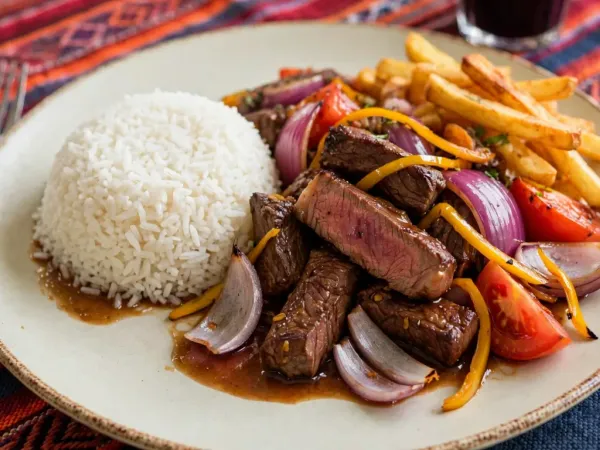
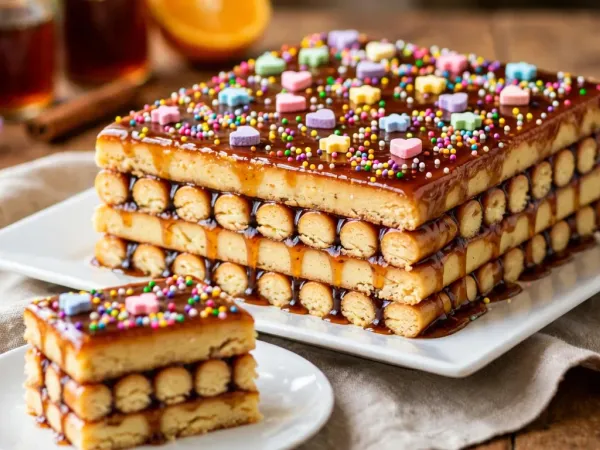
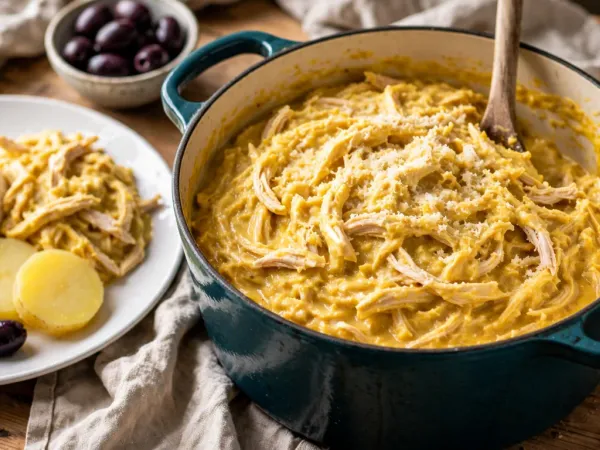
For a Peruvian meal, follow it with lomo saltado or ají de gallina, which uses the same yellow chile. For dessert, Lima’s October sweet is turrón de Doña Pepa.
Safety, storing and nutrition
Keep it cold
Causa holds a mayonnaise filling, so treat it like chicken salad. Its fridge should run at 40°F (4°C) or colder. Don’t leave it out of the fridge for more than 2 hours, or 1 hour when it is above 90°F (32°C). That is the advice of the USDA’s Food Safety and Inspection Service. On a hot day, set the plate over a bowl of ice.
Cook the chicken through
Poach the chicken until the thickest part reaches 165°F (74°C), the poultry minimum on the USDA’s chart, and chill it before you add mayonnaise. If you make mayonnaise at home, use pasteurized eggs, since raw eggs can carry Salmonella.
How long it keeps
Covered in the fridge, causa keeps for 3 to 4 days, the same as egg, chicken and tuna salads on the FoodSafety.gov storage chart. The same chart says these salads don’t freeze well. For the best taste, the Peruvian food site Eat Peru suggests eating it within 12 hours, before the avocado darkens.
Allergens
Causa contains egg, in the mayonnaise and the garnish. A tuna version contains fish, and a crab or shrimp one contains crustaceans. Many store-bought mayonnaises contain mustard. In the UK and EU, mustard and celery must be declared as allergens, and celery is in the poaching water here. The recipe has no wheat or milk.
Nutrition
A starter portion has about 590 calories, with 29 g of protein, 36 g of fat, 40 g of carbohydrate and 7 g of fiber. The figures are our own sums, built from the USDA’s nutrient database. The USDA lists neither papa amarilla nor ají amarillo, so we used boiled potato and a hot red chile instead. As a main, a quarter of the recipe has about 890 calories.
The 240 mg of sodium leaves out the salt in the cooking water and the dough. Mayonnaise and oil supply about 60% of the fat.
Fixes for soft, gluey or bland causa
- It won’t hold its shape: the potatoes were too wet. Knead in a little more potato, or chill it longer.
- It is gluey or stretchy: it was blended or overworked. Start the next one with a ricer.
- It is dry and cracks: knead in another spoonful of oil.
- It is bland: knead in more lime and salt, then check it again once cold.
- It is too hot: use less ají next time. Some heat fades in the fridge.
- The avocado went brown: slice it last, and squeeze lime over it.
Substitutes for missing ingredients
- Papa amarilla: Yukon Gold or another yellow, floury potato.
- Ají amarillo paste: frozen ají amarillo, blended with a little oil. Outside Latin American shops, it is sold in jars online.
- Lime juice: lemon juice. Peruvian cooks use small, sour limes.
- Chicken: two 5-oz (140 g) cans of tuna, drained, or cooked crab or shrimp.
- Botija olives: Kalamata olives.
Frequently asked questions
Is causa rellena the same as causa limeña?
Not quite. Causa rellena is filled, with two layers of potato around chicken or tuna. The old causa a la limeña is a plain mound of seasoned potato with garnishes around it, such as fried fish, shrimp and egg.
Is causa served hot or cold?
Cold. It is chilled until firm and served straight from the fridge.
Can I make causa the day before?
Yes, but add the avocado close to serving if you can. Once assembled, it is safe for up to 4 days chilled, though the avocado darkens.
Is causa gluten-free?
The recipe has no wheat. Check the labels on the mayonnaise and the ají amarillo paste.
Why is my causa pale?
White potatoes and too little ají amarillo give a pale dough. Use yellow potatoes and add paste until the color is a deep, sunny yellow.
Tags: potatoesají amarillochickenavocadocoldmake aheadgluten free