The Sunday Potthesundaypot.com/recipes/bibingka/
Bibingka: Filipino Christmas Rice Cake in Banana Leaf
By The Sunday Pot Kitchen Updated
- • Line a 9-inch pan with banana leaves softened over a flame
- • Whisk rice flour, a little glutinous rice flour, coconut milk, eggs, sugar and butter
- • Bake at 375°F (190°C) until set, then add salted egg and cheese
- • Bake 15 minutes more and broil briefly for charred spots
- • Brush with butter, sprinkle with sugar and serve warm with coconut
Ingredients
6 slicesInstructions
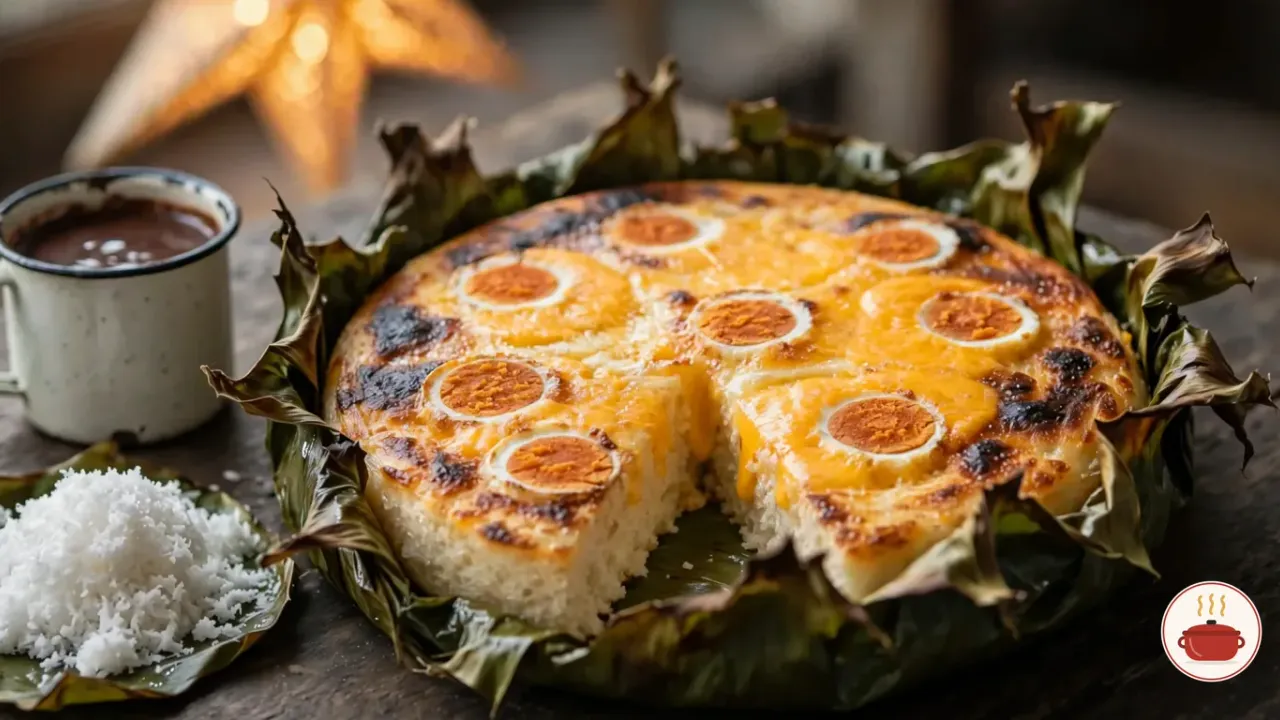
Bibingka is a Filipino rice cake baked in a banana leaf. A batter of rice flour, coconut milk, eggs and sugar bakes until spongy, with salted duck egg and cheese on top. Filipinos buy it outside churches at Christmas. This oven version makes one 9-inch cake, or 6 slices, in about an hour.
What bibingka is
A cake cooked between two fires
In the Philippines, bibingka is baked in a clay pot lined with banana leaf. Hot coals sit below the pot and on its lid. “These specialized clay pots function like an oven,” Lalaine Manalo explains on Kawaling Pinoy. The cake comes out charred on top and underneath, and soft inside.
The leaf does real work. It keeps the batter from sticking to the pot, adds aroma and stops the coals from overcooking the cake, Maida Pineda writes for SBS Food. Philippine writers often mention the smell of the scorched leaf.
The special one
The Christmas favorite is bibingka espesyal, the “special”. It carries salted duck egg and cheese, then gets butter, sugar and grated coconut at the end. That is the version here.
In Filipino shops, the shells of salted duck eggs are dyed a magenta red to tell them apart from fresh ones. The cheese is often kesong puti, a soft white cheese, or plain cheddar.
Galapong, or rice flour
The old batter starts from galapong. Rice is soaked overnight, then ground into a thick paste, Kawaling Pinoy explains. Most home cooks now use rice flour, and Manalo found it “the easiest way to make bibingka at home”.
Where bibingka comes from
A Tagalog dish in 1754
The word is old. In 1754, a Tagalog-Spanish dictionary was printed in Manila: Noceda and Sanlucar’s Vocabulario de la lengua tagala. It defines bibingca as “a little baked flour dish that the Tagalogs make”.
The same dictionary uses it as an example of bad grinding. Under balas, lumps of poorly ground flour, it gives the sentence “this bibingka has many lumps”. So cooks were grinding their own rice for it.
A Jesuit’s breakfast bread
Around the same years, the Jesuit Juan José Delgado described it in his history of the islands. He wrote it between 1751 and 1754, though it was only printed in 1892, in a volume you can read on the Internet Archive.
He calls it a rice bread “that they call bibinca”. It is as spongy as French bread but whiter, he writes. Freshly made, it was “excellent with chocolate”, and good for breakfast too.
A name from Malay
Bibingka has relatives across the region. The Austronesian Comparative Dictionary, compiled by Robert Blust and Stephen Trussel, lists biŋka cakes in Malay and in several Philippine languages. Its verdict is a “borrowing, most likely from Malay”, as an archived copy of its loans page shows.
You may read that the name comes from Goa’s layered cake, bebinca. The dictionary does not mention it, and we found no scholar who makes that link.
Many bibingkas
Mandaue, in Cebu, makes its own. Bibingka sa Mandawe uses pounded rice, coconut milk, sugar and yeast or tuba, a coconut wine, The Freeman reports. It bakes in clay molds between coals and is topped with young coconut.
The Ilocos region has a soft, chewy royal bibingka of glutinous rice. In Hawaii and on the US mainland, “bibingka” often means a sweet sheet cake of glutinous rice flour or cassava. That is a different cake.
Bibingka and the Christmas Masses of 2026
Nine dawns before Christmas
Bibingka belongs to Simbang Gabi, the nine Masses before Christmas. The Philippine bishops’ conference describes them as “traditionally held at dawn from December 16 to 24”, in instructions on CBCP News. In 2026, that is Wednesday, December 16, to Thursday, December 24.
Vendors sell the cakes outside churches, and people eat them after Mass with hot chocolate or salabat, a ginger tea. In Manila’s Quiapo district in December 2024, bibingka cost 70 pesos, GMA News reported.
Ovens and coals
Some stalls have changed their ovens. In Valenzuela, a stall that has made special bibingka since the 1960s now bakes in an electric oven, GMA’s Tagalog news site reported in December 2025. A cake takes 15 minutes, against up to half an hour over charcoal. An order cost 110 pesos.
Rice costs more this year
The main ingredient costs more in 2026. In early October, regular-milled rice averaged 49.79 pesos a kilo in the Philippines, against 40.20 pesos a year earlier. These are national statistics office figures, reported by The Manila Times on October 19. By our own sums, that is about 24% more.
The same report shows refined sugar slightly cheaper than a year before, at 82.29 pesos a kilo.
No figure for the cake
Bibingka itself has no 2026 statistic. We found no sales count, production figure or 2026 stall price, and no 2027 food forecast that names it. The latest prices we can cite are from the 2024 and 2025 seasons, quoted above.
What 29 bibingka recipes agree on
We worked through 29 bibingka recipes. Twenty-three are by Filipino outlets or cooks, nine of them based in the Philippines: Panlasang Pinoy, Philstar, GMA News and The Maya Kitchen among them. Others come from Filipino cooks abroad, such as Kawaling Pinoy, Foxy Folksy and Kitchen Confidante, and from SBS Food.
Two cakes share one name
Twenty-three are the Christmas kind, and our numbers come from them. The other six are glutinous-rice or cassava sheet cakes, baked for about an hour. None of those six uses salted egg.
The Christmas base
All 23 use baking powder, even the 4 that grind their own soaked rice. Coconut milk is in 21, and banana leaf lines the pan in 22. Cheese tops 21, grated coconut 20 and salted egg 17.
Plain rice flour is the base in 15. Where cooks add glutinous rice flour as well, it is about a fifth of the total. Five add some wheat flour.
Times and temperatures
The middle oven setting is 375°F (190°C). Small molds take 15 to 28 minutes, and one 8- or 9-inch pan 32 to 37. Most cooks add the toppings partway through, so they don’t sink or burn. Five finish the cake under the broiler.
The usual proportions
Take 100 g of rice flour as the unit. Against it, the typical recipe uses about 115 ml of coconut milk, 53 g of sugar and one egg. Add 16 g of butter and a teaspoon of baking powder, and you have the ratios our cake is built on.
Tips for a spongy, charred bibingka
- Don’t skip the leaf. It flavors the cake and keeps it from sticking. Parchment works if you can’t find banana leaves.
- Thaw frozen leaves first, before you soften them.
- Add the toppings late. On raw batter, salted egg and cheese sink.
- Watch the broiler. One minute too long and the leaf burns.
- Measure the baking powder. Two recipes call for 2 tablespoons, far above the rest. A teaspoon per 100 g of flour is typical.
- Serve it warm, as the church stalls do.
Serving bibingka
Serve it warm, with butter, a sprinkle of sugar and fresh grated coconut. In the Philippines it is a breakfast or a mid-morning snack, eaten with hot chocolate or salabat. At church stalls, its usual partner is puto bumbong, a purple rice cake.
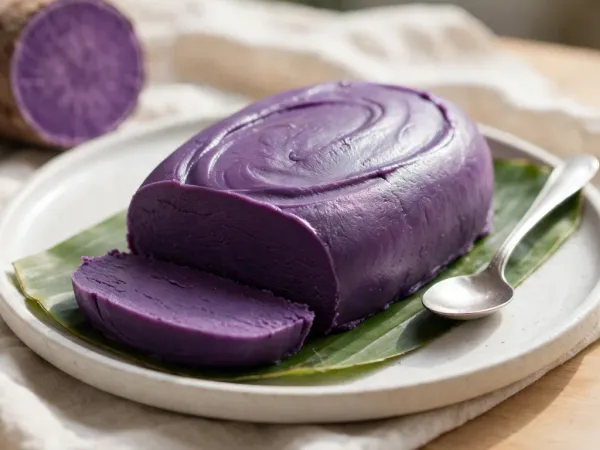
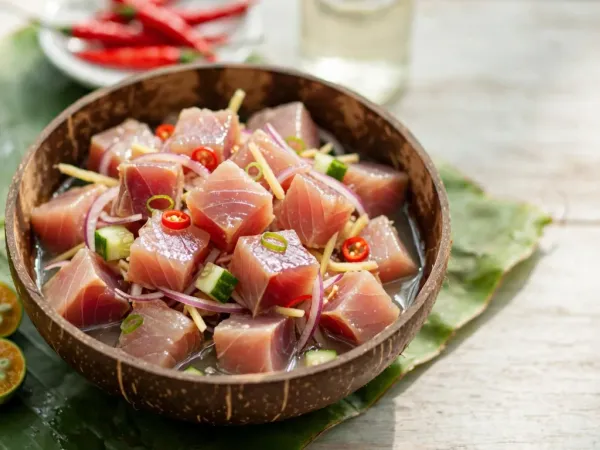
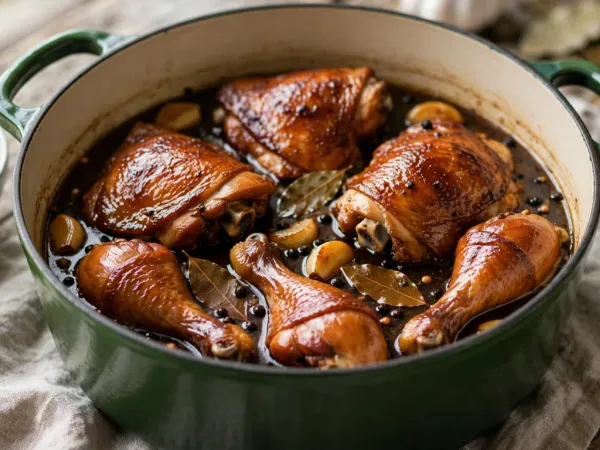
For a Filipino spread, add a slice of ube halaya, the purple yam jam. For a savory meal before it, try chicken adobo, or start with kinilaw, the vinegar-cured fish.
Safety, storing and nutrition
Bake the eggs through
Bibingka is an egg dish, so bake it until a skewer comes out clean. The US Food and Drug Administration says dishes containing eggs should reach 160°F (71°C), in its egg safety advice. An instant-read thermometer in the middle confirms it.
Store it in the fridge
The FDA’s limit for egg dishes at room temperature is 2 hours, cut to 1 hour on days hotter than 90°F (32°C). Some recipes say bibingka keeps at room temperature for days. With egg and cheese on top, it doesn’t.
In a covered box in the fridge, use it up within 4 days. Reheat slices until hot, to 165°F (74°C), in a 325°F (160°C) oven. Fresh grated coconut spoils fast, so chill it and use it within a day or two. You can freeze the cake without its toppings for up to 2 months.
Charcoal stays outdoors
Street vendors bake bibingka over coals, but that method is not for indoors. “Never burn charcoal indoors,” the US Centers for Disease Control and Prevention warns in its carbon monoxide guide. The broiler gives the home version its char.
Allergens
Bibingka contains egg and milk, from the butter and cheese. Coconut is not on the FDA’s list of tree nuts that count as major allergens, since its 2025 labeling guidance. Some people still react to it, so tell your guests. Rice flour has no gluten, glutinous rice flour included. Check the baking powder label if you cook for someone with celiac disease.
Nutrition
A slice has about 525 calories, with 11 g of protein, 28 g of fat, 61 g of carbohydrate and 2 g of fiber. We worked these out from the USDA’s figures for each ingredient. The USDA has no salted duck egg, so a fresh duck egg stands in.
That means the 400 mg of sodium is too low. A salted egg is very salty, so the real figure is higher. Coconut milk and butter give most of the fat.
Fixes for dense, gummy or pale bibingka
- It is dense: the baking powder may be old. Use a fresh tin.
- It is gummy: too much glutinous rice flour, or it is underbaked. Bake it longer next time.
- The toppings sank: they went on too early. Wait until the top is set.
- It is pale on top: broil it for a minute at the end.
- The leaf caught fire: trim tall leaf edges before broiling, and don’t walk away.
- It sticks to the pan: butter the leaf well, and overlap the strips.
Substitutes for missing ingredients
- Banana leaves: parchment paper, buttered. You lose the aroma.
- Glutinous rice flour: more plain rice flour. The cake is a little less chewy.
- Salted duck egg: leave it out, or use a second cheese.
- Kesong puti: cheddar, or a fresh white cheese such as queso fresco.
- Fresh grated coconut: frozen grated coconut, thawed, or unsweetened desiccated coconut.
Frequently asked questions
What goes into bibingka?
Rice flour or soaked ground rice, coconut milk, eggs, sugar and butter, baked in banana leaves. The special version adds salted duck egg and cheese.
Is bibingka gluten-free?
This recipe is, since it uses only rice flours. Some recipes add wheat flour, so check before you serve it to someone with celiac disease.
Why is bibingka eaten at Christmas?
It is sold outside churches during Simbang Gabi, the dawn Masses from December 16 to 24. People eat it after Mass, often with hot chocolate.
Can I make bibingka without banana leaves?
Yes. Line the pan with buttered parchment instead. It bakes the same, without the scent of the leaf.
Can I freeze bibingka?
Yes, plain and without toppings, for up to 2 months. Thaw it in the fridge, then warm it in the oven and add the butter, sugar and coconut.
Tags: rice flourcoconut milksalted eggbanana leafChristmasbreakfastgluten free