The Sunday Potthesundaypot.com/recipes/jiaozi/
Jiaozi: Boiled Chinese Pork and Napa Cabbage Dumplings
By The Sunday Pot Kitchen Updated
- • Make a plain dough of 2 parts flour to 1 part cold water and rest it
- • Salt the napa cabbage and squeeze it dry
- • Beat a little cold water into fatty ground pork until it turns sticky
- • Roll 3-inch (7.5 cm) wrappers and pleat about 48 crescents
- • Boil them, adding cold water three times, until they float and puff
Ingredients
48 dumplingsInstructions
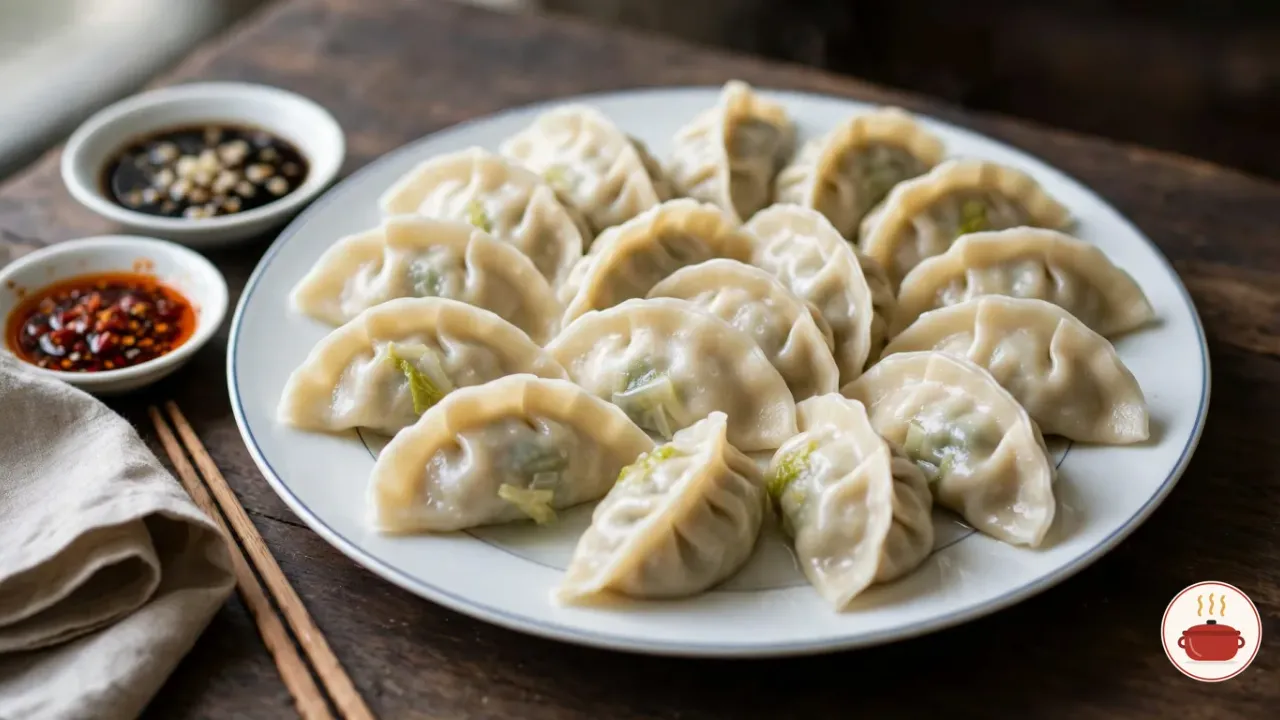
Jiaozi are Chinese boiled dumplings. Thin, hand-rolled wheat wrappers hold a juicy filling of ground pork and napa cabbage, seasoned with ginger, soy sauce and sesame oil. You boil them and dip them in black vinegar. This recipe makes about 48 jiaozi, enough for 4 or 5 people, in 2 hours.
What jiaozi are
Boiled first
In English, “dumplings” covers many things. In China, the everyday kind is boiled. Maggie Zhu makes the point on Omnivore’s Cookbook: “In China, when we talk about dumplings, we’re usually referring to boiled dumplings (or shui jiao, 水饺).
Pan-fried potstickers and steamed dumplings are separate dishes, often made with a different dough. Boiled jiaozi have soft, slightly chewy wrappers and no crisp side.
Pork and napa cabbage
Fillings vary, from pork and chives to lamb and carrot. Pork with napa cabbage is the one most northern families know. Wei Guo of Red House Spice calls it “the most popular variety in Northern China”. There, dumplings are a common weeknight dinner.
Where jiaozi come from
Dumplings in the desert
Archaeologists have found the shape again and again. About 20 dumplings from the Tang dynasty (618-907) have been dug up at the Astana tombs near Turpan, in Xinjiang. They were often in bowls beside the head of the dead, a Xinjiang archaeologist told Xinhua in a 2024 feature carried by People’s Daily. Another expert said they closely resemble today’s in size and shape.
The same feature describes older “dumpling-like” food in a sealed bronze container from a tomb in Shandong, about 2,500 years old. Its filling could no longer be identified, so treat that one with care.
A horn that became a dumpling
Early writers used the word jiaozi 角子, “little horns”. A memoir of the Song dynasty capital, with a preface dated 1147, lists them at an emperor’s birthday banquet. The modern character came later. In 1917, the writer Xu Ke explained in Qing Bai Lei Chao that northerners said “horn” like jiao, so people wrote 餃. Those boiled in water, he added, are shuijiao (our translation).
A coin for luck
The New Year custom is old and well recorded. A Ming palace memoir from the 1620s or 1630s describes court staff eating boiled dumplings before dawn on New Year’s Day. Sometimes “one or two silver coins” were hidden inside, says the Ming Gong Shi. Whoever found one read it as a sign of a lucky year (our translation).
A Qing guide to Beijing’s festivals, the Yanjing Suishi Ji, says rich and poor alike ate dumplings of white flour on New Year’s Day. Wealthy families hid small pieces of gold, silver or gems in them.
A doctor and frozen ears
Northerners have a saying for the winter solstice. Skip your bowl of jiaozi at Dongzhi, it warns, and no one will care if your ears freeze off (our translation). China’s official heritage portal, ihchina.cn, quotes the saying. It links the custom, by “one account”, to the Han doctor Zhang Zhongjing. He is said to have fed ear-shaped dumplings to villagers with frostbite. No Han text records it, so it is a legend.
The same Qing guide shows that customs vary. In old Beijing, people ate wonton at Dongzhi, not jiaozi. Today the jiaozi custom is strong across much of northern China, while the south eats tangyuan.
Why jiaozi are worth making now
A UNESCO decision in China
UNESCO’s committee for intangible cultural heritage will sit in Xiamen, China, between November 30 and December 5, 2026, says the UNESCO session page. China has nominated “Chinese cuisine”, the knowledge and practices behind preparing and enjoying food. UNESCO’s expert evaluation body recommends inscribing it on the Representative List. The committee itself has not voted yet.
The draft decision names New Year’s Eve dinners among the occasions where the food is shared. It does not name dumplings, but in northern China, jiaozi are the New Year’s Eve dish.
Two dumpling days
Dongzhi falls on Tuesday, December 22, 2026, according to the Hong Kong Observatory. The next Lunar New Year arrives on Saturday, February 6, 2027. In much of northern China, both are dumpling nights.
Cheaper filling in China
In October 2026, pork in China cost 8.6% less than a year earlier, and fresh vegetables 16.9% less. China’s statistics bureau released those figures on November 9. CCTV reported from one big market in Liaoning in late October. There, winter storage cabbage wholesaled for 0.25 to 0.30 yuan per jin (500 g), about the same as in 2025. These prices describe China, not your local store.
No one has counted homemade jiaozi in 2026, and none of the 2027 trend reports we checked mention them. Their moment comes from the calendar and the UNESCO vote, not from a fad.
What 26 jiaozi recipes agree on
Our set has 26 recipes. Nine are in Chinese, from mainland and Taiwanese recipe sites. The other 17 are in English, from The Woks of Life, Chinese Cooking Demystified, Red House Spice, SBS, Omnivore’s Cookbook and more. Four Chinese technique articles, from CCTV, People’s Daily and others, filled in the methods.
Dry the cabbage
Napa cabbage is about 94% water, USDA data shows. Seventeen of 25 filling recipes salt it and squeeze it, and 3 more blanch it first. Most salt it for 10 to 15 minutes. “Wring the cabbage harder than you think you need to,” Maggie Zhu advises.
Beat water into the pork
The pork goes in a bowl with soy sauce (21 of 25), ginger (21), sesame oil (19) and Shaoxing wine (15). Seven of our sources name the same rule: stir in one direction until the meat turns sticky. Nine add water, stock or flavored water.
People’s Daily’s health channel calls this “beating” water into the meat. It says to add the water slowly while stirring one way (our translation). The pork soaks it up and stays juicy inside the wrapper. Ten of the 15 recipes that mention fat ask for fatty pork.
A firm, plain dough
The Chinese sources make the wrappers with 2 parts flour to 1 part water by weight. CCTV’s food site puts it simply: 500 g of flour to 250 g of water (our translation). That dough uses cold or room-temperature water. The hot-water doughs in our set came from cooks outside China. Maggie Zhu keeps hot-water dough for steamed dumplings.
Rest the dough until it feels “as soft as an earlobe”, as Chinese cooks say, according to Red House Spice. A 30-minute rest is typical.
Three splashes of cold water
This is the big split. Of the 18 recipes that boil their jiaozi, 9 add cold water each time the pot boils up, and 5 simply set a timer. The cold-water method is called dian shui. “Why add cold water three times? Well, it helps to avoid vigorous boiling,” writes Wei Guo. The wrappers cook evenly and are less likely to tear.
Chinese Cooking Demystified adds about ½ cup of cool water each time. “Traditionally, this is repeated two more times,” the authors write, but with their flour, two rounds were enough. Recipes that use a timer boil them for a median of 7 minutes.
Tips for juicy, unbroken jiaozi
- Squeeze the cabbage hard. Any water left behind ends up in the wrapper.
- Choose fatty pork. Lean pork dries out.
- Keep the meat and cabbage apart until you wrap, as Red House Spice does.
- Roll the edges thin. The pleats fold the edge over on itself.
- Flour the tray. Damp wrappers stick and tear when you lift them.
- Don’t crowd the pot. About 16 at a time leaves them room to tumble.
Serving jiaozi
Serve them straight from the pot on a big shared plate. Give each person a small dish of black vinegar with a little garlic, and pass the chili oil. Red House Spice counts 10 dumplings as a serving.
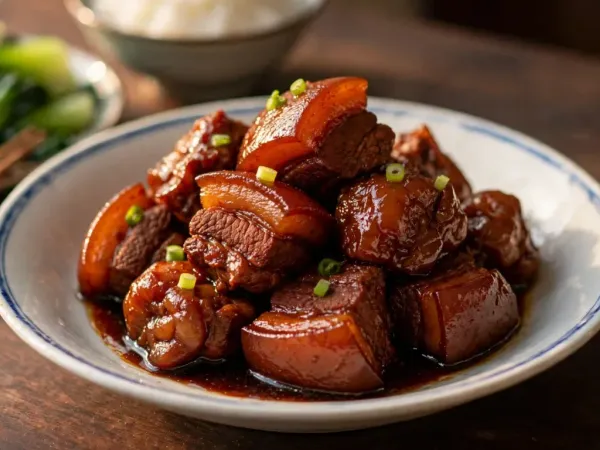
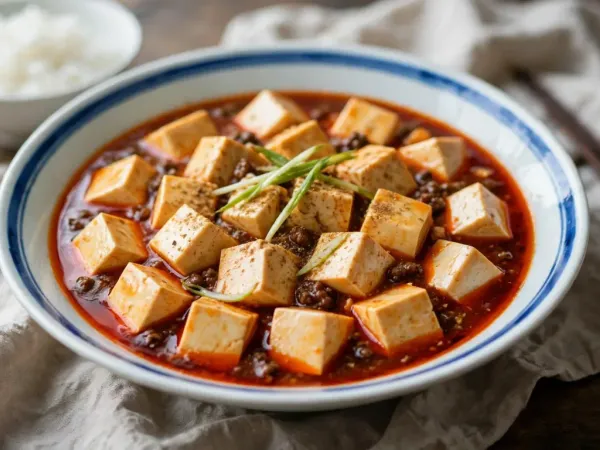
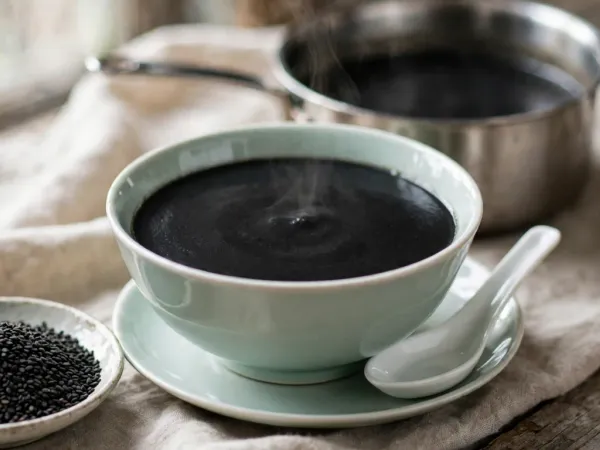
For a bigger spread, add a bowl of Sichuan mapo tofu or red-braised hong shao rou. For something sweet afterwards, try warm black sesame soup.
Safety, freezing and nutrition
Cook the pork through
Ground pork is safe at 160°F (71°C), according to the USDA’s chart of safe cooking temperatures. Floating is not proof. The CDC says a thermometer is the only way to know, so check the first dumpling of each batch.
Raw pork juice gets onto the board and the tray. Wash them in hot, soapy water, and don’t put cooked dumplings back on the same tray.
Freezing
“Just about every Chinese family will have a freezer stocked with homemade dumplings,” says the Australian cook Adam Liaw. Spread them out on a floured tray, freeze them solid, then bag them. All 14 recipes that give a method do it this way. Boil them still frozen, without thawing. The USDA notes that frozen meat takes about one and a half times as long to cook, says its freezing guide.
Boiling water
A big pot of boiling water is the main hazard here. Lower the dumplings in from a plate held close to the water, and pour the cold water in at the side. For a scald, MedlinePlus says to keep the burn under cool water for at least 5 to 30 minutes, and never to use ice, butter or oil.
Allergens and salt
The wrappers are wheat, the soy sauce is brewed from soybeans and, usually, wheat, and the oil is pressed from sesame. All three are major allergens, the FDA says. Chinkiang vinegar is brewed with wheat bran, so the dip contains wheat too. Ten dumplings carry about 560 mg of sodium before any dipping sauce.
Leftovers
Chill cooked jiaozi within two hours. They keep for 3 to 4 days in the fridge, says the USDA. Reheat them until steaming hot, or pan-fry them in a little oil until the bottoms crisp.
Nutrition
Ten dumplings come to about 545 calories, with 23 g of protein, 21 g of fat and 65 g of carbohydrate. We added these up ourselves from USDA nutrient figures for ground pork, napa cabbage, flour and soy sauce. They leave out the dip and the salt you squeeze away with the cabbage water.
Fixes for soggy, burst or tough jiaozi
- The filling is watery: squeeze the cabbage harder, and mix it into the meat only at the last moment.
- They burst in the pot: the water boiled too hard, or the seams were weak. Add the cold water sooner, and press the edges firmly.
- The wrappers are tough: the dough was too dry, or the edges too thick. Add a spoonful more water next time and roll the edges thinner.
- They stick to the tray: use more flour, or freeze them sooner.
- They stick together in the pot: stir gently right after they go in.
- The filling is crumbly: stir the pork longer, and add the water more slowly.
Substitutes for missing ingredients
- Napa cabbage: green cabbage, chopped very fine, salted and squeezed the same way.
- Shaoxing wine: dry sherry, or leave it out.
- Fatty pork: lean pork with an extra tablespoon of oil beaten in.
- Homemade wrappers: round store-bought dumpling wrappers. Wet the edges with water so they seal.
- Black vinegar: rice vinegar with a few drops of soy sauce.
Frequently asked questions
Are jiaozi the same as potstickers?
No. Potstickers are pan-fried until the bottoms turn crisp. Jiaozi are boiled.
Where does the name jiaozi come from?
From an old word for “little horns”, a nod to the shape. Boiled ones are shuijiao, water dumplings.
Why do you add cold water while they boil?
It calms the boil, so the wrappers cook evenly and don’t split while the filling cooks through.
Can I make jiaozi ahead?
Yes. Freeze them uncooked, then boil them frozen.
How many jiaozi make a serving?
About 10 for most adults as a main meal.
When do Chinese families eat jiaozi?
On Lunar New Year’s Eve and, across much of the north, at the winter solstice. Many families eat them on ordinary nights too.
Tags: porknapa cabbagedumplingsLunar New Yearwinter solsticefreezer friendly