The Sunday Potthesundaypot.com/recipes/rawon/
Rawon: East Javanese Black Beef Soup with Keluak Nuts
By The Sunday Pot Kitchen Updated
- • Rawon gets its black color and earthy taste from keluak, a processed nut, not from soy sauce
- • Taste every keluak before it goes in, and throw away any that is bitter, sour or moldy
- • Fry the spice paste for 10 to 12 minutes, until the oil separates, before it meets the broth
- • Simmer brisket or shin for about 2 hours in all; the soup tastes better the next day
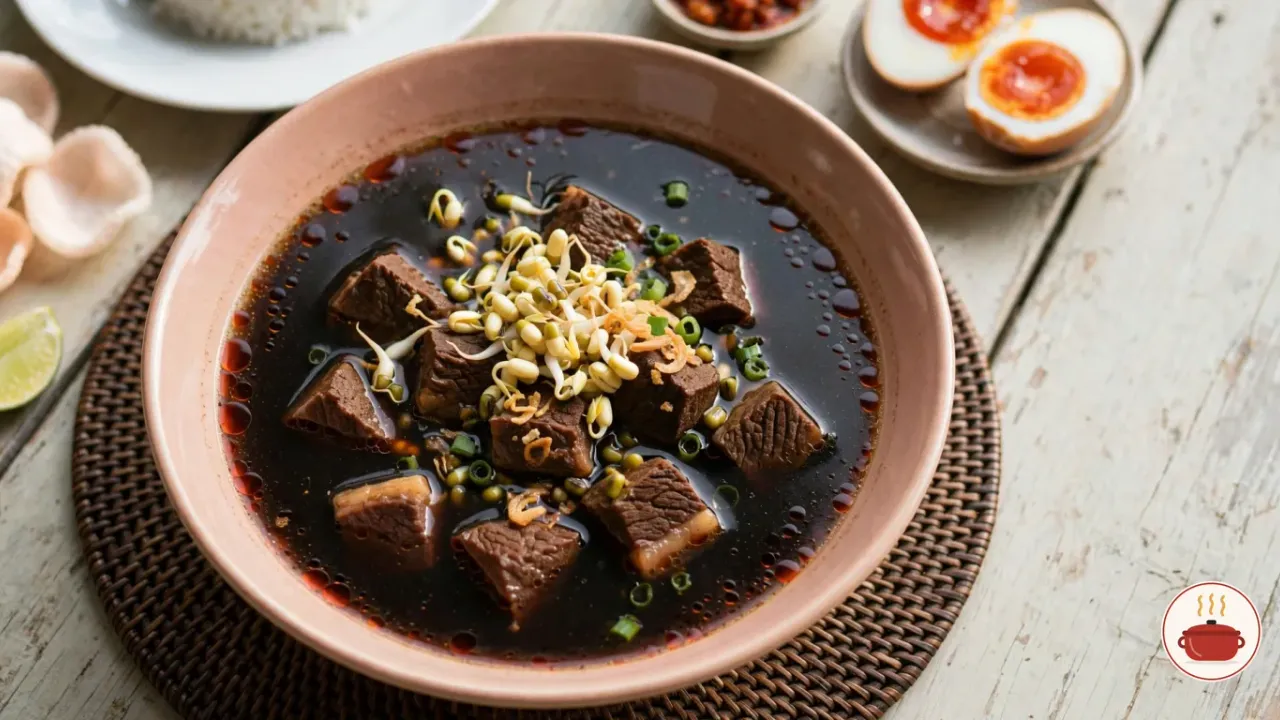
- • Serve over rice with short bean sprouts, salted duck egg, sambal and prawn crackers
Ingredients
6 servingsInstructions
Rawon is the black beef soup of East Java, Indonesia: beef brisket or shin simmered in a broth colored near black by keluak nuts and a fried paste of shallots, garlic, candlenuts and turmeric. It tastes earthy, savory and gently sour. Allow about 2½ hours for 6 bowls, served with rice, bean sprouts and salted egg.
What rawon is
A soup, not a stew
Rawon looks dark enough to be a gravy, but it is a thin, generous broth. The beef sits in plenty of liquid, and the fried spice paste gives it body without any coconut milk. Pieces of lemongrass, lime leaf and galangal perfume it. In Indonesia it is almost always eaten with rice, often poured straight over it as nasi rawon.
The keluak nut
The color comes from keluak, called kluwek or kluwak in Indonesian. It is the seed of a tall tree, Pangium edule. Fresh, the seeds are toxic. After boiling and weeks of fermenting in ash, the kernel turns into a soft, oily, jet-black paste with a nutty, earthy taste.
The black does not come from soy sauce, as some cooks assume. “Keluwak gives the dish its distinctive black color and nutty flavor,” writes Nunuk Sri Rahayu of Cook Me Indonesian. She calls it “absolutely essential to every rawon recipe”.
A recipe older than its black color
The 1845 Batavia cookbook
The oldest printed rawon recipe we could read is in an Indonesian-language cookbook printed in Batavia, now Jakarta. It is the third edition of Kitab masak masakan India, dated 1845, and a scan is on Wikimedia Commons.
Its “Rarawon”, on page 26, boils small pieces of meat with salam leaves and lemongrass. The paste has charred turmeric, a little ginger, chili, shrimp paste and shallots, and tamarind water finishes it. There is no keluak at all, although the same book has a separate keluak dish.
Kokki Bitja and the beef or buffalo
The famous Batavia cookbook Kokki Bitja, in an edition whose preface is dated 1859, prints four rarawon recipes. Its text is transcribed on Indonesian Wikisource. None uses keluak, and two call for “sampi atau karbo”: beef or water buffalo.
The food technologist Abdullah Muzi Marpaung surveyed 17 rawon recipes in 12 cookbooks from 1850 to 1940. Seven have no keluak, he wrote in a column for detik, and the old recipes that use it most often take just two nuts. Rawon without keluak still exists in parts of East Java and Madura, he notes.
Rawon in the street, by 1876
Digitized Dutch colonial newspapers show rawon as everyday street food. In April 1876, a writer in De Locomotief of Semarang mocked young clerks who knew nothing but “roedjak en nassi rawon”. In 1887, a Batavia report described a woman who “sold nasi rawon”, sometimes on credit.
The 10th-century claim
Many articles say rawon dates to a Javanese inscription of 901. We could not find a scholarly edition that shows it. P. J. Zoetmulder’s Old Javanese dictionary does define rarawwan as “a certain kind of meat dish”, quoting a later poem, the Bhomakāwya. So an old meat dish of that name existed, but the 901 date remains unproven.
Why rawon belongs on a cold-weather table
Beef costs more in Indonesia this year
Beef has been expensive in Indonesia in 2026. The national average reached Rp 143,601 a kilo by July 22, 2.57% above the government’s reference price of Rp 140,000. Kontan reported the National Food Agency’s figures, with an official blaming the weak rupiah for dearer imports. Rawon stretches a little beef into a big pot of soup.
Beef is back in the 2027 forecasts
In the United States, beef is the “darling” of the fastest-growing natural food category. The editors of New Hope Network, the organizers of Expo West, wrote this on October 21. They cite a projected 10.9% growth in 2026 for meat, fish and poultry sold through natural and organic stores, an estimate from Nutrition Business Journal. It is a US retail figure and says nothing about Indonesian food. But a slow beef soup with a story fits that mood.
From top of the list to 37th
Rawon once led TasteAtlas’s reader-rated list of the world’s soups. CNN Indonesia reported its first-place finish in July 2023. By April 15, 2026, it had slipped to 37th, Kompas found. Lists rise and fall, and the soup has not changed.
What nobody has measured
There is no 2026 sales, menu or search figure for rawon itself that we could find, and no data on keluak prices. The news is about beef, forecasts and rankings, not the soup.
How 27 cooks make rawon
Twenty-seven rawon recipes went into our comparison, 17 of them in Indonesian. They come from Kompas, detikFood, Sajian Sedap, Primarasa, Cookpad Indonesia, the chef Devina Hermawan, Unilever’s Indonesian kitchens and Indonesian cooks writing in English. The quantities below are medians per 500 g of beef.
The keluak count
Most recipes, 15 of 27, use exactly 5 keluak nuts, and the median is also 5. The range runs from 2 to 10. One blogger adapting the cookbook author Sisca Soewitomo cut her 15 nuts to 5 to keep the soup less black and thick. This recipe uses 7 for 750 g of beef.
The spice paste
The median paste holds 8 shallots, 5 garlic cloves and 4 candlenuts. Turmeric is in 22 recipes, and several char it first, as the 1845 book did. Coriander seed is in 20, ginger in 16. Chili goes into the pot in 14; the rest keep the heat for the sambal.
Lemongrass, lime leaf and galangal
Lemongrass is in 26 recipes, makrut lime leaf in 25 and galangal in 23. Most bruise the galangal and drop it in whole. Tamarind appears in 13 and salam leaves in 10.
Brisket or shin
Brisket, sandung lamur, is the most named cut, then shin, sengkel. “The beef usually used for rawon is shin and brisket,” says a Kompas recipe from Surabaya (our translation). Brisket also went into the rawon served as the main course at the gala dinner of the 2023 ASEAN Summit in Jakarta, Kompas reported. The median is 1.5 liters of water for 500 g of beef.
Two methods
Eleven recipes boil the beef first, then stir in the fried paste. Ten fry the raw beef in the paste and then add water. Both are Indonesian, and neither is the one true way. Boiling first gives a cleaner broth, so this recipe does that.
What goes on top
Of the 26 recipes that list toppings, 24 use short bean sprouts and 22 use sambal, usually with shrimp paste. Salted duck egg appears in 18, prawn crackers in 16 and fried shallots in 12.
Getting a deep, dark broth
- Buy good keluak. IPB University’s Professor Nuri Andarwulan suggests shaking it: the kernel should rattle loose. Good flesh is glossy jet black, and a cracked shell means a rancid nut.
- Taste every nut. One bitter keluak can spoil the pot.
- Char the turmeric. It adds a smoky edge, the way the oldest recipe does it.
- Cook the paste until oil seeps out at the edges. Raw shallot and garlic taste harsh in the broth.
- Simmer gently. A rolling boil makes the beef stringy and the broth cloudy.
- Cook it the day before. Several Indonesian recipes say rawon tastes richer once it has rested overnight.
Regional rawon
- Surabaya: the best-known city for rawon. Its famous Rawon Setan, “devil’s rawon”, is usually said to be named for its late-night hours.
- Nguling, Pasuruan: Rawon Nguling began in 1942, when Haji Abdulloh opened Depot Lumayan, Good News From Indonesia reports. Its broth is thicker, made with brisket.
- Without keluak: a brown rawon survives in Lumajang and on Madura, closer to the 1845 recipe.
- Oxtail rawon: rawon buntut swaps the brisket for oxtail. The Jakarta Post printed a hotel chef’s version, calling keluak’s flavor the dish’s “irreplaceable signature”.
Serving rawon
Serve rawon with steamed white rice, either in the bowl or on the side. Don’t skip the toppings: crisp bean sprouts, a salted duck egg with its orange yolk, a spoon of sambal, and prawn crackers to crunch. A squeeze of lime brightens the broth.
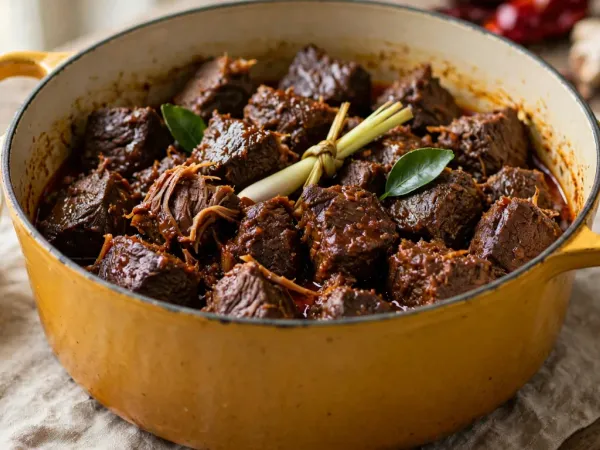
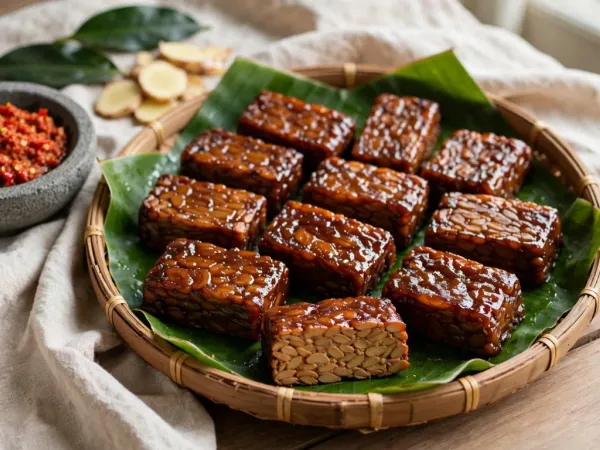
For more Indonesian cooking, try a slow beef rendang or sweet tempe bacem as a side. For another bowl of Southeast Asian soup, there is Thailand’s sour, spicy tom yum kung.
Safety, storage and nutrition
Keluak is toxic until processed
Every part of Pangium edule contains gynocardin, a compound that releases hydrogen cyanide, the PROSEA plant handbook explains. Processors boil the seeds and bury them in ash for about 40 days, IPB University researchers write in a peer-reviewed study.
Only ever cook with keluak sold processed: black nuts in a hard shell, or a ready paste. Never use fresh seeds. Andarwulan warns that badly processed keluak tastes bitter, and that the fruit can kill if eaten fresh, as she told Kompas. Soaking in hot water only softens the flesh; it does not make a bad nut safe.
Bean sprouts
Rawon’s sprouts are often eaten raw. People at higher risk of food poisoning should avoid raw or lightly cooked sprouts, mung beans included, the FDA says. That means young children, pregnant women, older people and anyone whose immune system is weakened. Scald them for 1 minute, as in step 6, or cook them longer for those groups.
Leftovers
Cool the soup fast in shallow containers, and have it in the fridge inside 2 hours. American guidance gives cooked leftovers 3 to 4 days, as the USDA’s leftovers guide says. The UK’s Food Standards Agency advises eating leftovers within two days or freezing them. Bring the soup back to a full boil before serving.
Allergens
The shrimp paste and prawn crackers contain crustacean shellfish, and salted duck eggs are egg. Candlenuts are tree seeds; if you have a nut allergy, ask your doctor before eating them. Leave out the shrimp paste and crackers, or use emping (melinjo crackers), for a shellfish-free bowl.
Nutrition
Each of the 6 bowls of soup and beef comes to roughly 480 calories, with 26 g of protein and 37 g of fat; carbs come to 13 g. Our estimate sums USDA FoodData Central figures for brisket, shallots, garlic, oil, sugar and spices, with macadamia standing in for candlenut. Rice, eggs and crackers are extra. Lifting the set fat off the chilled soup makes each bowl leaner.
Fixes for rawon that is bitter, pale or thin
- It tastes bitter: a bad keluak slipped in. Stir in a little more tamarind and a pinch of sugar, and taste every nut next time.
- It is brown, not black: you used too few nuts or a young keluak. Fry 2 or 3 more into the paste and simmer it in.
- It tastes raw or harsh: the paste needed more time in the wok. Next time, keep frying until it darkens and oil pools around it.
- It is thin and bland: simmer it uncovered to reduce, then add salt and a pinch of sugar.
- The beef is tough: keep simmering gently. Shin can need 2½ hours.
- There is a layer of oil on top: skim it with a wide spoon, or refrigerate the pot and scrape off the set fat.
Substitutes for missing ingredients
- Keluak nuts: a packet of keluak paste, used as the pack directs; without keluak you get a brown rawon, like the old recipes.
- Candlenuts: macadamia nuts.
- Fresh turmeric: ½ teaspoon ground turmeric, added to the paste as it fries.
- Galangal: frozen galangal; fresh ginger is a weak stand-in.
- Salam leaves: leave them out; bay leaves taste different.
- Brisket: beef shin, chuck or oxtail, simmered until tender.
- Salted duck eggs: boiled eggs.
Frequently asked questions
What makes rawon black?
Keluak nuts, the fermented seeds of Pangium edule. Fried with the spice paste, they color the broth near black. It is not soy sauce.
What does rawon taste like?
Earthy, nutty and savory, scented with lemongrass and lime leaf, with a gentle sourness from tamarind.
Is keluak poisonous?
Fresh seeds are. The keluak sold in shops has been boiled and fermented for weeks, which makes it safe. Throw away any nut that tastes bitter.
Where can I buy keluak?
At Indonesian, Malaysian and Singaporean grocery stores, and online, either as whole nuts or as paste.
How is rawon served?
Over or beside steamed rice, with short bean sprouts, a salted duck egg, sambal, prawn crackers, fried shallots and lime.
Can I make rawon in a pressure cooker?
Yes. Fry the paste first, then cook it with the beef and water at high pressure for 45 to 60 minutes.
How is rawon different from beef rendang?
Rendang is a dry, rich curry cooked down in coconut milk. Rawon is a thin soup with no coconut milk, colored by keluak.