The Sunday Potthesundaypot.com/recipes/labneh/
Labneh: How to Make Lebanese Strained Yogurt at Home
By The Sunday Pot Kitchen Updated
- • Two pounds (900 g) of whole-milk yogurt and ½ teaspoon of salt make about 1½ cups (350 to 400 g) of labneh
- • Use yogurt with no gelatin, pectin or starch, or it will not drain
- • Strain it in the fridge: 24 hours for a spread, 48 hours for labneh balls
- • Whisk in a splash of cold water if the outside turns dry and lumpy
- • Keep it in the fridge for up to 1 week, 2 at the most
- • Store labneh balls in the fridge, covered in olive oil, with no garlic or fresh herbs in the jar
Ingredients
6 servingsInstructions
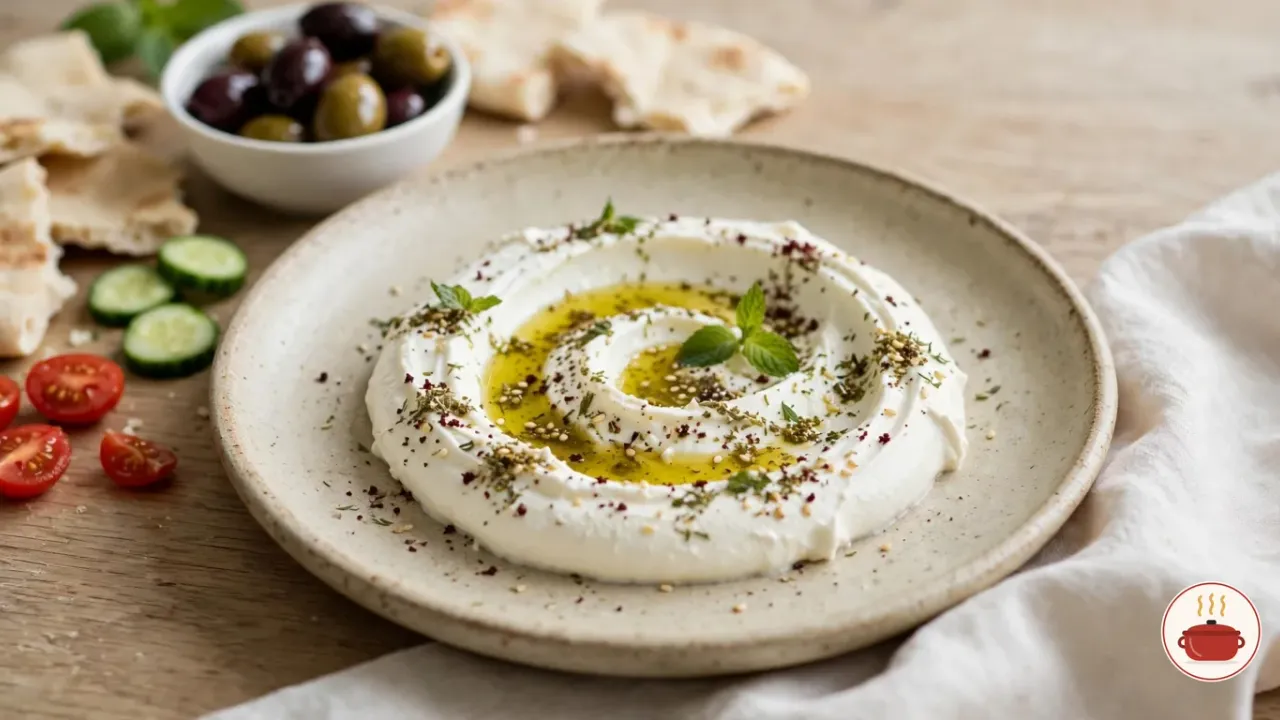
Labneh is Lebanese strained yogurt: plain yogurt, lightly salted and drained in cloth until it is as thick as cream cheese. Spread it on a plate, fill the swirl with olive oil and scatter za’atar over it. Two pounds of yogurt make about 1½ cups, after 24 hours in the fridge and 10 minutes of work.
What labneh is
Labneh is yogurt with most of its whey drained away. It is tangy, creamy and thick enough to spread. The word comes from the Arabic laban, milk, Jerusalem Story explains, and in everyday Levantine Arabic laban means yogurt.
The world’s food standards body files it with Greek strained yogurt. The Codex Alimentarius standard for fermented milks names labneh as a concentrated fermented milk, with at least 5.6% protein. Plain yogurt has about 3.5%.
At the Lebanese breakfast table
Labneh “holds a central place in the Lebanese diet”, researchers at the American University of Beirut write in a 2025 review of Lebanese dairy. People eat it at breakfast or in a mezze spread, with olive oil and herbs.
The Lebanese Food Heritage Foundation lists labneh among the cheeses on a typical breakfast table, next to akkawi and olives. Maureen Abood, a Lebanese-American cook, remembers her grandmother eating it every morning, spread on buttered toast.
Labneh balls and the mouneh pantry
Roll very thick labneh into balls, cover them in olive oil, and you have labneh makbouseh. In the mountains of the Chouf and the Bekaa Valley, families traditionally made it at the end of the spring milking season. It kept the extra milk, the Beirut review notes.
It belongs to mouneh, Lebanon’s tradition of preserved food. In July 2026, an AP story on Anissa Helou’s new book about Lebanese food described mouneh. It is food kept by “sun-drying, salting, pickling or submerging in olive oil”.
How old is it?
No one has dated labneh itself. Straining milk curds is very old, though. Pottery sieves from the sixth millennium BC, found in Poland, carry traces of milk fat, a team reported in Nature. They are among the oldest known cheese strainers.
Why labneh is having a moment
We found no sales or menu figure for labneh from 2026. The signs are trend lists, shop shelves and restaurant menus.
On 7 October 2026, the agency MorganMyers named labneh one of the top 10 flavors to watch in 2027, next to chili crisp, sumac and black garlic. It gave no figure for labneh. In August, the research firm Technomic predicted that more restaurants will serve labneh by 2028, Nation’s Restaurant News reported. Technomic called it “low-fat”, which traditional labneh is not.
Chefs are using it in new ways. In July 2026, Flavor & The Menu described a rotating “Labneh Set” at Shukette in New York, with strawberries, pickled fennel and sumac. At Reem’s in San Francisco, labneh comes with a six-minute egg and chile morita.
It is also on more shop shelves. On 1 October 2026, the brand Yaza put its labneh in all 500 Sprouts Farmers Market stores in the US, at $6.99, it said in a press release. “Labneh is the food I grew up with, and for a lot of shoppers it’s still unfamiliar,” said its founder, Karim Khalil.
What you need for labneh
Plain whole-milk yogurt
Use plain whole-milk yogurt with nothing in it but milk and cultures. “Avoid stabilizers if making yogurt cheese,” Washington State University Extension advises, because they stop the whey from separating. Gelatin does the same, the National Center for Home Food Preservation warns.
Many shop-bought labnehs are thickened too. In a 2024 survey of the UAE market, about 60% to 70% of labneh products declared preservatives, stabilizers or processing aids (Foods).
Full fat matters. When 73 tasters in Beirut rated 17 commercial labnehs, from full fat to zero fat, acceptability “clearly decreased as fat level decreased” (Journal of Dairy Science). In Lebanon, cooks often use goat’s milk yogurt, Abood notes. It works the same way.
Greek yogurt works too. It is already partly strained, so it thickens sooner: check it after 8 hours.
Salt
Salt is for flavor. The yogurt drains without it, notes Suzy Karadsheh of The Mediterranean Dish. The recipes we compared use about 3 g per kg of yogurt, or ½ teaspoon of fine salt for 2 lb (900 g).
A cloth
Cheesecloth is cheap but loosely woven. Sawsan Abu Farha of Chef in Disguise says the wide-weave kind is useless unless you fold it “4 or 8 times”. A thin cotton tea towel, muslin or a clean handkerchief works well. Avoid terry towels.
Za’atar and olive oil
Za’atar is both a wild herb and a blend. The herb is “from the oregano family” and “not thyme at all”, the Palestinian cook Reem Kassis told NPR. The blend mixes it with sumac, sesame seeds and salt. A 2020 Codex standard for the Near East caps the salt in mixed za’atar at 4%.
Sumac is the dried, crushed berry of Rhus coriaria, sour and red. Poison sumac is a different plant in a different genus, Toxicodendron, as Penn State Extension explains. Use a fruity extra-virgin olive oil: you will taste it.
How to make labneh in the fridge
We compared 16 published labneh recipes, 9 of them by cooks of Lebanese, Palestinian or Syrian birth or heritage. Most hang the yogurt in cloth. They split on one big question: where it strains.
Room temperature or fridge?
Thirteen of the 16 allow the yogurt to drain at room temperature, as Lebanese cooks often do. Abood says it adds to the fermented flavor. Several move it to the fridge in hot weather.
We strain in the fridge. The USDA says never to leave perishable food out of the fridge for more than 2 hours. Labneh also spoils faster when warm. In a study at the American University of Beirut, it kept 8.5 to 10.5 days at 41°F (5°C). At 77°F (25°C), it lasted only 2.3 to 2.7 days (Journal of Dairy Science). Washington State’s extension method strains it in the fridge for 8 to 24 hours.
How long to strain
Time sets the texture. Iman of Simply Lebanese finds 8 hours “still very creamy” and 12 hours “so thick, tangy”. Yumna Jawad of Feel Good Foodie gets a creamy spread after 24 hours and a texture “similar to cream cheese” after 48.
The recipes run from 3 to 72 hours, and the middle of the range is 12 to 24 hours, mostly at room temperature. The fridge slows things down, so give it 24 hours for a spread and 48 for a firm labneh or balls.
How much you get
Expect a third to a half of the yogurt’s weight. Five recipes give a yield, with a middle value of 38%. BBC Good Food gets about 300 g from 900 g; Feel Good Foodie gets 16 oz from 32 oz.
Lumps and dry edges
The layer against the cloth dries first and can turn lumpy. Abood whisks it smooth with a splash of cold water. Stir the labneh well when you unwrap it.
What to do with the whey
The whey is mostly water and milk sugar. In one study, whey from Greek yogurt held almost no true protein, just 0.02% (Journal of Dairy Science). Karadsheh uses it to marinate chicken, or in place of water in pita dough. Abu Farha bakes with it. It is salty if you salted the yogurt.
Labneh balls in olive oil
For labneh makbouseh, strain the yogurt for 48 hours in the fridge, until it is very firm. Roll it into balls of about 1 tablespoon each, with lightly oiled hands. Set them on paper towels on a tray and chill them, uncovered, for 12 to 24 hours to dry the outside.
Pack the balls into a clean jar and cover them with olive oil by at least 1 inch (2.5 cm). Keep the jar in the fridge. The oil turns cloudy and thick when cold, so take it out 20 to 30 minutes before serving. Roll the balls in za’atar, dried mint or Aleppo pepper when you serve them.
Fridge or pantry?
Lebanese pantries have long kept these jars at room temperature for months. The recipes split: 5 of 10 keep the jar in the fridge, and 4 in the pantry. On two recipe sites, readers reported mold on jars kept out of the fridge. Abood’s answer to one of them: keep the jar in the fridge.
Labneh itself is acidic, around pH 4.1, according to the Beirut review. That is below pH 4.6, where the botulism germ stops growing, as Colorado State University Extension explains. The risk comes from what people add to the oil. Oregon State University Extension says oil flavored with garlic or herbs, fresh or dried, must be refrigerated and used within 4 days. So keep garlic and herbs out of the jar.
The recipes that refrigerate keep the balls from 2 weeks to a year. We would eat them within a month. Throw out any ball with fuzz or pink spots.
Serving and storing labneh
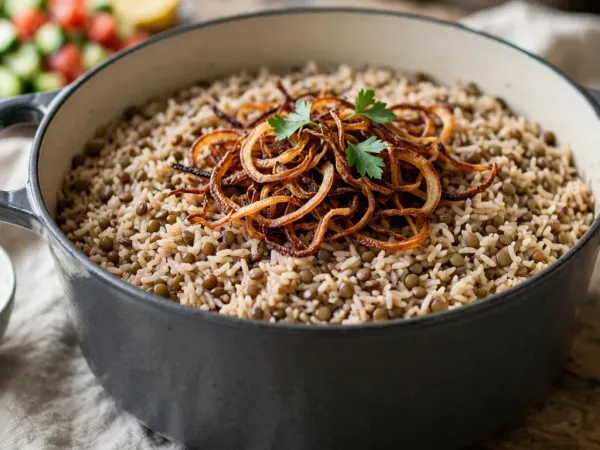
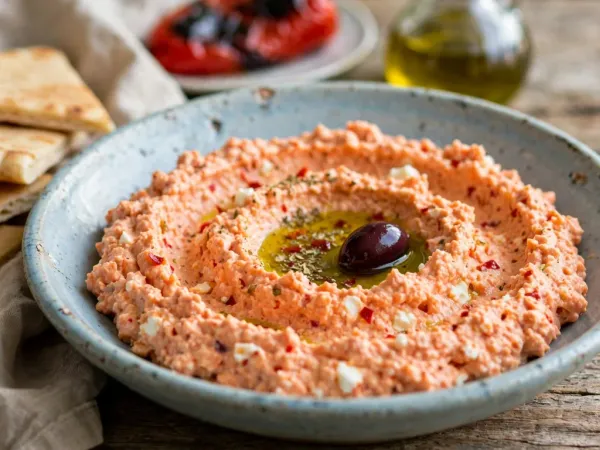
For breakfast, serve labneh with olive oil, za’atar or dried mint, warm pita, cucumbers, tomatoes and olives. In a mezze spread, it sits well beside hummus. It is also a cool, tangy partner for rich, spiced food. Try a spoonful with Lebanese mujadara in place of plain yogurt, or with Greek lamb kleftiko.
Keeping it
Fresh labneh keeps about 7 to 14 days in the fridge, the National Center for Home Food Preservation says. The Beirut study above found 8.5 to 10.5 days at 41°F (5°C). Keep it covered, use a clean spoon, and aim to finish it within 1 week. Throw it out if it smells off or shows mold.
The recipes disagree on freezing. Yosra of Zaatar and Zaytoun freezes hers. Hilda Sterner of Hilda’s Kitchen Blog says it separates.
Use pasteurized milk
If you make your own yogurt, start with pasteurized milk. Raw milk products can carry germs such as Listeria, E. coli and Salmonella, the CDC warns.
Calories and protein
One serving, about ¼ cup (60 g) of labneh with 1½ teaspoons of olive oil, has about 140 calories, 5 g of protein, 12 g of fat and 4 g of carbohydrate. These are estimates from USDA figures for whole-milk yogurt and olive oil, without the bread. Fresh Lebanese labneh holds about 9.4% fat and 7.7% protein, by the Beirut review’s figures.
Straining roughly doubles the protein and fat in each spoonful, because mostly water leaves. Calcium does not keep pace. USDA figures give whole-milk Greek yogurt 100 mg of calcium per 100 g, against 121 mg for plain yogurt.
Allergens
Labneh is a milk product, and za’atar holds sesame. Both are on the FDA’s list of major food allergens.
Fixes for labneh that won’t drain, turns lumpy or tastes too sour
- It will not drain: the yogurt has gelatin, pectin or starch. Start again with yogurt that lists only milk and cultures.
- Yogurt seeps through the cloth: the cloth is too loose. Fold the cheesecloth into more layers, or use a cotton towel.
- It is too thin: strain it longer, up to 48 hours in the fridge.
- It is too thick or dry: stir in a little of the whey or some cold water.
- It is lumpy: whisk it hard with a splash of cold water.
- It is chalky or bland: the yogurt was low-fat. Use whole milk.
- It is too sour: strain it for less time, and keep it cold. Tang also varies by brand, so try another yogurt.
- It has pink or fuzzy spots: that is mold. Throw it out.
Substitutes for missing ingredients
- Whole-milk yogurt: goat’s milk yogurt, or whole-milk Greek yogurt, checked after 8 hours.
- Cheesecloth: a thin cotton tea towel, muslin, a handkerchief, coffee filters or unscented paper towels.
- Za’atar: mix 2 parts dried thyme, 1 part sumac and ½ part toasted sesame seeds, with salt to taste. That is Helou’s mother’s ratio, from her za’atar page.
- Sumac: a little finely grated lemon zest.
- Fresh mint: crushed dried mint, as Abood uses.
- Dairy-free: a plain coconut or soy yogurt thickened with starch rather than gums, as Alexandra Daum of Occasionally Eggs suggests. Strain it in the fridge for 24 to 36 hours and eat it within a few days.
Frequently asked questions
What is labneh made of?
Plain yogurt and a little salt. Straining removes most of the whey, which leaves a thick, tangy spread.
Is labneh the same as Greek yogurt?
They are cousins. Both are strained yogurts, and Codex files them together. Labneh is strained further, so it is thicker, and it is salted.
Is labneh a cheese?
It is often called yogurt cheese, and it spreads like cream cheese. Food standards class it as a concentrated fermented milk, like strained yogurt.
Can I strain labneh at room temperature?
Many Lebanese cooks do. We recommend the fridge: the USDA advises against leaving perishable food out for more than 2 hours, and labneh spoils far faster when warm.
How long does labneh last?
About 1 week in a covered container in the fridge, 2 at the most. Labneh balls covered in oil keep longer in the fridge.
Can I make labneh with Greek yogurt?
Yes. Use whole-milk Greek yogurt with no thickeners, strain it in the fridge, and check it after 8 hours.
What do you eat with labneh?
Olive oil, za’atar or mint, with warm pita, cucumbers, tomatoes and olives. It also works as a dip, a spread for sandwiches, or a cool side for spiced dishes.
Is labneh low-fat?
No. Traditional labneh made from whole milk has about 9% fat. Low-fat versions exist, but tasters liked them less.