The Sunday Potthesundaypot.com/recipes/chin-chin/
Chin Chin: Nigeria's Crunchy Christmas Snack, Made Ahead
By The Sunday Pot Kitchen Updated
- • Fry from November 27 for a batch that stays within four weeks by Christmas Day
- • Egg, baking powder, liquid and thickness set the crunch more clearly than fat does
- • Fry at 350°F (175°C) in one loose layer, for 3 to 4 minutes
- • Judge the texture only after cooling, since the pieces harden as they cool
- • Seal when fully cold and discard any that smell stale
Ingredients
28 small servingsInstructions
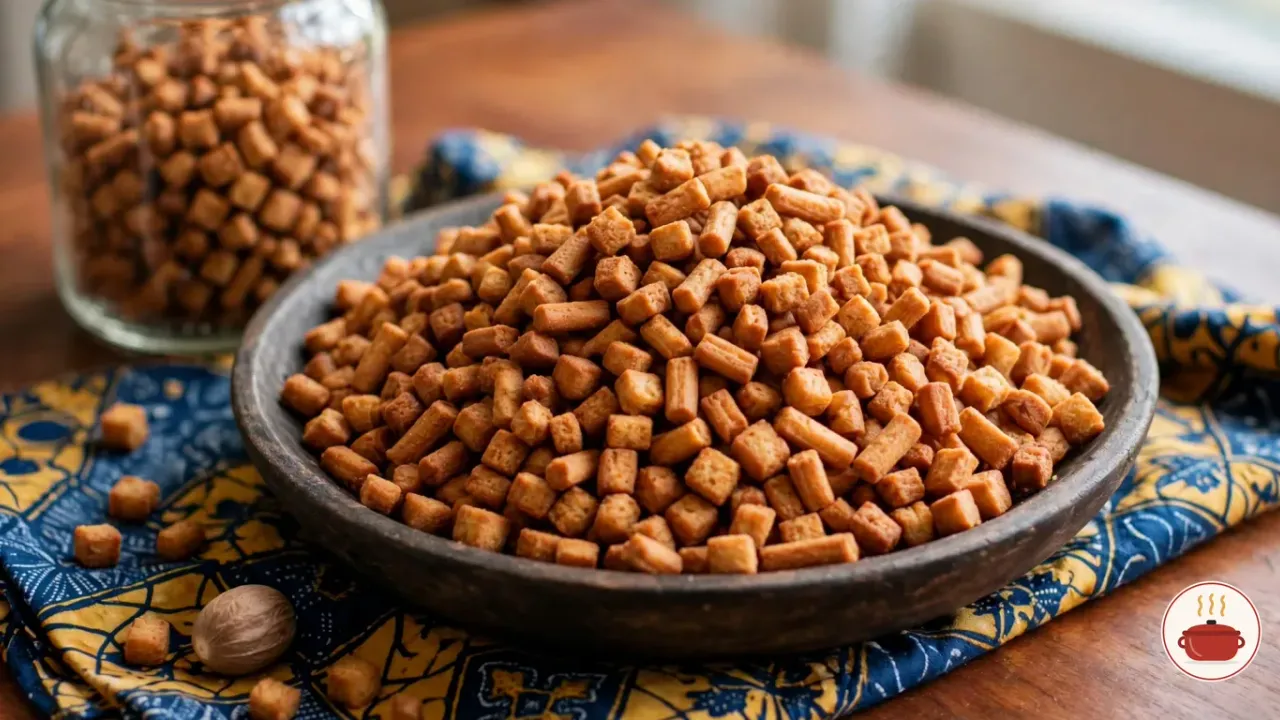
Chin chin is Nigeria’s crunchy fried-dough Christmas snack, and it is one you can make early. Two 2026 lab studies kept it for four weeks, so a batch fried on November 27 can last until December 25. We compared 21 recipes to build this one, which makes about 1¾ lb (800 g).
How early can you fry chin chin for Christmas?
Cooks don’t agree. Of the 21 recipes we compared, eight give a keeping time, and the answers run from two weeks to several months:
- Two weeks at room temperature: Ozoz Sokoh’s recipe for The Kitchn, which allows 4 weeks in the fridge and 3 months in the freezer.
- About a month: African Bites and Evi Aki’s recipe on Tara’s Multicultural Table.
- “Several months”: Cooking With Claudy, with no test behind the claim.
Two studies published this year offer firmer ground. In January, a paper from Nigeria’s National Centre for Agricultural Mechanization followed chin chin fried in groundnut (peanut) oil and stored at 26°C (79°F). After four weeks, its moisture had barely moved, at 4.7 to 4.9%.
Its peroxide value, a measure of early rancidity, held near 3.8 mEq/kg. The authors treat anything under 5 as safe and anything over 10 as rancid. A 25-person panel scored the texture 6.8 out of 7 when fresh and 6.5 at four weeks.
The oil made the difference. A second batch, fried in African elemi oil, climbed from 5.3 to 9.7 mEq/kg in the same four weeks, close to the rancid line. The authors credit groundnut oil’s higher smoke point, 235°C (455°F) against 165°C (329°F).
A June study sealed chin chin in airtight plastic containers at 30°C (86°F) for 28 days. Moisture and rancidity markers rose in every sample, and the deep-fried controls fared worst. So four weeks is a sensible ceiling for a sealed jar, not a promise.
For Christmas 2026, that puts the first frying day on Friday, November 27. Neither study tested a cookie tin in a humid kitchen, so keep the batch somewhere cool and dry. Freeze whatever you want to hold longer, and throw out any pieces that smell stale or of old oil.
Hard or soft? What 21 chin chin recipes change
Eighteen of the recipes are deep-fried, and those are the ones we measured against each other. Scaled to 500 g of flour, the medians look like this, with the range beside each:
- Sugar: 131 g (83 to 278 g)
- Butter or margarine: 112 g (43 to 153 g)
- Egg: about 1½ large eggs (none to nearly 3)
- Liquid: 153 ml (50 to 252 ml), in the 17 recipes with a usable amount
Fourteen of the 18 use egg, 16 use baking powder and 17 use nutmeg. None puts oil in the dough.
You might expect more butter to mean a softer bite, but the numbers show no such line. Sisi Jemimah uses 40 g of butter for 400 g of flour and likes the result “soft with just a bit of crunch”. My Active Kitchen uses a similar share, 30 g for 350 g, and says cutting milk and butter is the way to “a really crunchy chin-chin”. Nearly the same ratio, opposite goals.
Four things that do move the crunch
- Egg and baking powder. For a much harder result, 9jafoodie leaves out both and adds ½ cup more flour. Chef Lola’s Kitchen also drops the egg and baking powder for hard chin chin.
- Liquid. Kikifoodies takes out 2 tablespoons of water or milk for extra crunch.
- Thickness and time. “If the chin chin is soft after frying and cooling, it wasn’t fried long enough, or it was cut too thick,” writes Precious Core.
- Cooling. Don’t judge a batch hot. Cooking With Claudy puts it simply: “soft from the oil but hardens when cool”.
This recipe sits in the middle, with 2 eggs and ½ teaspoon of baking powder. For a hard batch, leave out both and add milk by the spoonful until the dough holds. For a softer one, scale up Chef Lola’s fix and add 2 more tablespoons of butter and another ½ teaspoon of baking powder. Stop there, because African Bites warns that too much butter makes the pieces crumble.
Frying without a greasy batch
The six recipes that name a temperature fry between 330°F and 375°F (165 to 190°C), and batches take 1 to 4 minutes where a time is given. We chose 350°F (175°C), near the middle, with 3 to 4 minutes for pieces ¼ inch (6 mm) thick.
We found no study of how temperature or crowding changes the oil a piece absorbs, so what follows is cooks’ experience. African Bites says to “avoid overcrowding the frying pan, which lowers the oil temperature quickly, resulting in a greasy snack”. My Diaspora Kitchen blames the same two faults, oil that isn’t hot enough and too much dough at once.
Go easy on flour at the board too. All Nigerian Recipes, writing on BellaNaija, warns that dusting the pieces “causes the oil to foam during frying”.
Can you air-fry or bake it instead?
Yes, and it changes the fat more than anything else here. In the June study, all-wheat chin chin held 15.03% fat when air-fried and 41.47% when deep-fried, both at 170°C (338°F). That deep-fried figure is unusually high: a 2022 study of wheat-cassava chin chin measured about 17%. Trust the direction more than the exact gap.
For home timings, Air Fryer Yum air-fries at 350°F (175°C) for 15 to 18 minutes a batch. Kikifoodies bakes at the same temperature for 20 to 25 minutes.
What this year’s prices mean for a batch
No survey we found tracks the price of chin chin itself, and the signals for its ingredients are mixed. The FAO sugar index reached 121.3 in October 2026, up 28.8% in a year and its highest since December 2024. That is a world price, not a Lagos shelf price.
In Lagos, Nairametrics’ October market survey found a 900 g refill of Peak milk up 17.39% in a month, from ₦9,200 to ₦10,800. It lists no wheat flour, sugar or margarine, so we can’t price this batch in naira. Nationally, headline inflation fell to 14.06% in October, with food at 19.13% and vegetable oil among the items named as drivers.
If sugar is the squeeze, the leanest recipe in our set uses 83 g per 500 g of flour, about ¼ cup less than this one.
Where it comes from, and what nobody has pinned down
Ozoz Sokoh calls chin chin “an essential part of a Nigerian Christmas”. It crosses borders too. African Bites and Precious Core both come to it through Cameroon. Chef Lola’s Kitchen says a savory version with onion, ginger and chili powder is more popular in Ghana.
We found no reliable record of who first made it, or when. The name is just as open. A University of Lethbridge page by Anu Adeosun points out that it doubles a word, like puff puff and kuli kuli. No dictionary we could read traces it further.
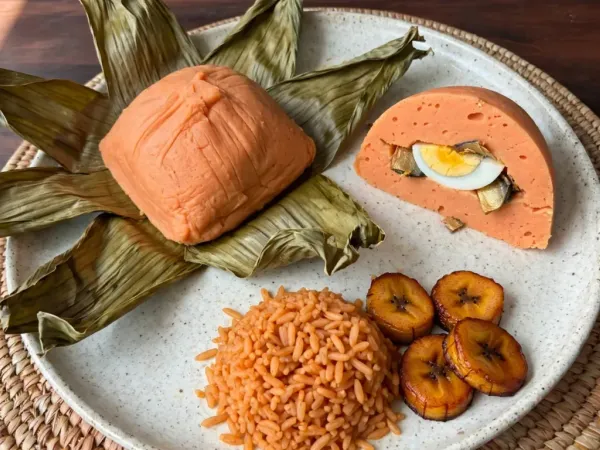
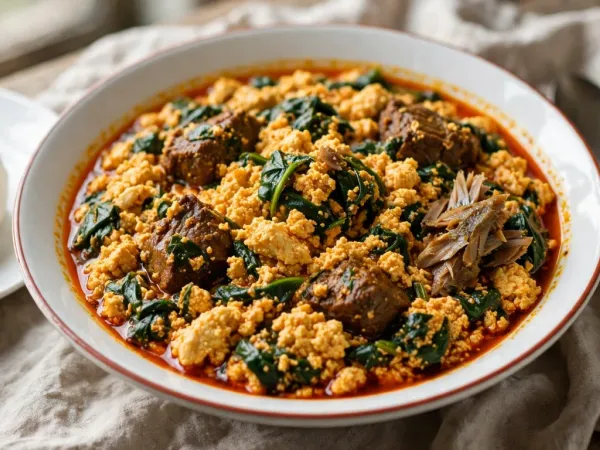
For a Nigerian spread, set small bowls of it out before jollof rice, moi moi or a pot of egusi soup.
Hot oil, raw dough and what’s in an ounce
A deep pot of oil needs your full attention. The US Fire Administration says to turn the burner off if you leave the kitchen, or if the oil starts to smoke. For a small grease fire, the NFPA says to slide a lid over the pan and turn off the burner. Leave the pan where it is, and never pour water on it.
Don’t nibble the dough. The FDA warns that processing grain into flour “does not kill harmful bacteria”, and raw egg is in the bowl as well.
This recipe contains wheat, egg and milk, three of the major food allergens. Margarine can add soy, so read its label. If you fry in peanut oil, tell your guests.
One ounce (28 g) has about 130 calories, 3 g of protein, 5 g of fat, 19 g of carbohydrate and 60 mg of sodium. We calculated this from USDA FoodData Central, assuming the fried pieces hold about 17.6% fat, as in the 2022 study. At the 41% of the June study, the same ounce would carry about 160 calories and 12 g of fat.
No evaporated milk or nutmeg? Swaps that work
- Evaporated milk: whole milk works. Ozoz Sokoh’s recipe uses it.
- Butter or margarine: the recipes split. Seven of the 18 fried versions use butter, five use margarine and six accept both.
- Nutmeg: use anise, as Ozoz Sokoh does, or cinnamon, as Chef Lola allows. Evi Aki uses ehuru, also called African nutmeg.
- A citrus lift: African Bites adds lime zest and Precious Core adds orange zest.
- Eggs: four of the 18 fried recipes work without them. Leave them out and add milk until the dough comes together.
Frequently asked questions
Is chin chin supposed to be hard or soft?
Either is normal. 9jafoodie says it “can be either hard or crunchy”, and several cooks aim between the two. This recipe sits in the middle, and the section on crunch above shows how to push it either way.
How long does chin chin last?
Plan on up to four weeks in a sealed container somewhere cool and dry. Two 2026 studies followed it for that long. The Kitchn’s recipe allows up to 3 months in the freezer.
Why is my chin chin soft after frying?
It may just be warm, since the pieces firm up as they cool. If it is still soft when cold, it was probably cut too thick or came out of the oil too soon.
Why did my chin chin turn out oily?
Cooks most often blame oil that wasn’t hot enough or a crowded pot. Fry one loose layer and let the oil come back to temperature between batches.
Can you make chin chin without eggs?
Yes. Four of the 18 fried recipes we compared work without them, including Ozoz Sokoh’s. Chef Lola and 9jafoodie both leave egg out for a harder piece, so add a little more milk and expect more crunch.