The Sunday Potthesundaypot.com/recipes/turron-de-dona-pepa/
Turrón de Doña Pepa: Peru's October Anise and Syrup Sweet
By The Sunday Pot Kitchen Updated
- • One 8-inch (20 cm) turrón takes 4 cups (500 g) of flour, 1¼ cups (250 g) of shortening and 5 egg yolks
- • Shape 45 sticks, ½ inch (1.2 cm) thick, and bake them pale at 350°F (175°C) for 18 to 22 minutes
- • Cook the chancaca and fruit syrup to 235°F to 240°F (113°C to 116°C), the soft-ball stage
- • Stack 3 layers, each at right angles to the last, with warm syrup, never boiling hot
- • Let it set for at least 2 hours, or overnight, before cutting 24 pieces
- • Peru's 2026 standard names wheat flour, vegetable fat, sugar, salt, anise, sesame and egg yolk for the traditional version
Ingredients
1 turrón, 8 inches (20 cm) square; 24 piecesInstructions
Turrón de Doña Pepa is the sweet Lima eats every October: crumbly sticks of anise and sesame shortbread, stacked in crossed layers, soaked in a dark syrup of cane sugar and fruit, and covered in sprinkles. This recipe makes one 8-inch (20 cm) turrón, or 24 pieces. It takes about 2 hours of work, plus at least 2 hours to set.
What turrón de Doña Pepa is
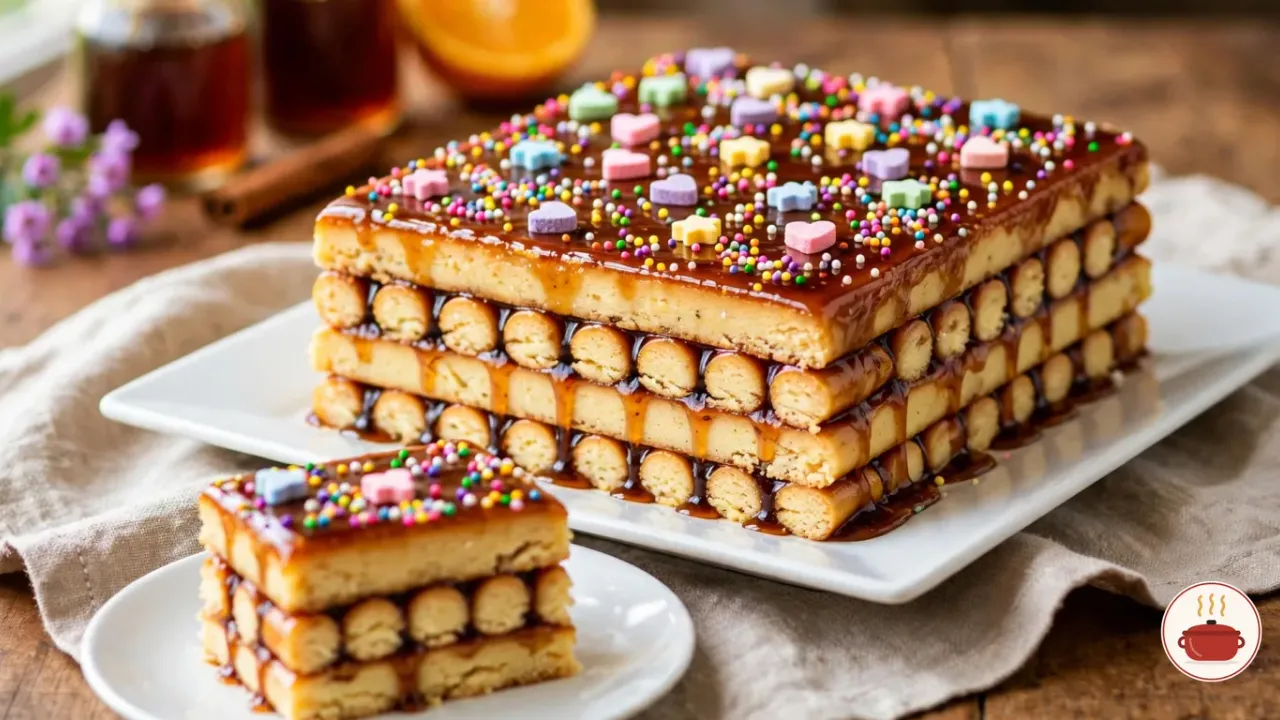
It is a baked pastry, not a candy. Short dough sticks are flavored with anise seed and sesame, then baked until pale. They are stacked in layers, each at right angles to the last. Miel de chancaca, a syrup of unrefined cane sugar boiled with fruit and spices, glues them together. Bright sprinkles and small candies go on top.
Peru’s Ministry of Culture describes it the same way. The dough is made with flour, fat, anise water, salt, anise seed, egg yolks and sesame, it says. The syrup is boiled with cloves, cinnamon and tart fruit such as quince, fig, peach, orange, pineapple and lime. That account is in its 2016 book on Afro-Peruvian intangible heritage, which lists the turrón as part of it.
Not a Spanish nougat
The name is borrowed. In Spain, turrón is a nougat of almonds cooked with honey and sugar. The Peruvian one is a flour pastry. It keeps only the old idea of a honeyed sweet for a feast day.
The sweet of the Señor de los Milagros
The turrón belongs to the October processions of the Señor de los Milagros, the Lord of Miracles. The image is a Christ painted on an adobe wall in Lima. Popular belief holds that an enslaved man from Angola painted it, and records of it go back to 1651, according to the National Library of Peru.
The wall survived the earthquake of 13 November 1655. After another quake in October 1687, a copy of the image was carried through the streets in the first procession. The festivity was declared part of Peru’s national cultural heritage in 2005. Lima calls October the mes morado, the purple month, for the purple habits many of the faithful wear.
Who was Doña Pepa?
Nobody knows for sure. The Ministry of Culture finds turrón sellers at the October procession from the 19th century. The name Doña Pepa first shows up in 1908, in the Lima magazine Variedades. It praised the “turrones de yema” and said “la reputación de exquisitez la tienen los turrones de doña Pepa”: the finest were Doña Pepa’s.
The story told in Lima is a legend. It says Josefa Marmanillo, an enslaved Afro-Peruvian cook from the Cañete valley, lost the use of her arms in the late 18th century. She prayed to the Christ of Pachacamilla, was cured, and made the turrón as an offering. No document backs it up.
Other names have been put forward. In 1921, a Lima man told a reporter that Doña Pepa was “doña Josefa de Cobos”, a Black cook from the city. In 1952, an archivist found a “Josefa Piérola” in an 1880 tax register, a freed woman of color who ran a pastry shop. The El Comercio archive weighs the versions and concludes that some may never be proven.
One historian, César Coloma, argues that the title “doña” rules out an enslaved woman. He also notes that Ricardo Palma, who wrote about many Lima sweets, never mentioned this one. The Ministry of Culture records his view as one position among several.
Why turrón de Doña Pepa is in the news in 2026
On 6 October 2026, Peru’s national quality institute, Inacal, announced the first technical standard for the sweet. It is called NTP 106.010:2026. The standard was approved in June and signed in July, but Inacal made it public in time for the October season.
It defines the turrón as baked dough “en forma de palitos”, in alternating layers, soaked in a fruit syrup. The top must carry at least one decoration from a list that includes hard candies and candied fruit. The standard has two classes. The traditional one is made with wheat flour, vegetable fat, sugar, salt, anise, sesame and egg yolk. The other allows different flours and ingredients.
It also sets limits: at most 12% moisture, a peroxide value of at most 5 meq/kg, and no potassium bromate. The finished block should have a “corteza dorada rojiza”, a reddish-gold crust, and a soft texture.
Exports, a festival and the processions
Exports are growing. Peru’s turrón exports rose 44.7% in value from January to May 2026, according to the Lima Chamber of Commerce’s research institute, in Gestión. It credits sales through US retail chains. The US took more than half of the US$243,900 exported from January to August 2025, by the exporters’ association ADEX.
In Lima, a Festival del Turrón y Dulces ran from 7 to 11 October 2026 in Miraflores, with matcha, passion fruit and vegan versions. The procession goes out again on 18, 19 and 28 October and 1 November, El Peruano reports. Then, on 4 November, the food world comes to Lima for The 50 Best Restaurants awards, held in Peru for the first time.
To be clear, nobody has published a 2026 sales figure for turrón de Doña Pepa itself. The export figure counts Peruvian turrón as a whole.
What you need for turrón de Doña Pepa
We compared 18 published recipes, 14 of them by Peruvian cooks or Peruvian outlets. This recipe follows their medians.
Flour and fat
Plain all-purpose flour is the most common choice, in 10 of the 18. Five Peruvian recipes use self-raising flour, called harina preparada. This one uses no leavening, so the sticks keep their shape. Peru Delights’ first batch “grew like baguettes”.
The fat is the bigger choice. Vegetable shortening appears in 8 recipes, butter alone in 4, and a mix in 3. The median is 1 part fat to 2 parts flour by weight: 250 g of fat for 500 g of flour.
Morena Cuadra of Peru Delights says the recipe calls for lard, which “gives the perfect crumbly texture”. She uses shortening, like most cooks she knows. The 2026 standard’s traditional formula also names vegetable fat. Butter tastes richer but holds about 16% water, so the sticks come out a little less short.
Egg yolks, anise and sesame
Yolks are in 16 of the 18 recipes, with a median of 5 for 500 g of flour. The 1908 magazine already called these “turrones de yema”, yolk turrones. Anise seed is in 17 recipes, often twice: boiled into anise water for the dough, and whole. Sesame is in 16.
Use anise seed, Pimpinella anisum, not star anise. They are different plants with a similar flavor, as Purdue University explains. Star anise shows up only in 4 of the syrups.
Chancaca and the fruit syrup
Chancaca is Peru’s unrefined cane sugar, sold in round cakes. It is in 16 of the 18 syrups. Piloncillo from Mexico, panela, or Indian jaggery are the same kind of sugar and work well. Dark brown sugar is the last resort: it is white sugar coated in molasses, not whole cane sugar.
The fruit gives the syrup its tang. Orange is in 17 recipes, apple in 15, pineapple in 13, quince in 12 and fig leaf in 9. Cinnamon and cloves are the usual spices.
Sprinkles and candies
Peruvians call the tiny round sprinkles grageas. Many cooks add small hard candies, and some add heart- and star-shaped sugar candies called pepelmas. Rainbow nonpareils and a few small candies are the closest match abroad.
How to make turrón de Doña Pepa at home
The method has three parts: short sticks, a thick syrup, and patience while it sets.
Keep the dough short
Rub the cold fat into the flour first, then add the yolks and just enough anise water to bring it together. Fat “shortens” the strands of gluten in flour, which is how shortening got its name. That is what keeps the sticks crumbly. Chill the dough for 30 minutes so the soft fat firms up before you roll it.
Bake the sticks pale
The median is 350°F (180°C) for about 22 minutes. Pull the sticks when they are firm and light golden underneath but still pale on top. The recipes ask for pale sticks, because the syrup darkens the turrón later.
Cook the syrup to the soft-ball stage
Seven of the recipes cook the syrup to 113°C to 120°C (235°F to 248°F). This recipe stops at 235°F to 240°F (113°C to 116°C), the soft-ball range given by the Exploratorium’s guide to sugar stages. Check your thermometer in boiling water first: at sea level it should read 212°F (100°C). At altitude, take 1°F off the target for every 500 feet.
Use a deep pot. A chancaca syrup “will bubble up much more than standard caramel”, warns the recipe from the Great Canadian Baking Show. Stir only until the sugar dissolves, then let it boil.
Warm syrup, not hot
Cooks split here. Five pour the syrup cold and three pour it warm. The syrup must be cold, or the dough can end up “como pan remojado”, like soaked bread, warns the Lima pastry chef Patricia Delgado Roberts. This recipe takes the middle road. It lets the syrup cool for about 20 minutes, until it is warm and thick like honey but still pours.
Don’t drown the sticks or push them around once the syrup is on. Too much syrup, moved too much, crystallizes, warns a recipe in the Lima daily La República.
Three crossed layers
Three layers is the norm, in 10 of the 18 recipes. Peru Delights and two of the English-language recipes stack four, as in the photo above. Lay each layer at right angles to the last, so the block holds together when you cut it. The Ministry of Culture records one reading of the lattice: it stands for the litter that carries the image, and the sprinkles for the crowd.
Let it set
Give it at least 2 hours. The Le Cordon Bleu Perú pastry chef Daniel Punchin rests his turrón for 24 hours before cutting, in a recipe for El Comercio. Some cooks say it is even better the next day, as the syrup soaks in.
Storing and serving turrón de Doña Pepa
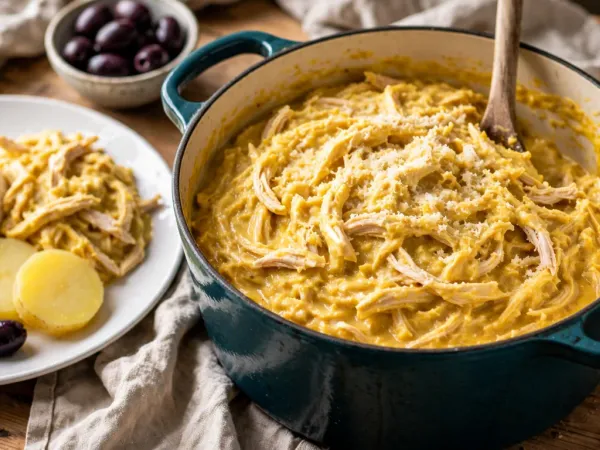
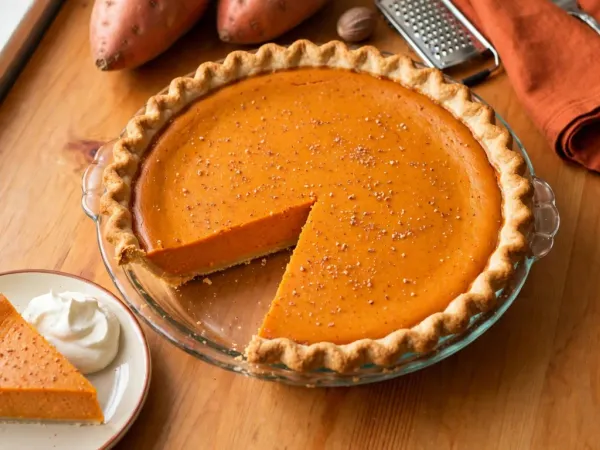
Serve it in small squares, with coffee or a hot drink such as Mexican champurrado. For a main course from the same city, make Lima’s creamy chicken ají de gallina. For another sweet for the saints’ days at the start of November, bake Mexico’s pan de muerto.
Keeping it
Keep the turrón “fresco, seco y a temperatura de ambiente, en un envase cerrado”, cool, dry and at room temperature in a closed container. That is the advice of Peru’s food safety authority, Digesa, as Andina reported. No authority gives a shelf life for homemade turrón. If it tastes sour, it has fermented, Digesa warns, so throw it out.
Safety in the kitchen
Don’t taste the raw dough. Raw flour and raw yolks can carry germs, and only baking makes them safe, the FDA says. The baked sticks are fine.
Hot sugar syrup burns badly and sticks to skin. If it splashes you, hold the burn under cool running water for 20 minutes, as soon as possible, the NHS advises. Don’t put butter or cream on it.
Calories and allergens
One piece has about 295 calories, 12 g of fat and 44 g of carbohydrate. A Lima nutritionist estimated 558 calories per 100 g of turrón in 2019 and suggested pieces of 50 g. This is a feast-day sweet.
Turrón contains wheat, egg and sesame. Sesame became the ninth major food allergen in the US on 1 January 2023, the FDA notes. Check your sprinkles for nut traces and colorings too.
Fixes for turrón that is soggy, hard or grainy
- The sticks went soft and soggy: the syrup was too hot or too thin. Cool it to warm, and cook it to the soft-ball stage.
- The turrón is hard to cut: the syrup went past 240°F (116°C). Next time, take it off a few degrees sooner.
- The syrup turned grainy: it was stirred while boiling. Stir only until the sugar dissolves.
- The sticks spread and lost their shape: the dough was warm. Chill it, and the shaped sticks, for 15 minutes before baking.
- The sticks are tough: the dough was kneaded. Mix it only until it comes together.
- The sticks taste bitter: they baked too dark. Take them out while they are still pale on top.
- It falls apart when cut: the layers weren’t crossed, or it didn’t rest long enough. Let it set overnight.
Substitutes for missing ingredients
- Chancaca: piloncillo, panela or jaggery, weight for weight. Or use dark brown sugar with 1 tablespoon of molasses.
- Quince: another apple, ideally a tart one such as Granny Smith.
- Fig leaf: leave it out. It is in only half the recipes.
- Vegetable shortening: lard, for the crumbly texture Peru Delights describes, or butter, for flavor.
- Anise seed: 1 teaspoon of anise extract in the anise water. Never use star anise in the dough.
- Grageas: rainbow nonpareils or hundreds and thousands.
Frequently asked questions
What is turrón de Doña Pepa made of?
It is made of shortbread sticks with flour, fat, egg yolks, anise and sesame. They are layered, soaked in a syrup of chancaca and fruit, and topped with sprinkles.
Why is it eaten in October?
It is the sweet of the Señor de los Milagros, whose processions fill Lima in October. Turrón sellers have followed the procession since at least the 19th century.
Who was Doña Pepa?
Lima tradition names Josefa Marmanillo, an enslaved Afro-Peruvian cook. The name Doña Pepa first appears in print in 1908, and no document confirms who she was.
Is turrón de Doña Pepa the same as Spanish turrón?
No. Spanish turrón is an almond nougat. The Peruvian one is a baked flour pastry soaked in syrup.
What can I use instead of chancaca?
Piloncillo, panela or jaggery work the same way. Dark brown sugar with a spoonful of molasses is the fallback.
Can I make turrón de Doña Pepa ahead?
Yes. It is best made a day ahead, so the syrup can soak in. Keep it in a closed container somewhere cool and dry.
How many layers should it have?
Three is the usual number. Some cooks stack four. Lay each layer at right angles to the one below.
Is turrón de Doña Pepa vegan?
No, the traditional dough uses egg yolks. Vegan versions without eggs or milk are now sold in Lima, but this recipe is the classic.