The Sunday Potthesundaypot.com/recipes/acaraje/
Acarajé: Bahian Black-Eyed Pea Fritters Fried in Dendê
By The Sunday Pot Kitchen Updated
- • The batter is only black-eyed peas, onion and salt: none of 29 recipes adds baking soda, egg or flour
- • Skin the peas, grind them with almost no water, then beat the batter until it nearly doubles
- • Fry ovals of about 80 g in dendê at 340°F to 350°F (170°C to 175°C), 3 to 4 minutes a side
- • Brazil marks the National Day of the Baiana de Acarajé on November 25, under a 2010 law
- • The fritter is free of major allergens, but the usual fillings contain shrimp, peanuts and wheat
Ingredients
14 acarajé (6 to 7 servings)Instructions
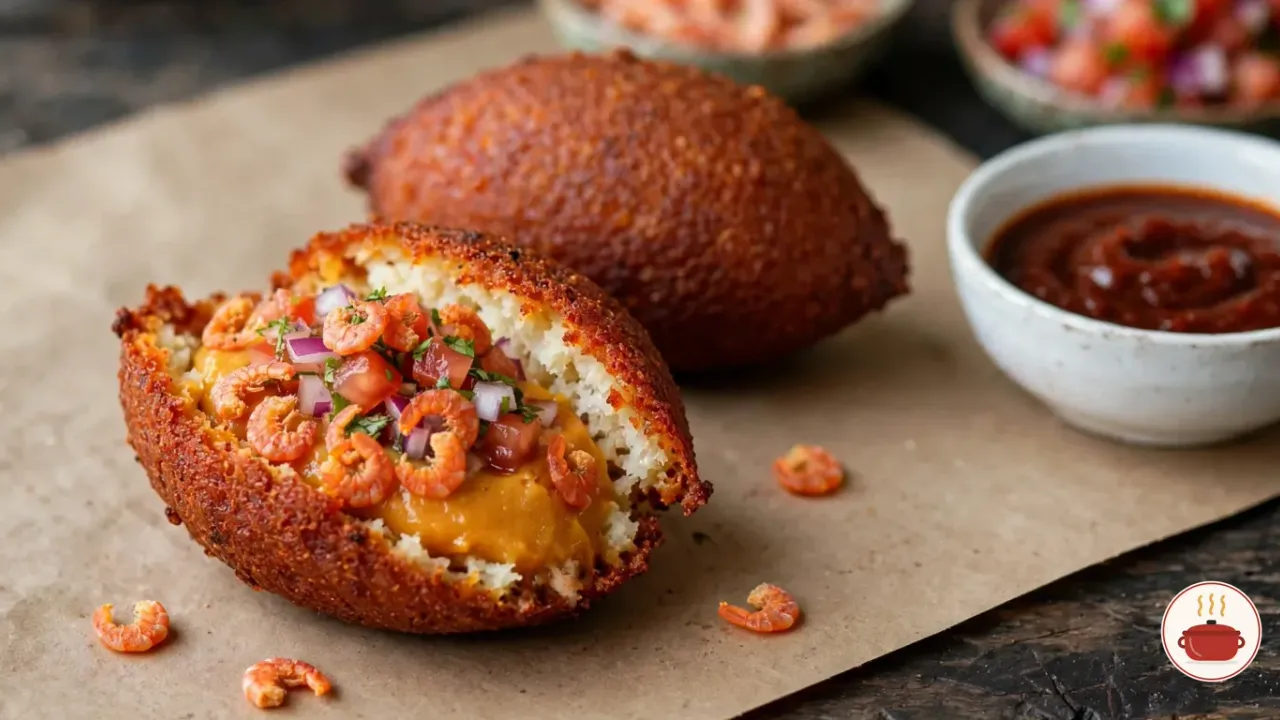
Acarajé is the street fritter of Salvador, in the Brazilian state of Bahia. Peeled black-eyed peas are ground with onion and salt, beaten light and fried in dendê, the red palm oil. Split open, it holds vatapá, salad and dried shrimp. This recipe makes 14 in about 4½ hours, most of it soaking time.
What acarajé is
Beans, onion, salt and red oil
An acarajé is an oval fritter about the size of a palm. The crust turns red-brown from the dendê, and the inside stays white and soft. One cook on the Brazilian site TudoGostoso beats the batter until it triples in volume, which is what makes it light.
In Salvador, it is sold from a tabuleiro, a wooden stall run by a baiana de acarajé. A 2015 city decree even sets the stall sizes and the baianas’ dress: a blouse, a head wrap and a white or printed skirt, it says.
A Yoruba name
The fritter came from West Africa, where the Yoruba call a bean cake àkàrà. Samuel Crowther’s 1852 Yoruba vocabulary defines akara as “bread, cake” and je as “to eat”. So acarajé reads as “eat akara”. In northern Nigeria the same fritter is kosai, and in Ghana koose, the Campo Grande paper Correio do Estado notes.
Many Brazilian sources translate the name as “eat a ball of fire”. Crowther’s dictionary does not give “fire”, so treat that as a popular reading, not the word’s meaning.
Offering first, sandwich later
In candomblé, the Afro-Brazilian religion, acarajé is a sacred food. IPHAN, Brazil’s heritage institute, says it is offered to the orixás Xangô and Oiá without fillings.
The fillings came much later. Cici of Amaralina is 72 and has sold acarajé for 65 years. She told the Salvador paper Correio in March that her fellow baianas first put caruru, an okra stew, inside about 50 years ago. Salad followed some ten years later, ABAM’s coordinator added.
The anthropologist Vilson Caetano told Correio in January that shrimp, vatapá, salad and caruru have no religious meaning. The fritter grew bigger, he said, to compete with hamburgers and hot dogs.
The oldest recipe we could read
The Black Bahian historian Manuel Querino described acarajé in A Arte Culinária na Bahia, printed after his death. In the 1957 edition, the beans soak in cold water until the skins come off. Then they are ground on a stone, seasoned with grated onion and salt, and fried in dendê in a clay pan.
Querino serves it with one sauce of dried malagueta chile, onion and shrimp. There is no vatapá in his version at all.
Why acarajé matters this month
November 25 is the baianas’ day
Brazil’s Law 12.206 of 2010 makes November 25 the National Day of the Baiana de Acarajé. In 2026 it falls on a Wednesday. Salvador had not yet published this year’s program when we wrote this, on November 13.
Salvador wants to protect the craft
IPHAN approved the baianas’ craft as national heritage in December 2004. It entered its Book of Knowledge on January 14, 2005. In December 2022, IPHAN renewed the title and extended it to the whole of Brazil. This is Brazilian heritage, not a UNESCO listing.
Now the city may add its own title. On October 27, the Salvador councillor Sílvio Humberto filed bill no. 297/2026 to make the craft municipal heritage, the site Alô Alô Bahia reported on November 5. It is a bill, not yet a law.
About 8,000 baianas
ABAM, the baianas’ association, has about 8,000 baianas on its register across Brazil, most of them in Bahia, its coordinator Rita Santos told Correio in March. The 2007 IPHAN dossier gave the association almost 3,000 members.
On July 25, ABAM’s eighth Festival de Acarajé gave fritters away free in Salvador’s Praça da Cruz Caída.
More beans in the Northeast
The 2025-26 bean crop in Brazil’s Northeast should reach 711,700 tonnes, up 17.8%. Bahia leads with 318,500 tonnes. Those are estimates by the research office of Banco do Nordeste, from national crop data, as the site Movimento Econômico reported on September 9. They cover all beans, not only black-eyed peas.
The same report says export demand centers on the Vigna group, which includes the black-eyed pea, known in Brazil as feijão-fradinho. India, Pakistan and Vietnam are among the buyers.
No 2026 price for a fritter
We found no 2026 survey of acarajé prices. In November 2023, ABAM put the price in Salvador at R$3 to R$18, Correio reported. In 2024, one baiana told A Tarde she charged R$15 without shrimp and R$17 with, and blamed the cost of dendê.
What 29 acarajé recipes agree on
We read 29 recipes in full. Eighteen are Brazilian, in Portuguese: newspapers, recipe sites and a baiana in Campo Grande. Eleven are in English, among them one by the Brazilian-born chef Marcello Tully. Copies of the same text count once.
Beans, onion and salt, nothing more
None of the 29 adds baking soda, baking powder, egg or flour. Only one, an outlier, adds breadcrumbs. Twenty-seven remove the skins, and 28 start from dried peas. The Brazilian-born chef Leticia Moreinos Schwartz warns that cooked or canned beans “will simply melt away in the oil”.
The median is 500 g of dried peas and 40 g of onion for every 100 g of peas. Garlic shows up in 5 of the 18 Brazilian recipes, and ginger in 2.
Brazilians beat the batter
Here the two groups part ways. Sixteen of the 18 Brazilian recipes beat the batter to whip in air. Only 3 of the 11 English ones do. The site Receiteria stirs it with a wooden spoon until it doubles.
Skip this and the fritter turns heavy. In August, the TV host Ana Maria Braga called a contestant’s acarajé “hard as a stone”. She sent him to learn from the baianas, Correio reported (our translation).
Keep the water out
Brazilian recipes grind the peas with as little water as possible. “Too much water can make the batter soft,” Receiteria says (our translation). Science agrees: in a 1986 study in Cereal Chemistry, fritters of this kind soaked up more oil as the batter’s moisture rose.
Dendê in the pan
Seventeen of the 18 Brazilian recipes fry in dendê: 10 in dendê alone, 5 in a mix with another oil. Only 6 of the 11 English recipes name it. Querino noted that the batter takes on the color of the oil.
Two ways to soak
The Brazilian recipes split on time. Seven soak for only 1 to 3 hours, often after cracking the dry peas so the skins float off fast. Seven soak for 8 to 12 hours. Nine of the 10 English recipes that give a time soak overnight.
An onion in the oil
Seven Brazilian cooks drop a whole onion into the oil. When it starts to bubble around the onion, the oil is hot enough, Receiteria says. The columnist Raissa Faro adds in Brasil de Fato that it keeps the smell of dendê down.
Fillings are bought, not made
Vatapá appears in 21 of the 29 recipes, shrimp in 17 and salad in 14. Nine of the 11 English recipes include a vatapá recipe, but only 7 of the 18 Brazilian ones give a recipe for any filling. In Brazil, vatapá and caruru are dishes in their own right.
A simpler vatapá, from a baiana
Home vatapá often takes coconut milk, cashews, peanuts and bread. A street version is lighter on work. Clarice dos Anjos, a former president of ABAM, gave an interview for IPHAN’s dossier in 2001. She advised baianas not to take cashew vatapá to the street. The nuts are oily and turn sour in the sun.
Her stall vatapá is ginger, onion, shrimp and a little peanut, blended and cooked in dendê. She thickens it with wheat flour and boiling water. This recipe follows that method; the amounts are ours, since she gave none.
Choosing peas, oil and shrimp
- Black-eyed peas: dried, never canned. In Brazil, peeled feijão fradinho is sold online, Minha Cozinha Amarela notes, which saves the peeling.
- Dendê: look for red palm oil, deep orange and opaque. A half-and-half mix with peanut or sunflower oil is common in Brazilian recipes too.
- Dried shrimp: small, pink-orange and salty. They are sold in Asian food shops, SBS Food notes.
Tips for light, crisp fritters
- Pick out the black eyes. A cook in Rio who blogs as Eat Rio was told that skins and eyes left in make the fritters bitter.
- Grind thick. One TudoGostoso cook leaves the paste a little coarse so it fries crisp. A wet paste turns soft, Receiteria warns.
- Beat until pale. The batter should look fluffy and close to double.
- Wet the spoon. Another TudoGostoso cook dips it in water between fritters so the batter slides off.
- Keep the spoon out of the oil. Minha Cozinha Amarela passes on this tip from the baianas: dendê on the spoon spoils the rest of the batter.
- Fry at serving time. Another TudoGostoso cook fries them just before eating.
Serving acarajé
Cut each fritter like a pocket, “without separating the halves”, as the paper Tribuna do Paraná puts it (our translation). Fill it at the table, so each person picks their own.
At a Salvador stall, the baiana asks “hot or cold?” It is not about temperature: “quente” means with pepper and “frio” without, Correio explains. One regular at a Pituba stall told Correio she eats hers plain, “only with pepper” (our translation).
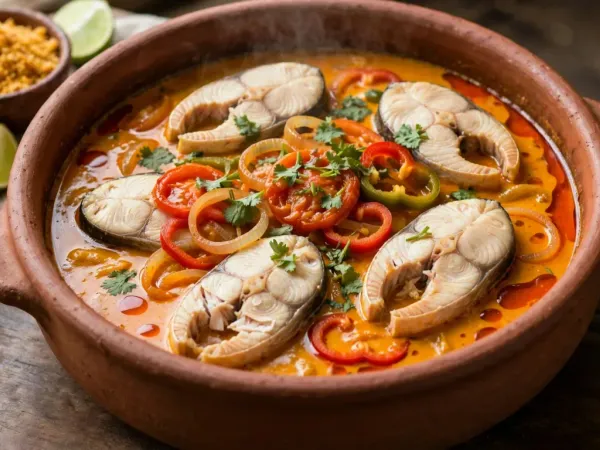
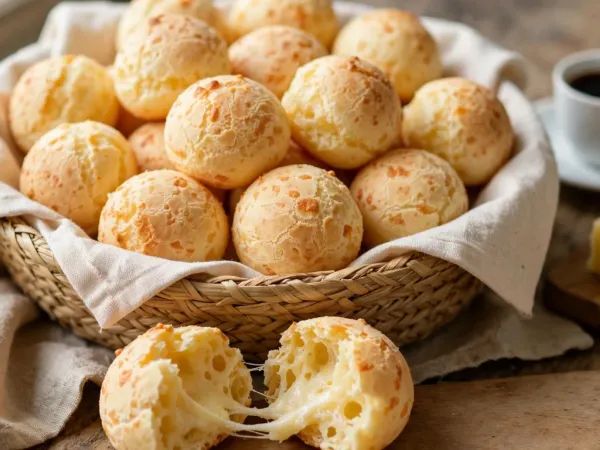
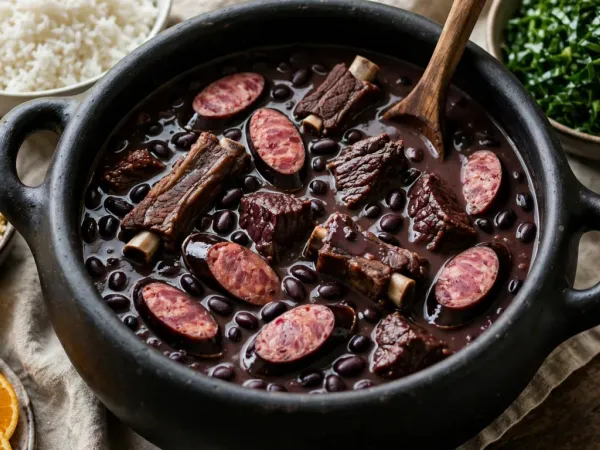
For a Bahian meal, add a pot of moqueca baiana. Brazil’s other classics are feijoada and pão de queijo. For the Nigerian side of the family, try moi moi, a steamed bean pudding close to Bahia’s abará.
Storing and safety
Hot oil
A deep pot of oil is the main hazard here. The US Fire Administration says to stand by your pan and turn the burner off if you see smoke. Should the pot flare up, a lid laid over it puts the fire out, the agency adds, so keep one within reach.
Spattered dendê can scald. The NHS first-aid page asks for 20 minutes of cool running water on a burn, as soon as possible.
Reusing dendê
Researchers at the Federal University of Bahia followed a baiana frying in Salvador. Her oil ran at 143°C to 188°C (289°F to 370°F), and they measured how it broke down. After 15 hours of frying, its polar compounds passed the 25% limit most rules set for frying oil. Topping up used oil with fresh oil made it worse, they found.
At home, we’d strain the cooled oil and reuse it once or twice at most. Throw it out if it foams, smokes early or smells sharp. Salvador’s decree tells baianas the same: replace oil that foams or smokes. Never pour it down the sink.
Raw batter
The batter is raw ground beans, cooked only in the frying. The FDA’s Bad Bug Book names a toxin found in many beans, highest in red kidney beans. We found no official advice for black-eyed peas. So don’t taste the batter, and fry each fritter until there is no pasty center.
Allergens
The fritter itself holds peas, onion, salt and oil, none of them major allergens. The fillings are another matter. Dried shrimp are a crustacean, the vatapá has peanuts and wheat flour, and many home vatapás add cashews. Serve plain fritters with pepper sauce to anyone who must avoid them.
Leftovers
Acarajé are best hot from the pot. Chill vatapá and shrimp within one to two hours and eat them within 48 hours. That is the leftovers rule of Britain’s food safety regulator. Reheat the vatapá to 165°F (74°C), the USDA’s mark for leftovers. We found no reliable source on keeping the raw batter, so fry it all the same day.
Nutrition
One filled acarajé has about 320 calories. It carries 15 g of protein, 17 g of fat, 29 g of carbohydrate, 4.8 g of fiber and 404 mg of sodium. We added these up from USDA FoodData Central, using its “Shrimp, dried” entry. Nobody has measured how much oil an acarajé absorbs, so we assumed 12 g per fritter. Each gram less saves about 9 calories.
Fixes for heavy or greasy acarajé
- They fall apart in the oil: the batter is too wet, or the beans were cooked or canned. Start again with dried peas.
- They are hard and dense: the batter wasn’t beaten enough. Beat until it is pale and nearly doubled.
- They are greasy: the batter was too wet, or the oil wasn’t hot enough. Wait for the onion to bubble, and drain the peas well.
- They are dark outside and raw inside: the oil is too hot. Lower the heat and fry a little longer.
- They taste bitter: skins or black eyes were left in. Skim and pick more carefully.
Frequently asked questions
Is acarajé the same as akara?
They share a root: Brazil’s name comes from the Yoruba àkàrà. The Nigerian food blog Ounje Aladun sums acarajé up as akara fried in palm oil. In Bahia it is also split to hold fillings.
How is abará different?
Abará uses a similar black-eyed pea batter with more dendê and dried shrimp. It is wrapped in banana leaf and steamed, not fried.
Is acarajé vegan?
The fritter is: peas, onion, salt and palm oil. The usual vatapá and shrimp are not, so serve it plain or with salad and pepper sauce.
Can I use canned black-eyed peas?
No. Cooked beans make a batter that falls apart in the hot oil. Start from dried peas.
Is acarajé on UNESCO’s list?
No. The baianas’ craft is Brazilian heritage, registered by IPHAN in 2004-2005. It is not on a UNESCO list.
What does “quente” mean at an acarajé stall?
It means with pepper sauce. “Frio” means without, or with very little.
Tags: street foodfriedblack-eyed peasdendêAfro-BrazilianBahiadried shrimpparty food