The Sunday Potthesundaypot.com/recipes/pao-de-queijo/
Pão de Queijo: Brazilian Cheese Bread from Minas Gerais
By The Sunday Pot Kitchen Updated
- • Use tapioca starch, also sold as tapioca flour, not cassava flour
- • Pour the milk, water and oil over the starch at a full boil, to scald it
- • Let the dough cool below 120°F (50°C) before the eggs go in
- • Per 500 g of starch, use about 3 eggs and 250 g of dry, aged cheese
- • Bake 1 oz (30 g) balls at 400°F (200°C) for 25 to 30 minutes
- • Freeze raw balls on a tray and bake them from frozen, 5 to 10 minutes longer
Ingredients
about 40 small rollsInstructions
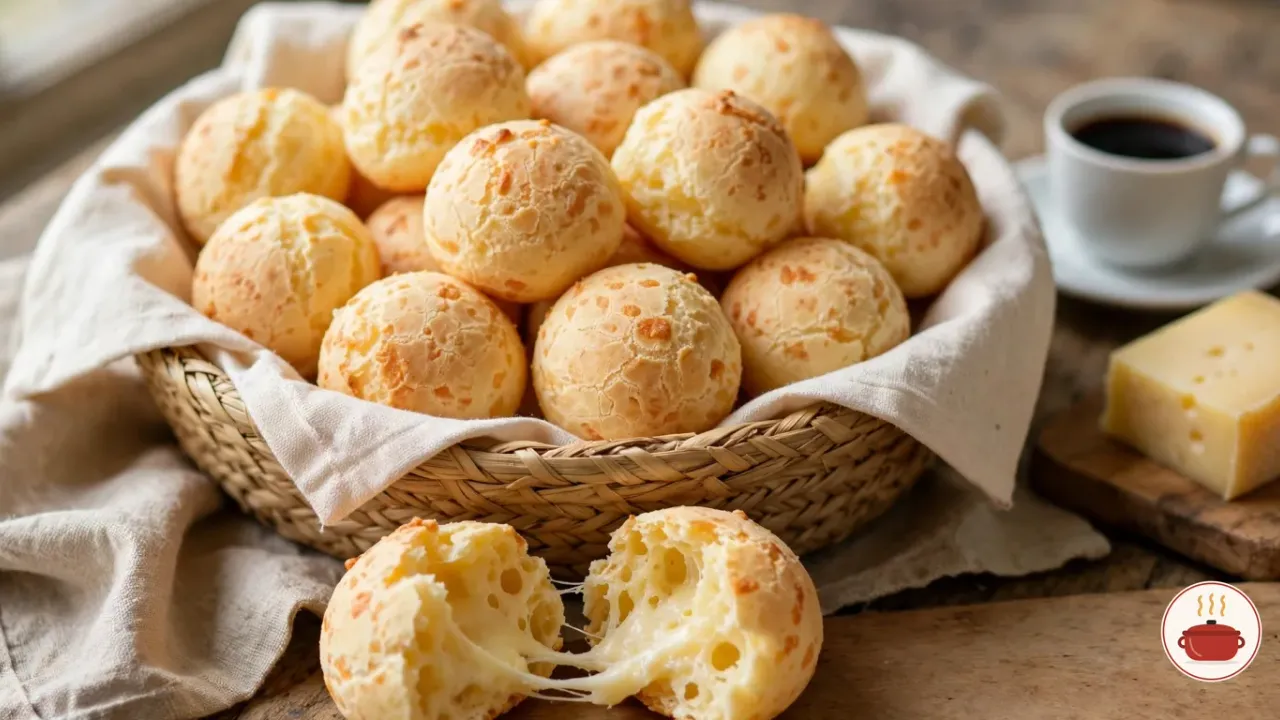
Pão de queijo is the cheese bread of Minas Gerais, in southeast Brazil: small, crisp-skinned rolls with a soft, chewy, stretchy middle. It contains no wheat. The dough is cassava starch scalded with hot milk and oil, then beaten with eggs and cheese. This recipe makes about 40 rolls.
What pão de queijo is
Starch, cheese, eggs and milk
Pão de queijo is made from cassava starch, which the Brazilians call polvilho, with cheese, eggs, fat, milk and salt. No legal standard defines it in Brazil, and recipes vary widely. Some use water instead of milk, and lard or butter instead of oil.
The dough has no yeast and no rest, so it never ferments. It rises from steam in the oven. Strictly speaking, as the Belo Horizonte broadcaster Itatiaia points out, it isn’t a bread at all.
Sweet starch and sour starch
Brazilian cooks choose between two starches. Polvilho doce, or “sweet” starch, is plain cassava starch, the same as the tapioca starch sold abroad. Polvilho azedo, or “sour” starch, is left to ferment in tanks of water for 20 to 60 days, then dried in the sun.
Sour starch makes the rolls rise more. “Sweet starch gives smaller, more delicate rolls, dense inside and crisp outside,” explains the MICHELIN Guide in Brazil. With sour starch “the bread rises more”, so some cooks mix the two (our translation).
The cheese of Minas
The cheese matters as much as the starch. The guide’s choice is Minas meia-cura, a raw-milk cheese aged for 7 to 11 days, with Parmesan or Canastra as substitutes. In December 2024, UNESCO added the traditional ways of making Minas artisanal cheese to its list of intangible cultural heritage.
An origin nobody can date
“Nobody knows for sure where pão de queijo comes from,” the MICHELIN Guide admits (our translation). It “is believed” to date from around 1750, made in Minas dairy farm kitchens, where wheat was scarce and cassava starch was not. Cassava itself came from Indigenous cooking.
Those farm kitchens ran largely on the labor of enslaved women, and many Brazilians say they invented the dish from leftover starch. No historian we found documents that story. The first written accounts of pão de queijo date from the 20th century, Itatiaia reports. A 2022 dissertation from the Federal University of Uberlândia concludes that its history “has not yet been established” (our translation).
The spread is better known. Bakeries in Belo Horizonte made it popular from the 1950s. The same dissertation explains that it was handmade until the 1980s, when frozen pão de queijo carried it across Brazil and abroad.
Why pão de queijo is in the news
A first festival
On September 12 and 13, 2026, the city of Contagem, near Belo Horizonte, held the first Festival do Pão de Queijo. The chef Leo Paixão curated it, reported the newspaper O Tempo. One panel was called “from cultural heritage to economic development” (our translation).
Contagem’s city government says local factories turn out about 100,000 tonnes a year. It published no attendance figure for the festival.
A heritage bill still waiting
A 2017 bill in the Minas Gerais assembly, PL 4.002/2017, would declare pão de queijo part of the state’s cultural heritage. It has passed its committees. At the assembly’s last archived record, from April 2025, it was still waiting for a vote on the floor. We found no news of one since.
August 17 is often called the Dia do Pão de Queijo. That date is not official. It comes from a 2007 recipe contest on the TV show Mais Você, the news site Portal Tela explained on August 17, 2026.
Ten billion reais
The same article quotes the consultancies CREST and Wise Sales. Brazilians spent about R$10.2 billion on pão de queijo in cafés, bakeries and restaurants between June 2025 and June 2026. They say 59% of it was eaten at breakfast. That is the only 2026 figure for the dish we found, and it comes from the industry, not a public survey.
At EPCOT, too
In the United States, the 2026 EPCOT International Food & Wine Festival sells it at its Brazil booth for $5.19. The fan site WDW News Today found the rolls “pretty spectacular”, if pricey. None of the 2027 food trend forecasts published this October names pão de queijo.
What goes into pão de queijo
We compared 34 recipes: 23 Brazilian, from Panelinha, Receitas Nestlé, TudoGostoso and others, and 11 in English. Twenty-six scald the starch, 7 blend a pourable batter, and 1 uses cold liquid.
The ratio
Fifteen recipes give the starch in grams. Per 500 g of starch, their medians are 261 ml of liquid, 100 ml of oil, 3 eggs, 250 g of cheese and 9 g of salt. Across all the scalded recipes, the median liquid rises to about 335 ml.
This recipe uses 300 ml of milk and water, 120 ml of oil, 3 eggs and 250 g of cheese. The salt drops to 6 g, because Parmesan is salty.
Which starch
Eighteen recipes use sweet starch, 13 use sour, and 3 mix them. Almost every English recipe uses tapioca starch, which is sweet starch under another name. Bob’s Red Mill and other brands sell it as “tapioca flour”. Don’t confuse it with cassava flour, which is the whole dried root, not the extracted starch.
Which cheese
Brazilian recipes lean on aged Minas cheese, often with Parmesan. Parmesan appears in 21 of the 34 recipes. English recipes often pair it with a melting cheese: mozzarella, queso fresco or a mature cheddar.
Strong, dry cheese works best. “Keep in mind the tapioca will naturally mellow the flavor of whatever cheese you choose,” advises King Arthur Baking. Moist, young cheese makes the rolls soft and greasy, Receitas Nestlé warns.
How to make pão de queijo
Scald the starch
Cassava starch doesn’t dissolve in cold liquid. Scalding means pouring boiling liquid over it, so part of it turns to a gel. Cassava starch needs to reach 58 to 70°C (136 to 158°F) for that, says the Uberlândia dissertation. Scalded doughs give rolls with more volume and a better texture.
The liquid must be at a full boil. Pour it in a slow stream while you stir, rather than all at once, or the starch forms hard clumps.
Cool before the eggs
Wait until the dough feels warm, not hot. The eggs go in “after the dough is below 50°C, so they don’t set”, the dissertation advises (our translation). Hot dough also melts the cheese, which then leaks oil.
Get the dough right
The finished dough is soft, smooth and a little sticky, and it holds a ball when your hands are oiled. Too much liquid makes it sticky and flat. Too little makes it hard, and it won’t rise. Eggs vary in size, so add the last one bit by bit.
Bake hot, and keep the door shut
A fully heated oven sets the skin while steam puffs the inside. Brazilian recipes bake at a median of 200°C (400°F) for 30 minutes, English ones a little cooler. Several Brazilian recipes say to keep the oven door shut for the first 20 minutes.
Freeze them raw
Fourteen of the 34 recipes suggest freezing the shaped balls, which is how Brazilian shops sell them. Freeze them apart on a tray, then bag them. Bake them straight from the freezer, adding 5 to 10 minutes.
Serving and storing pão de queijo
When to eat it
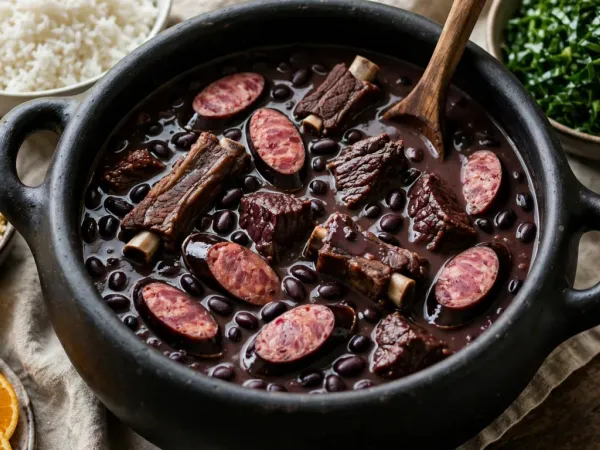
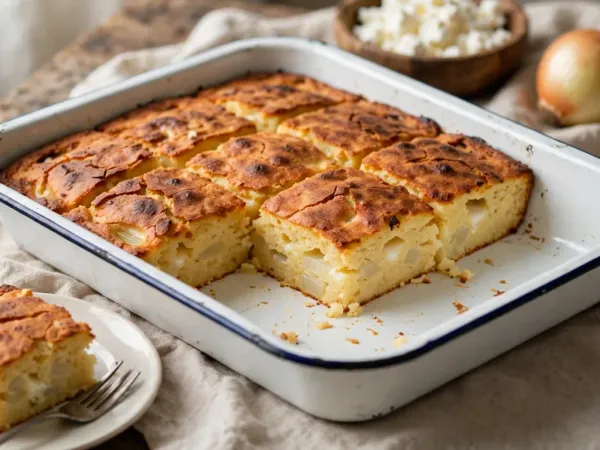
In Brazil pão de queijo comes with morning coffee, as a snack, or in a basket on the lunch table. Serve it warm, beside a pot of feijoada, or with soup. Paraguay has its own corn and cheese bake, sopa paraguaya, which suits the same table.
Keeping the rolls
Pão de queijo is best within an hour of baking. Once cold, the rolls turn firm, so warm them for a few minutes in a 350°F (175°C) oven. Keep the raw balls frozen instead and bake as many as you need.
Frozen dough stays safe as long as it stays at 0°F (−18°C). The USDA says freezer times “are for quality only”. Most Brazilian recipes suggest using the balls within 3 months.
Raw eggs and cassava
The dough contains raw egg, so don’t taste it before baking. The FDA advises cooking foods made with eggs thoroughly.
Raw cassava root contains compounds that can release cyanide. Starch is a different matter. When Australia’s food regulator, FSANZ, surveyed cassava foods, the starch products it tested had no detectable cyanide.
Calories, allergens and gluten
Four rolls have about 400 calories, 10 g of protein, 19 g of fat and 46 g of carbohydrate. We totaled USDA FoodData Central values for every ingredient and divided by 10. USDA has no entry for tapioca starch, so we used dry pearl tapioca, its nearest match.
Its allergens are milk and eggs, both among the nine the FDA names as major. Without any wheat, it is naturally gluten-free. For someone with celiac disease, buy starch labeled gluten-free, which in the US means under 20 parts per million of gluten, as the FDA explains.
Fixes for flat, hollow or gummy cheese bread
- Flat rolls: the dough was too wet or warm, or the oven was not hot enough. Chill the shaped balls for 15 minutes and heat the oven fully.
- Dry, crumbly dough: the liquid was not boiling when it hit the starch. Work in 1 to 2 tablespoons of hot milk.
- Hollow inside: too much sour starch, or too hot an oven. Use more sweet starch, or bake at 375°F (190°C).
- Gummy middle: they need a few more minutes in the oven, or a share of sour starch next time.
- Hard crust, wet inside: the oven ran too hot. Lower it by 25°F (15°C).
- Greasy: too much oil, or a young, moist cheese. Use a dry, aged cheese.
- Bland: the cheese was too mild. Use more Parmesan or Pecorino.
Substitutes for missing ingredients
- Polvilho azedo (sour starch): use tapioca starch alone. Brazilian shops sell sour starch; replacing half the tapioca with it makes lighter, airier rolls.
- Minas meia-cura cheese: Parmesan, Pecorino Romano or a mature cheddar.
- Low-moisture mozzarella: Monterey Jack, or more Parmesan.
- Whole milk: all water, as in Panelinha’s classic recipe.
- Neutral oil: melted butter, or lard, the old farmhouse fat.
- A stand mixer: a wooden spoon and your hands.
Frequently asked questions
Is pão de queijo gluten-free?
Yes. It is made from cassava starch, with no wheat, rye or barley. Check that your starch and cheese are labeled gluten-free if you cook for someone with celiac disease.
Is tapioca flour the same as tapioca starch?
Yes. In the US and UK the two names mean the same product, and it matches Brazil’s polvilho doce. Cassava flour is different.
Why didn’t my pão de queijo rise?
The usual causes are dough that is too dry, liquid that wasn’t boiling, or an oven that wasn’t fully hot. Sour starch also rises more than sweet.
Can I freeze pão de queijo dough?
Yes. Freeze the raw balls on a tray, bag them, and bake them from frozen for 5 to 10 minutes longer. Most recipes suggest using them within 3 months.
Why is pão de queijo chewy?
The scalded starch forms a stretchy gel, and the cheese adds more stretch. A good roll is crisp outside and soft and chewy inside.
What is pão de queijo de liquidificador?
It is a blender version: a pourable batter with more milk and oil, baked in muffin tins. Seven of the recipes we compared use it. The rolls come out shaped like small muffins.
What cheese is best for pão de queijo?
In Minas Gerais, a semi-aged Minas cheese called meia-cura. Abroad, Parmesan alone or mixed with a little mozzarella or cheddar.
How many pão de queijo make a serving?
Rolls of 1 oz (30 g) are small, so plan on 3 or 4 each as a snack, or 2 with a meal.
Tags: cheesetapiocabreadgluten freevegetarianfreezer friendlybreakfast