The Sunday Potthesundaypot.com/recipes/salep/
Salep: Turkey's Thick, Hot Winter Milk Drink, Made at Home
By The Sunday Pot Kitchen Updated
- • Use 8 to 10 g of pure salep per liter of milk, about 2 level teaspoons
- • Mix the salep with the sugar while dry, then whisk in cold milk a little at a time
- • Stir over low heat for 20 to 25 minutes; pure salep thickens slowly
- • Most supermarket salep mixes we checked list 0.01% to 2% salep: the rest is mostly sugar and starch
- • Turkey bans exporting salep and fines anyone who digs wild orchids, so buy from cultivated stock where you can
Ingredients
5 cupsInstructions
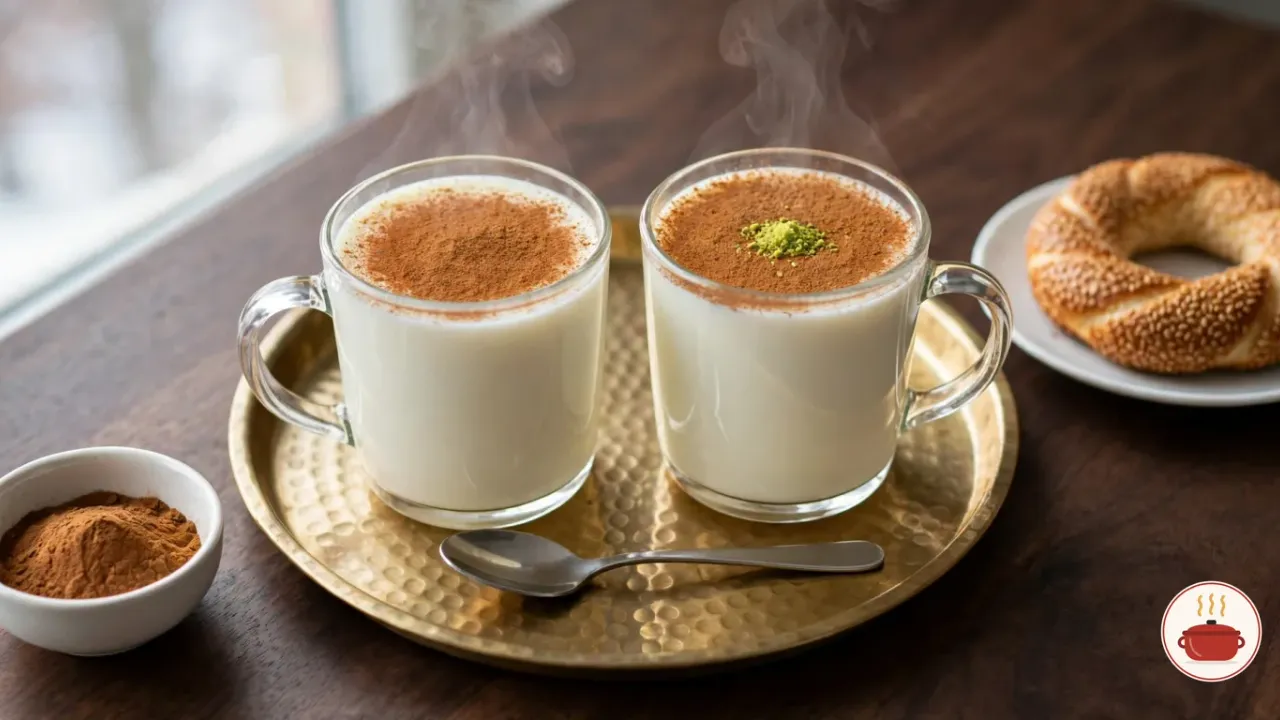
Salep is a hot Turkish winter drink of milk, sugar and ground orchid tubers, finished with a thick coat of cinnamon. It is white, smooth and about as thick as runny custard. This recipe makes 5 cups in 30 minutes, and explains what is really in a supermarket packet.
What salep is
A drink thickened by a tuber
Salep is two things in Turkish: a powder and the drink made from it. The powder comes from the round tubers of several kinds of ground orchid. They are dug after the plant has flowered, cleaned, boiled in water or milk, dried and milled. That is how Turkey’s food code defines it, and it files the powder among the spices.
The tubers hold glucomannan, a fiber that soaks up water and turns milk silky. Good salep has more than 40 g of it per 100 g, according to a 2019 study of Turkish salep. A spoonful thickens a whole pan of milk.
Thick, white and dusted with cinnamon
The drink is plain: milk, sugar and the powder. Every recipe we studied put ground cinnamon on top. Some add ground pistachio or a little ground ginger. The Turkish newspaper Daily Sabah calls it “the thick, creamy, white drink” of winter.
Turks drink it from late October to March, in pudding shops, cafés and on the Istanbul ferries. Turkey’s culture ministry describes people heading to pudding shops and cafés on cold winter nights for a cup of hot salep.
Salep, sahlep or sahlab
Salep is the Turkish spelling, and sahlep a common variant. In Arabic it is sahlab. Across the Levant, sahlab is now usually thickened with cornstarch and scented with rose water, orange blossom or mastic. The Turkish cup keeps to milk, sugar and cinnamon.
Where salep comes from
An Ottoman street drink
The 17th-century traveler Evliya Çelebi described Istanbul’s salep sellers walking the streets in winter. They carried ornate copper ewers with a fire burning underneath and called out their wares. We know his account through a 2019 review by two Turkish researchers, which quotes it. His version was spiced and scented with rose water, unlike the plain cup of today.
The same review reports that Turkey exported the powder for decades, from 15,386 kg in 1955 to 75,119 kg in 1993. The authors link the rise after 1990 to instant mixes.
Salep in 18th-century England
Salep also traveled west. In a 1768 letter printed by the Royal Society, J. Moult explained how to cure English orchid roots like the salep that “comes to us from Turkey”. He hoped to bring down its “present high price, which confines it to people of fortune”.
Don’t confuse it with the “saloop” in Charles Lamb’s 1822 essay on London’s chimney sweeps. His saloop was a tea of sassafras wood with milk and sugar, not orchids.
The ice cream that stretches
Salep is also what makes Maraş ice cream chewy and stretchy. Its Turkish registration allows only goat’s milk, salep and sugar, with salep at 0.7% to 8%. The same document tells the story of a street seller who buried his leftover drink in snow. It frames that origin as hearsay: a good story, not a dated fact.
Why salep is in the news this winter
A study of 200 years of tubers
On April 6, 2026, the journal Current Biology published a study of where the powder comes from. Researchers from Oslo, Leiden, Kew and Türkiye read the DNA of 99 museum tubers and 97 bought at markets in Türkiye and Iran. The paper is open to read.
About 200 years ago, one species, Orchis mascula, made up more than half of the tubers. In the newest samples it was as low as 5%, and other genera made up more than 75%. The median tuber lost 65% of its weight. The authors link the change in species to picking over a wider area and a longer season, and the shrinking tubers to overharvesting.
One caveat: the newest market tubers in the study were bought in 2013 and 2014. So the paper describes a long trend, not this year’s market.
A fine of 699,245 lira
In Türkiye, wild orchids are protected, and digging them without a permit is illegal. For 2026, the fine is 699,245 lira per offence and up to 3,496,768 lira for destroying habitat, a botanist told DHA in January. In June, nature-protection officers in Çankırı seized 35 kg of tubers. They fined the 10 people who dug them a total of 6,992,245 lira, TRT Haber reported.
Exporting salep tubers or powder, “in any form”, is banned too. The rule goes back to an export notice of 1996, and Türkiye repeated it in its December 2025 export list (our translation).
Salep moves to the field
Farmers are now trying to grow it instead. On May 28, 2026, the agriculture ministry announced the first two registered varieties, Balyumru and Bolyumru. Its news release puts the area under cultivation at 400 decares, about 99 acres.
Grown salep is not cheap either. In Kastamonu in June, the grower Ferdi Doğdu said dried salep found buyers at up to 13,000 lira a kilo, NTV reported. In Yüksekova in July, a district farm official put it at 14,000 to 15,000 lira.
Still no count of cups
Nobody we could find has published a 2026 count of how much of it Turks drink, or what a café cup costs. The news is about the plant, its price and the law, not a sales boom.
What’s really in a packet of salep
Most “salep” on Turkish supermarket shelves is a drink mix. We read the ingredient lists of seven brands, as printed on the maker’s or the retailer’s page:
- Dr. Oetker: 0.1% salep in two of its mixes, 1% in another
- Tikveşli ready-to-drink salep: 0.15%
- Pakmaya: 0.25%
- Migros own brand: 0.84%
- Nestlé: 1%
- Kahve Dünyası: 2%
- Ülker: 0.01%, from a user-entered food database
The rest is mostly sugar, starch, milk powder and gums. A 1% sachet holds about 0.2 g of salep. Home cooks use 8 to 10 g per liter of milk, so a sachet cup has a tenth of the real thing or less.
That is not a scandal, just a different product. The recipe site yemek.com puts it simply: ready-mix salep and pure salep powder “are not the same thing” (our translation). Under Turkey’s food code, a product sold as the pure spice may not contain added starch.
What 29 salep recipes agree on
We studied 31 published recipes line by line, 15 of them in Turkish. Two copied another’s quantities, so our counts use 29. They include Turkish newspapers, yemek.com, Turkish cooks writing in English and five Levantine sahlab recipes.
About 9 g of salep per liter
Among recipes that give pure salep in grams, the median is 9 g per liter of milk. The culture ministry uses 10 g with 750 g of milk. yemek.com suggests starting at 6 to 10 g per liter. Recipes that measure by the spoon often use 1 dessert spoon per 2 cups (500 ml).
Sugar splits the room
The median is 34 g of sugar per liter. Turkish newspaper and TV versions run far sweeter, at 85 to 100 g. Turkish cooks writing in English stay near 20 to 40 g. This recipe takes the middle, at 50 g, and you can add more.
Pure salep is slow
Recipes using pure salep cook it for a median of 18 minutes, and up to 35. One yemek.com recipe warns that home salep “won’t be as thick” as a café cup (our translation). Recipes that cook in 2 to 6 minutes use packet mix or cornstarch.
Many skip the orchid entirely
Eight of the 29 contain no orchid at all. Three are Turkish “yalancı salep”, fake salep made with cornstarch. The five Levantine sahlab recipes all use cornstarch. Twelve recipes say the real powder is hard to find, costly or protected.
Cinnamon, every time
All 29 finish with ground cinnamon. Six add pistachio or other nuts. None uses egg or cream.
Choosing your salep
- Pure salep: a fine, pale cream-grey powder sold by the gram. Ask whether it is cultivated. Turkey’s registered growers sell on the home market only, under a 2024 ministry rule.
- Packet mix: fine if that’s what you have. Make it with milk as the label says, and skip the extra sugar: sugar comes first on most labels.
- Cornstarch: for an honest substitute, use 3 tablespoons (24 g) of cornstarch per liter of milk, in the same method. Call it sahlab-style milk, not salep.
Maraş ice-cream makers test the powder by wetting a pinch between thumb and finger. A good one stretches into a long, sticky thread.
Tips for smooth salep
- Dry first. Stir the powder into the sugar before any milk touches it.
- Cold start. Begin with cold milk and heat it slowly.
- Keep stirring. It sticks and scorches on the bottom of the pan.
- Use a heavy pan. A thin pan burns the milk before the drink thickens.
- Stop early. It sets more in the cup, and much more as it cools.
- Be generous with cinnamon. In Türkiye the dusting can cover most of the surface.
Serving salep
Serve it in handled cups, mugs or tulip glasses on a saucer, with a teaspoon for the last thick inch. A simit, the sesame bread ring, or plain biscuits go well with it.
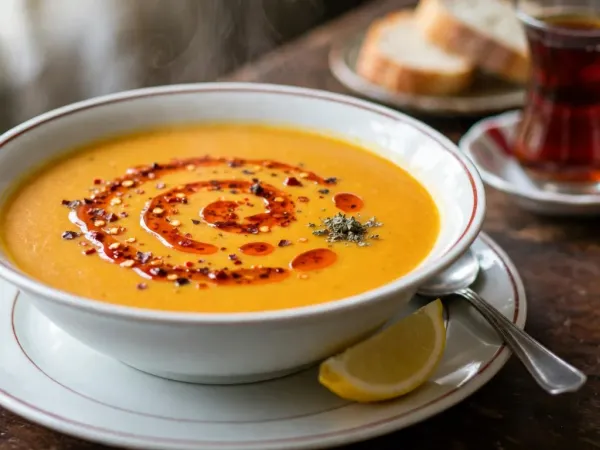
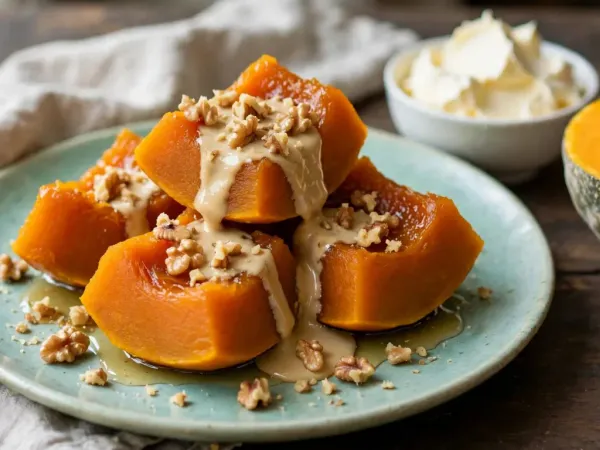
For a Turkish winter evening, follow a bowl of mercimek çorbası with a plate of kabak tatlısı and a hot cup of this. Mexico’s thick champurrado is its corn-and-chocolate cousin.
Safety, allergens and storing
Thick drinks hold their heat
Salep clings and stays hot far longer than tea, so a careless sip can scald. Give children theirs well cooled. For a scald, NHS first aid is 20 minutes under cool running water, started within 3 hours.
Allergens
Salep contains milk, one of the major allergens on the FDA’s list and in UK and EU law. Pistachio is a tree nut. Packet mixes often add whey, milk powder or lactose. One brand warns of possible traces of gluten, nuts, soy and egg, so read the label. Pure salep has no gluten.
Leftovers
Chill leftovers within 2 hours and drink them within 3 to 4 days, in line with the USDA’s leftovers advice. Once cold, it sets like a soft pudding. Warm it over low heat with a splash of milk, whisking, until it is steaming hot all through, 165°F (74°C).
Nutrition
Each cup, a fifth of the pan, comes to about 173 calories. It has 6.5 g of protein, 6.7 g of fat, 22 g of carbohydrate and 89 mg of sodium. Those numbers come from USDA FoodData Central entries for whole milk, sugar and cinnamon. USDA lists no orchid powder, so we counted it as cornstarch; at 2 g a cup, it adds very little.
Fixes for lumpy or thin salep
- It’s lumpy: the powder met hot milk, or went in without the sugar. Whisk hard, or pour it through a sieve.
- It’s thin after 25 minutes: your powder may be weak, or a mix. Simmer 5 minutes more, or stir in 1 teaspoon of cornstarch slaked in cold milk.
- It’s like glue: too much powder. Whisk in hot milk, a little at a time.
- It tastes scorched: it stuck and burned on the pan base. Pour it into a clean pan without scraping, and use lower heat.
- It’s too sweet: packet mixes carry their own sugar. Add plain hot milk.
Substitutes for missing ingredients
- Pure salep: 3 tablespoons (24 g) of cornstarch per liter, or a packet mix made as its label says.
- Whole milk: 2% milk gives a lighter cup. For dairy-free, oat or soy milk work with the cornstarch version.
- Cinnamon: a little ground ginger, as some Turkish recipes use.
Frequently asked questions
What does salep taste like?
Mild, milky and sweet, silky like runny custard, with cinnamon on top.
Is salep the same as sahlab?
Same name, different cup. Turkish salep uses orchid powder and cinnamon. Most Levantine sahlab today uses cornstarch, with rose or orange blossom water and nuts on top.
Is it legal to buy salep?
In Türkiye, salep from registered growers is legal. Digging wild orchids is not, and Türkiye bans exporting salep in any form. Elsewhere, read the label and ask the shop where it comes from.
Does salep have caffeine?
No. Milk, sugar, orchid powder and cinnamon contain no caffeine.
Can I make salep ahead?
Yes, for a day or two. It sets in the fridge, so reheat it gently with a little extra milk, whisking.
Why is my homemade salep thinner than a café’s?
Pure salep thickens slowly, and yemek.com warns that a home cup won’t match a café’s. Simmer it longer, up to 35 minutes as some recipes do, or use a little more salep.