The Sunday Potthesundaypot.com/recipes/champurrado/
Champurrado: Mexican Chocolate Atole Thickened with Masa
By The Sunday Pot Kitchen Updated
- • Six mugs take ⅔ cup (75 g) of masa harina, 6 cups (1.4 liters) of liquid, 6 oz (180 g) of Mexican chocolate and 3 oz (85 g) of piloncillo
- • Dissolve the masa in 1½ cups (360 ml) of warm water first, then sieve it into the pan, so no lumps form
- • Simmer for 10 to 12 minutes, whisking, until it coats the back of a spoon
- • Traditional champurrado is made with water; milk makes it creamier
- • About 280 calories and 4 mg of caffeine a mug, ready in 35 minutes
- • It thickens as it cools: thin leftovers with water or milk when you reheat them
Ingredients
6 servingsInstructions
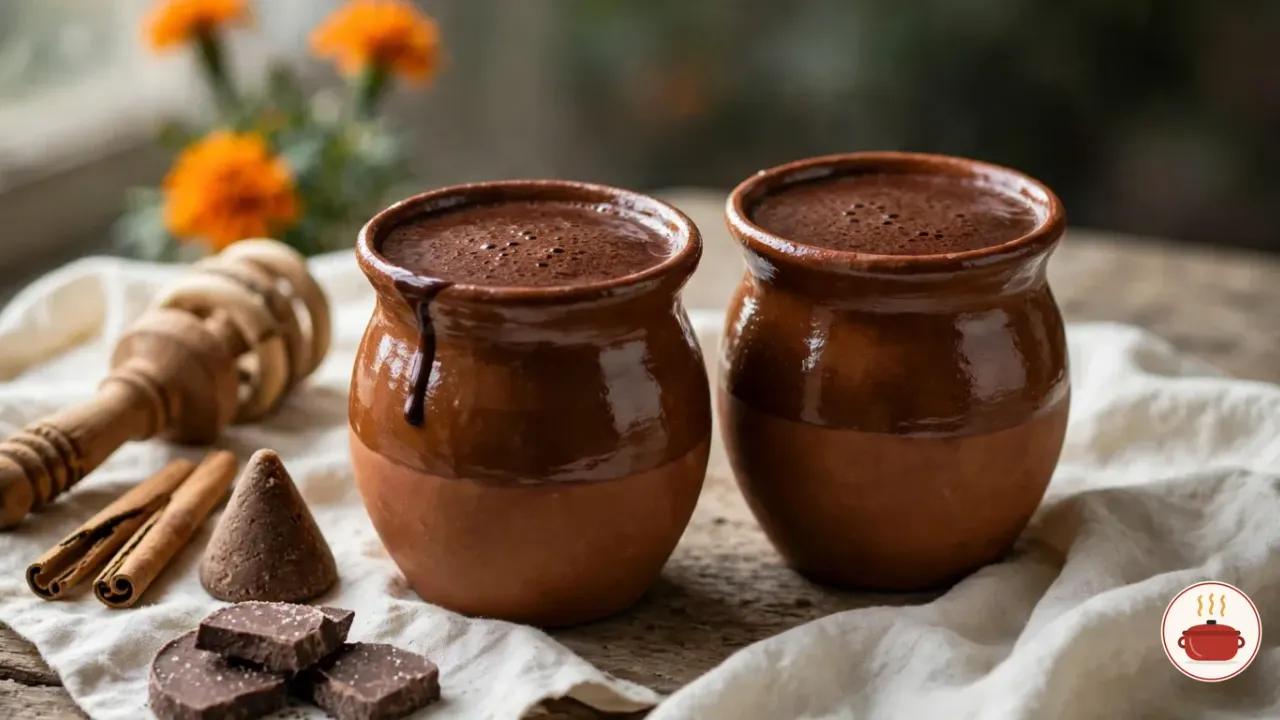
Champurrado is Mexico’s chocolate atole: a hot drink of masa, Mexican chocolate, piloncillo and cinnamon, simmered until thick and frothed with a molinillo. This version takes one saucepan and 35 minutes. Melt the chocolate in water and milk, whisk in the masa, then simmer for 10 to 12 minutes. It makes 6 mugs.
What champurrado is
Champurrado belongs to a family of drinks called atole. Atole comes from atolli, the Nahuatl word for ground corn mixed with water, as Andrea Aliseda explains at Epicurious. Atoles can be plain white, or flavored with fruit, grains or cajeta. Champurrado is the atole defined by chocolate.
The masa does the work. It thickens the drink and gives it a creamy body and a nutty corn flavor. The result sits somewhere between hot chocolate and a thin porridge. It is drunk from a mug, not eaten with a spoon.
Water or milk
In central Mexico, champurrado is made with water, masa, chocolate and piloncillo, notes El Universal. Some cooks add milk and cinnamon. The researcher José N. Iturriaga goes further. No Mexican, he writes, confuses champurrado, made with water, with atole de chocolate, which must be made with milk. El Financiero quotes him, in Spanish.
Regions differ, though. In Chihuahua, a big dairy state, cooks make it with milk, El Financiero adds. This recipe uses 2 cups (480 ml) of milk to 4 cups (950 ml) of water, for a creamier cup. Use all water for the traditional version.
From atolli and cacao to champurrado
Both halves of the drink are ancient. The friar Bernardino de Sahagún described atolli, a ground-corn drink served hot or cold, from before the Spanish arrived. He also saw foamy cacao drinks sold in the markets, some made with masa and honey, El Financiero reports.
Champurrado as we know it came later, with sugar cane. The chronicler Salvador Novo wrote that in New Spain, chocolate was the hot drink of the rich and atole the drink of the poor. Once piloncillo arrived, atole mixed with chocolate became champurrado. A Mexican cookbook of 1845 already lists atole de champurrado, El Financiero notes.
The Spanish also changed chocolate itself. Drinks of cacao in early Mesoamerica were somewhat bitter. The Spaniards added sugar and cinnamon, explains the Penn Museum.
The name and the molinillo
The name comes from champurrar, an old Spanish word for mixing drinks. An 1868 source traced it to a Malay word for mixing, as the word historian Barry Popik found.
Foam was the mark of a good chocolate drink in early Mesoamerica, the Penn Museum notes. Cooks raised it by pouring the drink from one vessel to another. Today the tool is the molinillo, a carved wooden whisk with loose rings. You hold it between your palms and rub them together, so it spins and froths the drink, the Rosenberg Library Museum explains.
When Mexicans drink champurrado
Champurrado is a drink for cold mornings, fiestas and holidays. Street stalls serve it all year from huge pots, with tamales, says El Financiero. It is also a filling breakfast in many Mexican homes, writes Lori Alcalá of Mexican Food Journal.
Day of the Dead
The Day of the Dead falls on 1 and 2 November. On the home altar, or ofrenda, families set out food made from corn: tamales, atole, champurrado or pozol. Mexico’s food agency Alimentación para el Bienestar lists them, in Spanish. In 2026, the two days fall on a Sunday and a Monday.
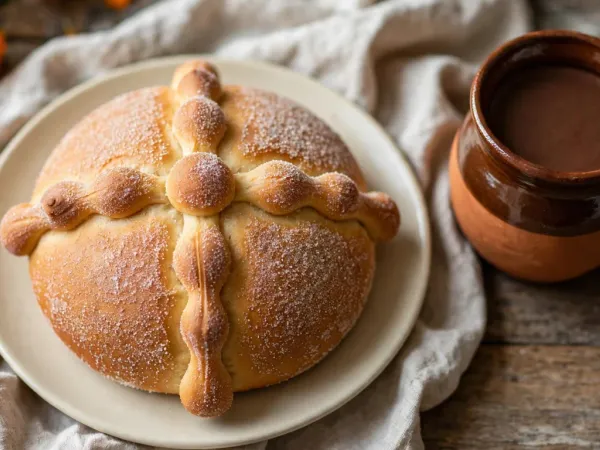
UNESCO added the indigenous Day of the Dead to its intangible heritage list in 2008. Families cook the favorite dishes of the dead and place them at the home altar and the grave, UNESCO explains. In San Pablito, an Otomí town in Puebla, pan de muerto is served with atole de cacao, notes Mexico’s anthropology institute, INAH.
Posadas and Candlemas
The season runs on into winter. Las posadas, the parties of the 9 nights before Christmas, run from 16 to 24 December, says Mexico’s culture ministry. Then comes Candlemas on 2 February. Whoever found the doll in the Three Kings cake brings the tamales, and the tamales come with a hot drink such as champurrado. Mexico’s agriculture ministry describes the custom, in Spanish.
Why champurrado is having a moment
Latin American drinks are rising in the US. In its 2027 forecast, published in September 2026, the food data firm Tastewise projects that Latin American drinks will overtake Asian ones in America in 2027. At current rates, the two lines sit half a percentage point apart.
Fast-food chains have noticed Mexican chocolate too. In December 2025, Taco Bell’s Live Más Cafés added a Mexican Hot Cocoa, made with cinnamon-spiced chocolate syrup, Nation’s Restaurant News reported. Hot, it costs $3.99 for 16 ounces.
Cocoa itself has calmed down. Cocoa futures more than doubled in 2024, after poor rain and crop disease in West Africa. By February 2026 they had fallen nearly 70% from a year earlier, the Associated Press reported. Shop prices have been slow to follow: US chocolate prices still rose 14% in early 2026, by Datasembly’s count. On 2 October 2026, cocoa traded at $5,670 a tonne, less than half its record of December 2024, by Trading Economics data.
We found no published sales or search figure for champurrado itself. The pull is the calendar: the Day of the Dead, the posadas and the cold months in between.
What you need for champurrado
Masa harina
Masa harina is flour made from nixtamalized corn: corn soaked in slaked lime, ground into masa, dried and ground again. Cornmeal and plain corn flour are not good substitutes, warns King Arthur Baking. Maseca is a favorite brand, notes Mexican Food Journal. You need ⅔ cup (75 g).
Mexican chocolate
Mexican chocolate is ground cacao with sugar and usually cinnamon, pressed into tablets of about 3 oz (85 g). Ibarra and Abuelita are the two big brands. Both are coarse, grainy and already sweet, notes Mexican Please. Ibarra lists only cocoa paste, cane sugar, soy lecithin and cinnamon on its own page. This pot takes 2 tablets, about 6 oz (180 g).
Piloncillo
Piloncillo is unrefined whole cane sugar, pressed into a cone. It is also called panela. King Arthur finds it more earthy and caramel-like than brown sugar. Use 3 oz (85 g), chopped, or ⅓ cup (70 g) of packed dark brown sugar.
Canela
Mexican cooks use canela, the soft, papery Ceylon cinnamon. Mexico is the main importer of true cinnamon, which goes into its chocolate, says Sri Lanka’s Export Development Board. One 4-inch (10 cm) stick is enough. Cassia, the harder cinnamon sold in many shops, works too.
A saucepan and a molinillo
A 3- to 4-quart (2.8 to 3.8 liter) heavy saucepan holds the whole batch. Traditionally, champurrado is cooked in a clay pot, El Universal notes. A molinillo makes the best froth, but a whisk or an immersion blender works.
How to make champurrado in one saucepan
Dissolve the masa first
Every good recipe starts the same way. Mix the masa harina with water before it meets the hot pan, or it forms lumps. Pati Jinich stirs hers into warm water, lets it sit, then strains it into the pan. This recipe does the same, with 1½ cups (360 ml) of warm water.
Melt the chocolate gently
Warm the water, milk, cinnamon and piloncillo for 6 to 8 minutes. Then add the chocolate and stir for 3 to 4 minutes, until it melts. Keep the heat at medium, below a boil, so the milk does not catch.
Simmer until it coats a spoon
Once the masa is in, simmer for 10 to 12 minutes, whisking often. Recipes range from 5 to 17 minutes, depending on how thick you want it. The finished drink should coat the back of a spoon, says the chef Oscar Michel in Sunset. Lower the heat if it bubbles hard, as Epicurious advises, so it does not burn.
Froth it
Spin a molinillo in the pan for 30 to 60 seconds, until foam rises. Naz Deravian uses a molinillo, or an immersion blender, in her recipe for NYT Cooking. Well-made chocolate has a head of foam at least 1 to 2 cm (½ to ¾ inch) deep. So says a guide to traditional drinks from Mexico’s Institute of Indigenous Peoples.
Expect it to thicken
Champurrado keeps thickening as it cools, Deravian and Alcalá both note. Serve it right away. Thin a pot that has stood with a splash of water or milk.
Variations: water-only, toasted masa and spices
Traditional water-only champurrado
Replace the milk with 2 cups (480 ml) more water. Aliseda leaves out milk for a version closer to the pre-Hispanic one, and lets the masa carry the flavor. With Ibarra chocolate, this version is dairy-free.
Toasted masa
Deravian toasts the masa harina in the dry pot for about 3 minutes, until fragrant and lightly golden. It gives the drink a deeper corn flavor.
Spices and orange peel
Add 1 star anise, 2 cloves or a strip of orange peel with the cinnamon. In Nuevo León, old recipes add orange peel, El Universal notes. A pinch of cayenne gives a gentle heat.
Vegan champurrado
Use water, or oat or almond milk, and Ibarra chocolate. Michel makes his with almond milk, so his vegan customers can drink it.
The cornstarch shortcut
Some packets thicken atole with cornstarch instead of masa, Aliseda notes, and old Nuevo León recipes did too. It works, but you lose the nutty corn flavor.
Serving and storing champurrado
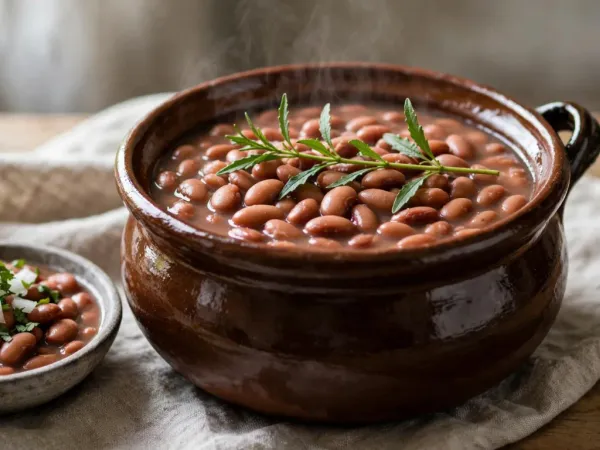
Serve champurrado hot, in mugs, with tamales, pan de muerto, pan dulce or churros. It also suits a slow Sunday supper of frijoles de la olla and warm tortillas.
For another thick, rich drink after dinner, try Vietnamese egg coffee. For something lighter, a hojicha latte has a toasty flavor and much less sugar.
Leftovers
Follow the USDA’s advice on leftovers:
- Refrigerate leftover champurrado within 2 hours.
- Drink it within 3 to 4 days.
- Reheat it until it simmers, whisking in ¼ cup (60 ml) of water or milk per 2 cups (480 ml).
Calories, sugar and caffeine
One mug, about 1 cup (240 ml), has about 280 calories, 5 g of protein and 8 g of fat, by USDA figures. It has about 51 g of carbohydrate, including about 39 g of sugar, mostly from the chocolate and piloncillo. Use 2 oz (55 g) of piloncillo, or none, for a less sweet cup.
Chocolate holds a little caffeine. USDA lists 14 mg per 100 g of Mexican chocolate, so each mug has about 4 mg. That is very little next to the 400 mg a day the FDA cites for most adults. Citing the Dietary Guidelines, the FDA adds that children under 2 should avoid drinks with caffeine.
Why the masa matters
Corn is low in available niacin, a B vitamin. Its niacin is tightly bound, and alkaline processing frees it, a 2016 review in Advances in Nutrition explains. Cooking corn with lime also adds calcium, reports the FAO. That old process, nixtamalization, is what turns corn into masa.
Allergens
Champurrado made with milk holds milk, and many Mexican chocolates hold soy lecithin. Both milk and soy are among the major food allergens the FDA lists. Check the label of your chocolate.
Fixes for lumpy, thin, thick or scorched champurrado
- Lumpy: pour it through a sieve, or blend it for 10 seconds with an immersion blender.
- Too thin: simmer it for 5 minutes more, whisking. Or whisk 2 tablespoons (15 g) of masa harina into ¼ cup (60 ml) of water and add it.
- Too thick: whisk in water or milk, ¼ cup (60 ml) at a time.
- Scorched taste: pour it into a clean pan without scraping the bottom, and keep the heat lower.
- Too sweet: add ½ cup (120 ml) of water and 1 oz (28 g) of dark chocolate.
- Not chocolatey enough: melt in another ½ tablet, about 1½ oz (45 g).
Substitutes for missing ingredients
- Mexican chocolate: 4 oz (115 g) of dark chocolate, ½ teaspoon of ground cinnamon and 2 tablespoons of sugar. Bon Appétit’s champurrado accepts dark chocolate.
- Piloncillo: ⅓ cup (70 g) of packed dark brown sugar.
- Masa harina: about 1¼ cups of fresh masa, crumbled into the warm water. Do not use cornmeal.
- Canela: a cassia cinnamon stick, or ½ teaspoon of ground cinnamon.
- Whole milk: more water, or oat or almond milk.
- Molinillo: a whisk or an immersion blender.
Frequently asked questions
What does champurrado taste like?
It tastes of chocolate, cinnamon and toasted corn, with the caramel note of piloncillo. It is thick, creamy and not too sweet.
What is the difference between champurrado and atole?
Atole is the whole family of hot, masa-thickened drinks. Champurrado is the atole made with chocolate.
What is the difference between champurrado and Mexican hot chocolate?
Mexican hot chocolate is chocolate melted in water or milk. Champurrado adds masa, which makes it much thicker.
Is champurrado made with water or milk?
Traditionally with water. Many families use milk, or half water and half milk, for a creamier drink.
Why is my champurrado lumpy?
The masa went into the hot pan without being dissolved first. Whisk it into warm water, and pour it through a sieve.
Does champurrado have caffeine?
A little. One mug made with 1 oz (30 g) of Mexican chocolate has about 4 mg of caffeine, by USDA figures.
Can I make champurrado ahead?
Yes. Chill it within 2 hours, then reheat it gently, whisking in water or milk, because it thickens as it stands.
What do you eat with champurrado?
Tamales, pan de muerto, pan dulce, churros or buñuelos.
Is champurrado vegan?
It can be. Make it with water or plant milk, and a chocolate without milk, such as Ibarra.