Classic Pot Roast with Carrots and Potatoes (Dutch Oven)
By The Sunday Pot Kitchen Updated
- • 20 minutes of prep and about 3 hours 40 minutes of cooking
- • One 3½ lb (1.6 kg) boneless chuck roast feeds 6
- • Sear it hard, 4 to 5 minutes a side, for flavor and a darker gravy
- • Braise it covered at 300°F (150°C): 1½ hours alone, then 1½ hours with the carrots and potatoes
- • It is ready when a fork twists through it, at about 195 to 205°F (91 to 96°C) inside
Ingredients
6 servingsInstructions
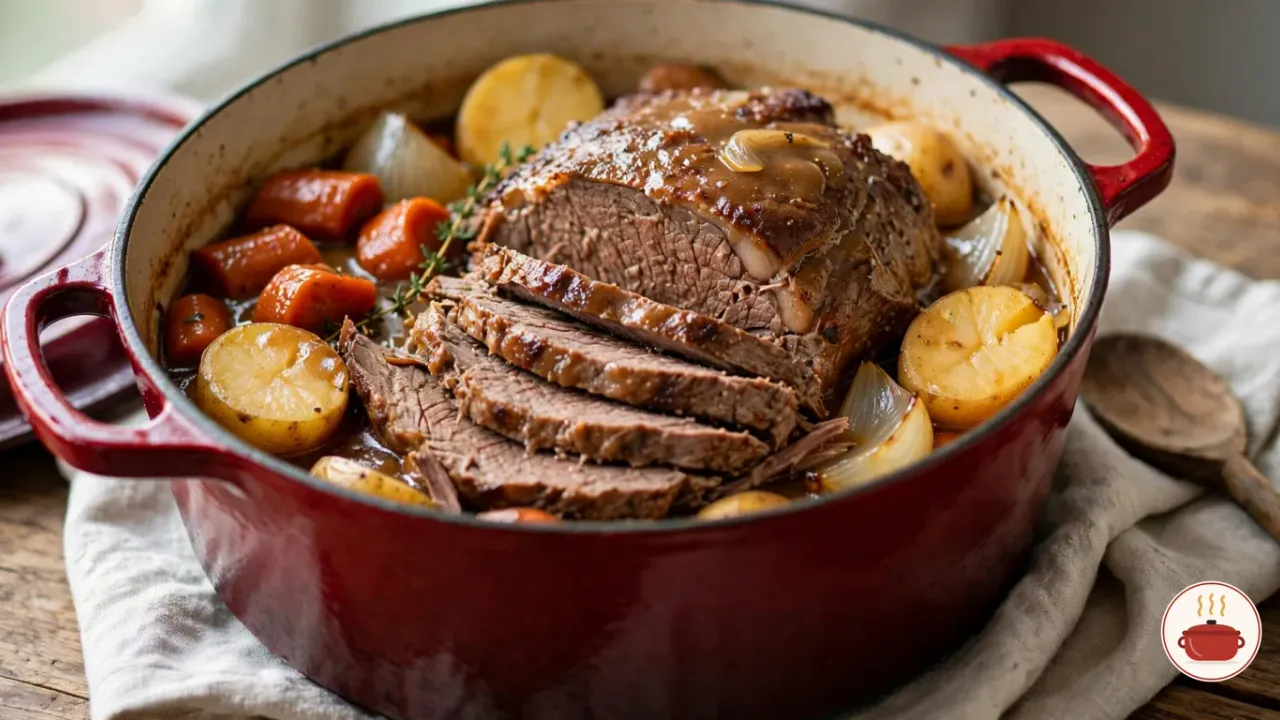
A classic pot roast is a beef chuck roast seared in a Dutch oven and braised in broth and red wine. It cooks at 300°F (150°C) for about 3 hours. Carrots and potatoes join it halfway. It is ready when a fork twists through the meat with no resistance. The juices in the pot become the gravy.
The best beef for pot roast
Choose a cut from the chuck, the shoulder of the steer. The shoulder works hard, so its meat holds a lot of collagen. Collagen is the connective tissue that makes meat tough. Chuck also carries marbling, the white flecks of fat inside the muscle, which keep it juicy.
Long, moist heat melts the collagen into gelatin. That turns a tough cut silky and makes the gravy rich. A lean cut has little collagen and little fat, so it dries out instead.
Look for one of these names at the meat counter:
- Chuck roast. It may carry the label chuck pot roast, chuck eye roast or blade roast. It is the most common choice, well marbled and forgiving.
- Chuck shoulder roast. This leaner cut comes from the shoulder clod. It slices more neatly but can taste a little drier.
- 7-bone roast. This bone-in chuck roast comes from a cut across the shoulder blade. The bone looks like the number 7. It adds flavor, but you need a wider pot.
Buy a roast of 3 to 4 lb (1.4 to 1.8 kg) for 6 people. Look for an even thickness of about 3 inches (7.5 cm), so it cooks at the same pace all through. If the butcher ties it with string, leave the string on until you serve it.
Why sear the roast first
Searing browns the outside of the meat. That browning creates deep, savory flavors that plain braising never builds. It also leaves brown bits stuck to the bottom of the pot. The wine lifts them off, and they give the gravy its color and taste.
Searing does not seal in the juices, whatever the old kitchen saying claims. The roast loses moisture either way. You sear for flavor and color.
Pat the meat dry and heat the oil well before the roast goes in. A wet roast steams instead of browning. Then leave it alone for 4 to 5 minutes a side. It will let go of the pot once a crust forms.
Sear the roast right before it braises, not the night before. USDA advises against browning beef and chilling it to finish later: a partial cook does not destroy the bacteria.
How long to cook pot roast
At 300°F (150°C), a 3½ lb (1.6 kg) chuck roast needs about 3 hours. Use these times as a guide for other sizes:
- 2 to 3 lb (0.9 to 1.4 kg): 2½ to 3 hours
- 3 to 4 lb (1.4 to 1.8 kg): 3 to 3½ hours
- 4 to 5 lb (1.8 to 2.3 kg): 3½ to 4½ hours
Thickness matters as much as weight, so start checking early. The test is simple. Push a fork into the thickest part and twist it. If the meat gives way, it is ready. If it pushes back, cover the pot and check again in 20 to 30 minutes.
A thermometer tells a second story. The USDA safe minimum for a beef roast is 145°F (63°C), with a rest of at least 3 minutes. Your roast passes that mark early in the braise. At that stage the meat is safe to eat, but it is still tough.
Tenderness comes much later. Chuck turns soft once the inside reaches about 195 to 205°F (91 to 96°C). Collagen breaks down slowly, so the meat needs time in that range. The long cook is for texture, not for safety. A tough pot roast almost always needs more time, not less.
Keep the heat low. At a bare simmer, the meat stays moist. A hard boil squeezes the muscle fibers and dries them out.
Slow cooker or Instant Pot
Both work, with a few changes.
Slow cooker. Sear the roast and build the sauce in a large skillet, as in the first 4 steps. Put the carrots and potatoes in the cooker first and set the roast on top. USDA advises this order, since vegetables cook more slowly than meat. It also says to thaw meat fully before it goes in a slow cooker.
Pour the sauce over the roast, with only 1 cup (240 ml) of the broth, since a slow cooker loses little liquid. Cook on low for 8 to 10 hours or on high for 5 to 6 hours. Make the gravy in a saucepan.
Instant Pot. Cut the roast into 3 or 4 large pieces so it cooks evenly. Sear them on the sauté setting, then build the sauce as in the recipe. Cook at high pressure for about 60 minutes for 3 lb (1.4 kg), or 75 minutes for 4 lb (1.8 kg).
Let the pressure drop on its own for 15 minutes. Then add the carrots and potatoes and cook for 5 minutes at high pressure, with a quick release. Make the gravy on the sauté setting.
Making the gravy
The braising liquid already tastes of beef, wine and onion. It only needs skimming and thickening.
First, remove the fat. Tilt the pot and spoon it off the top, or pour the liquid through a fat separator. Next, bring the liquid to a simmer. You should have about 3 cups (720 ml). If you have much more, boil it for a few minutes to concentrate it. If you have less, add a little broth or water.
Thicken it with a paste of equal parts soft butter and flour. Whisk it in a little at a time, so it never forms lumps. Simmer for 5 minutes to cook out the raw taste of the flour. The gravy should lightly coat the back of a spoon. For a thicker gravy, let it reduce a few minutes more. Add salt only at the end.
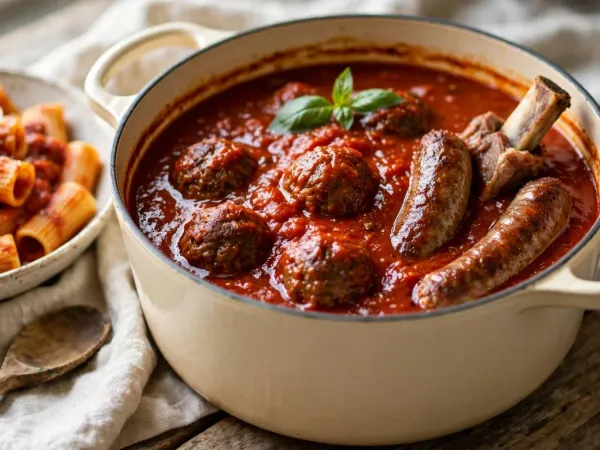
This beef gravy has nothing to do with Italian Sunday gravy. That one is a slow tomato sauce, simmered with meatballs and sausage. Both belong on a Sunday table.
What to serve with pot roast
The pot already holds the potatoes and carrots, so the rest can stay simple. Add crusty bread or buttered egg noodles for the gravy. Something green helps too, such as green beans or a crisp salad.
For a full Sunday menu, start with small bowls of French onion soup. Finish with a warm sticky toffee pudding and a pour of cream.
Leftovers and storing
Pot roast keeps well, and it often tastes better the next day. Follow the USDA advice on leftovers:
- Refrigerate the leftovers within 2 hours of cooking.
- Cut the meat into smaller pieces and use shallow containers, so everything cools fast. Hot food can go straight into the refrigerator.
- Eat them within 3 to 4 days, or freeze them for 3 to 4 months.
- Reheat the meat to 165°F (74°C), and bring the gravy to a rolling boil.
Freeze the beef in its gravy, so it stays moist. Thaw it overnight in the refrigerator. Then warm it in a covered pot over low heat.
Leftover beef makes great sandwiches, hash or tacos. For tacos, shred it into warm tortillas and serve it with a side of pot beans.
Substitutes for missing ingredients
- Chuck roast: a brisket flat or boneless short ribs, both rich in collagen. Bottom round or rump roast also works, but it turns out leaner and drier. Slice it thin.
- Red wine: more beef broth, plus 1 tablespoon (15 ml) red wine vinegar for brightness.
- Beef broth: chicken broth, or water with beef bouillon. Bouillon is salty, so salt the dish less.
- Worcestershire sauce: 2 teaspoons (10 ml) soy sauce.
- Fresh thyme: 1 teaspoon (1 g) dried thyme.
- Yukon Gold potatoes: red potatoes, which hold their shape. Russets turn softer and thicken the gravy.
- Carrots: parsnips or turnips for part of them.
- Kosher salt: brands differ, so go by the weight. Table salt packs more salt into each spoon: use about half the volume.
- Butter and flour for the gravy: stir 2 tablespoons (16 g) cornstarch into 3 tablespoons (45 ml) cold water, then whisk it into the simmering liquid. For a gluten-free gravy, check the labels on the broth and the Worcestershire sauce too.
- Dutch oven: any heavy, oven-safe pot with a tight lid, or a roasting pan sealed with foil.
Frequently asked questions
What cut of beef is best for pot roast?
Chuck roast is the best choice. It comes from the shoulder and holds plenty of collagen and marbling, so it turns tender and juicy after a long braise. A chuck shoulder roast or a bone-in 7-bone roast also works.
How long does pot roast take in the oven?
A 3½ lb (1.6 kg) chuck roast takes about 3 hours, covered, at 300°F (150°C). Allow 2½ to 3 hours for a smaller roast and up to 4½ hours for a 5 lb (2.3 kg) one. It is ready when a fork twists through it easily.
Why is my pot roast still tough?
It almost always needs more time. Chuck stays firm until its collagen melts, and that takes time at about 195 to 205°F (91 to 96°C) inside the meat. Cover the pot and check again every 20 to 30 minutes.
Do I have to sear pot roast?
No, but it tastes better seared. Browning builds deep flavor and leaves brown bits that color and season the gravy. Searing does not seal in juices, so you can skip it when time is short.
Can I make pot roast ahead?
Yes. Cook it fully, then refrigerate it within 2 hours. It keeps for 3 to 4 days. Lift off the solid fat, then reheat the meat to 165°F (74°C) and bring the gravy to a rolling boil.
Can I put a frozen roast in the slow cooker?
No. USDA advises that you always thaw meat before it goes in a slow cooker. Thaw the roast in the refrigerator first, then sear it and cook it as usual.