The Sunday Potthesundaypot.com/recipes/birria-de-res/
Birria de Res: Jalisco-Style Beef Birria in Red Consomé
By The Sunday Pot Kitchen Updated
- • Use a bony, gelatinous cut such as beef shank with a meatier one such as chuck or short rib
- • Toast the dried chiles for seconds only, then soak them in hot water that is not boiling
- • Blend guajillo, ancho and pasilla with garlic, cumin, oregano, clove, canela and vinegar, then strain
- • Marinate the beef overnight, then braise it covered for about 3 hours
- • Skim the fat but keep a thin red layer, and salt the consomé only at the end
Ingredients
6 servingsInstructions
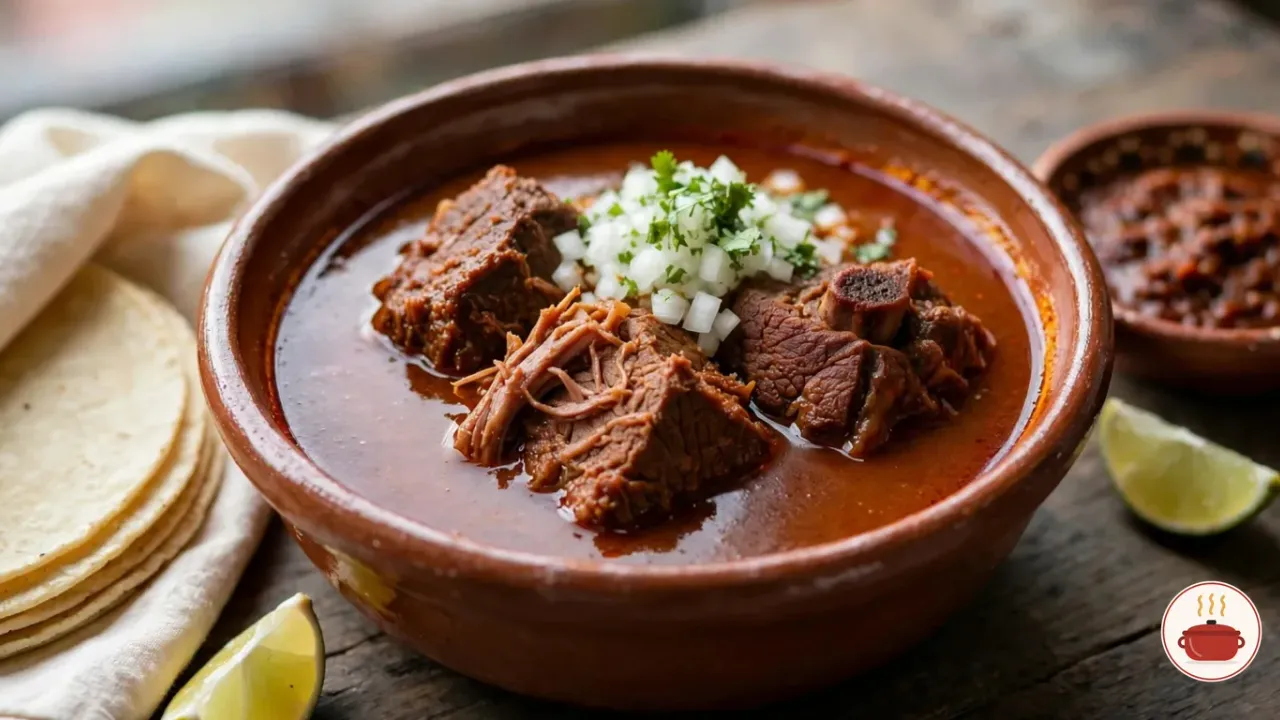
Birria is Jalisco’s great red stew. Meat rests overnight in a paste of dried chiles, spices and vinegar, then braises until it falls off the bone. It comes to the table in its own brick-red broth, the consomé. This beef version feeds 6, with 45 minutes of work, an overnight rest and 3 hours of simmering.
What birria is
A stew first, a taco second
Outside Mexico, many people meet birria as a taco: a tortilla dipped in red broth, crisped on a griddle and served with a cup of consomé for dunking. In Jalisco, birria is first of all a stew, eaten from a bowl with onion, cilantro, lime and tortillas.
El Colegio de México publishes a dictionary of Mexican Spanish, the DEM. It defines birria as a traditional Jalisco dish of lamb or goat meat “with a chile and tomato broth”. Goat, chivo, is the classic meat. El Informador, Guadalajara’s daily, cites the state tourism office on this: birria is traditionally goat marinated in chiles and spices, though the beef version “has also become common”.
Why beef
Beef birria, birria de res, is the version most home cooks outside Jalisco make. It is also the style that took over Tijuana. As far back as 2012, OC Weekly called the stew-pot birria de res “king in Baja”. Beef is easy to find, and its bony cuts give the broth body.
The word
The DEM lists a second, separate word birria: anything “of poor quality, ugly or unpleasant”. A popular story says the dish took its name from that sense, because the Spanish thought goat meat worthless. The dictionary treats the two as different words, so take the story as folklore.
Where birria comes from
The oldest entry we could read
The earliest printed use we could read is in Félix Ramos i Duarte’s Diccionario de mejicanismos. Its second edition, from 1898, is on the Internet Archive. It defines birria as “barbacoa de chivo, ó chivo asado”, goat barbacoa or roast goat. It marks the word as Mexico City usage. We found no entry for it in the 1895 first edition.
The Spanish-language Diccionario de americanismos, from the Association of Spanish Language Academies, still gives the rural Mexican sense “barbacoa de borrego o de chivo”.
Cocula, Tlaquepaque and the earth oven
Several Jalisco towns claim the dish. “It is believed that birria comes from the town of Cocula,” Milenio wrote in 2021, careful to say “believed”. A 2014 El Informador piece put the debate between Atequiza and Tlaquepaque, and noted that some credit Zacatecas instead.
The old method used an earth oven. “The traditional preparation took place in underground ovens,” writes Animal Gourmet, which also advises cooking the meat bones and all. Some cooks still wrap the meat in maguey leaves, or seal the pot lid with a rope of corn dough to trap the steam.
Legends
You will often read that Spanish goats ran wild in 16th-century Mexico and Indigenous cooks turned the unwanted meat into birria. We found no historian who backs this. Treat it, and the story of shepherds whose goats steamed in a volcanic cave, as legends.
From Tijuana to Los Angeles
Beef birria crossed into the United States through Tijuana. L.A. TACO told the story in 2018. Teddy Vazquez learned birria at a respected Tijuana taco cart, Birrieria el Paisa, and began selling it in Los Angeles from his car.
At the time, L.A. TACO said beef birria was “relatively rare in Southern California”. A year later, LAist called his Teddy’s Red Tacos “the most high-profile birria de res success story”. Its tortillas, dipped in consomé, came off the griddle “a deep crimson”.
Birria and Guadalajara this year
The World Cup and the 50 Best
Guadalajara hosted World Cup matches in June 2026. Afterwards, the city’s visitors bureau put tourist spending at 10.5 billion pesos. La Crónica de Hoy reported on July 8 that birria was one of the main draws for fans from Asia, Europe and South America. It shared that billing with carne en su jugo and tortas ahogadas.
The city now has a second date. The organisers of Latin America’s 50 Best Restaurants will announce the 2026 list “on 1 December live from Guadalajara”, with Jalisco’s tourism ministry as host partner.
Beef prices
Birria is a dish for cheap, bony cuts, and that matters this year. In the United States, ground beef averaged $6.79 a pound in September 2026, 7.4% more than a year before. In August it reached $6.92, the highest monthly average in the ten years of Bureau of Labor Statistics data we pulled. Boneless chuck roast, the cut most US birria recipes use, cost $9.19 a pound, about the same as a year earlier. Mexican cooks reach for shank and short rib instead.
In Mexico, INEGI, the national statistics office, reported that tomatoes rose 30% and onions 23% in September alone. Its bulletin gives no separate figure for beef.
Plenty of talk, no tally
Menus keep finding new uses for birria. The menu researchers Datassential wrote on September 9, 2026, that it had grown 221% on menus over four years. That is their own menu data.
Neither Mexico nor any tourism office counts birria sales, so no official 2026 number exists for the dish itself. It shows in the stories instead: the World Cup, the 50 Best and a steady run of how-to pieces in the Mexican press.
What 28 birria recipes have in common
We read 28 birria recipes in full. Seventeen are in Spanish, from Mexican outlets such as Excélsior, El Universal, El Informador, Infobae México, Cocina Fácil, Directo al Paladar and Animal Gourmet. The English ones include Pati Jinich, Rick Bayless, America’s Test Kitchen, NYT Cooking and Sunset. Seventeen use beef, eight goat and three lamb.
Guajillo is the base
Guajillo chile appears in 27 of the 28, usually about six per pot. Ancho joins it in 17 and pasilla in 11. Chef Oropeza’s tips in Directo al Paladar sum up the roles: guajillo for colour, ancho for depth and pasilla for a smoky touch. Across the recipes, the median works out to between six and seven dried chiles per kilo of meat.
The spice cabinet
Cumin and oregano each show up in 25 recipes, black pepper in 24 and clove in 21. Cinnamon and bay leaf appear in 15 each. Chef Eduardo Osuna calls oregano, pepper, clove and cumin the spices that “can’t be missing” from a good beef birria.
Vinegar, and a long rest
Vinegar appears in 23 of 28 recipes, a median of about 37 ml per kilo of meat. “Cider vinegar is common in Mexico,” notes Rick Bayless, who learned his version from a market vendor in Guadalajara. Eighteen recipes marinate the meat in the adobo first, and 12 leave it overnight or longer. Pati Jinich asks for 24 to 48 hours if you can, “or at least 2 hours”.
Shank and short rib
The Mexican beef recipes pair a bony cut with a meaty one. “The ideal is short rib and shank,” says Osuna. Shank, chambarete, appears in 10 of the 17 beef recipes and short rib in 9. American recipes lean on chuck.
Bone-in meat appears in 16 recipes. “The bone adds flavour and gelatin,” Oropeza says.
Three hours, covered
The stovetop and oven braises run a median of 3 hours. Sixteen recipes cover or seal the pot. In 23, the consomé is simply the cooking liquid. Five, mostly goat recipes, make a separate tomato broth from the juices, which is where our optional tomatoes come in.
Tips for a deep red, tender birria
- Toast in seconds. A chile that smokes turns the whole pot bitter. “Don’t burn them,” warns Infobae México’s 2026 recipe.
- Soak, don’t boil. Hot water from the kettle, not a rolling boil, keeps the chiles sweet.
- Strain the adobo. Bits of chile skin make the broth gritty.
- Pick bony meat. Shank and short rib give the consomé its silky body.
- Seal the pot. Foil under the lid holds the steam, like the dough seal in old Jalisco kitchens.
- Keep some fat. Oropeza leaves “a light layer” so the consomé keeps its signature red look.
- Season last. The broth reduces as it cooks, so add salt once it is done.
Serving birria
Serve birria in deep bowls, with a pile of chopped white onion, cilantro, lime wedges and a stack of hot corn tortillas. Eleven recipes add a hot salsa, often made with chile de árbol. In Tijuana, LAist noted, the beef version is “served mostly for breakfast”.
Leftovers make tacos. Dip a corn tortilla in the red fat on top of the consomé. Fill it with shredded meat, fold it and crisp it in a hot pan. Add melted cheese and you have quesabirria. Pati Jinich’s advice for tacos: “drink the broth as a chaser.”
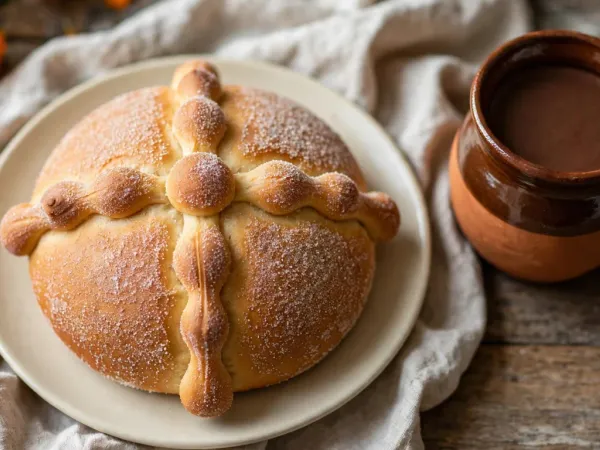
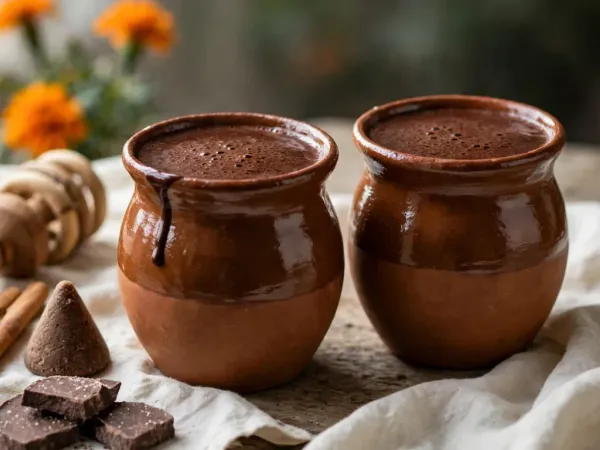
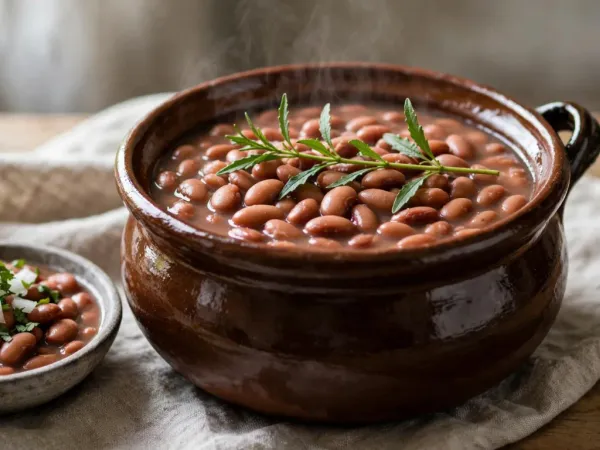
For a Mexican spread, open with a pot of frijoles de la olla and end with a mug of thick champurrado. In early November, a sweet roll of pan de muerto fits right in.
Safety, storing and nutrition
Handling dried chiles
Capsaicin, the heat in chiles, burns skin and eyes. Colorado State University Extension advises gloves and glasses when you work with chiles. If some gets on your skin, rub it with vegetable oil, wipe it off, then wash with soap and water. Toast chiles with the fan on: smoking chiles fill a kitchen with fumes that make you cough.
Marinating and cooking
Marinate raw beef only in the fridge. Here the adobo cooks along with the meat, so none of it stays raw. If you set some aside for later, boil it first. Hours of braising take the meat well beyond 145°F (63°C), the minimum for beef roasts on the USDA’s safe temperature chart.
Cooling and keeping
A deep pot of stew cools slowly. The USDA’s leftovers guidance says to spread a big batch across several shallow boxes so it cools fast. Refrigerate it no later than two hours after cooking. Birria then keeps for up to four days chilled, or about four months frozen. Freeze meat and consomé together. Reheat the consomé until it boils, or to an internal 165°F (74°C).
Allergens
This recipe contains none of the major food allergens. Some birria recipes add sesame seeds, beer or bouillon cubes, so check if you swap in another recipe’s extras. Corn tortillas are usually gluten-free, but read the label.
Nutrition
One bowl has roughly 630 calories, 53 g of protein, 39 g of fat, 15 g of carbohydrate and 5 g of fiber, without tortillas. Our estimate draws on the USDA’s FoodData Central database for braised beef chuck and for dried ancho and pasilla chiles. FoodData Central has no guajillo, so we used its sun-dried hot chile instead.
Fat varies most: the more you skim, the lighter the bowl. Sodium comes to about 890 mg, almost all from the added salt.
Fixes for bitter, thin or tough birria
- The broth is bitter: the chiles were scorched or soaked in boiling water. Next time, toast for seconds only and use hot tap water.
- Chewy, tight meat: give it longer. Keep simmering in 30-minute steps until it pulls apart.
- The consomé is thin: lift out the meat and boil the broth uncovered for 10 to 15 minutes.
- It is too greasy: let the pot cool in the fridge, then spoon away the set fat from the top. Leave a little for colour.
- It is too hot: leave out the árbol chiles and make sure every seed and vein comes out.
Substitutes for missing ingredients
- Beef shank: bone-in short ribs or oxtail.
- Chuck: boneless beef shoulder or cheeks.
- Goat or lamb: use the same weight, bone-in. This is the older Jalisco way.
- Ancho: more guajillo.
- Pasilla: an extra ancho.
- Mexican oregano: regular dried oregano.
- Canela: a small piece of regular cinnamon stick.
Frequently asked questions
Is birria spicy?
Usually only mildly. Recipes that want more heat add chile de árbol, which you can leave out or serve as a salsa on the side.
Can I make birria in a pressure cooker?
Yes. Three recipes in our set cook it under pressure for 30 to 45 minutes. Marinate the meat first, as usual.
Is birria made with goat or beef?
Both. Goat is the traditional Jalisco meat, while beef is the popular Tijuana and US version. Lamb is common too.
How is birria different from barbacoa?
The words overlap. The 1898 dictionary defines birria as goat barbacoa, and the DEM still gives “barbacoa” as one of its meanings. As a dish, though, birria is defined by its chile adobo and red broth.
What is quesabirria?
A taco of shredded birria and melted cheese. You dip the tortilla in consomé, crisp it on a griddle and serve it with a cup of broth for dipping.
Can I make birria ahead?
Yes, and it improves. Cook it a day early and refrigerate it. Spoon off some of the set fat, then bring the consomé back to the boil.