The Sunday Potthesundaypot.com/recipes/gulab-jamun/
Gulab Jamun: Soft Khoya Dumplings in Cardamom Rose Syrup
By The Sunday Pot Kitchen Updated
- • Boil sugar, water and cardamom for 5 minutes, short of a thread, then add rose water
- • Rub soft khoya smooth, then mix in a little flour and baking powder without kneading
- • Roll 20 small balls between greased palms until there are no cracks
- • Fry them slowly in ghee at 285 to 300°F (140 to 150°C) for 7 to 10 minutes
- • Drop them into warm, not boiling, syrup and soak for at least 2 hours
Ingredients
20 piecesInstructions
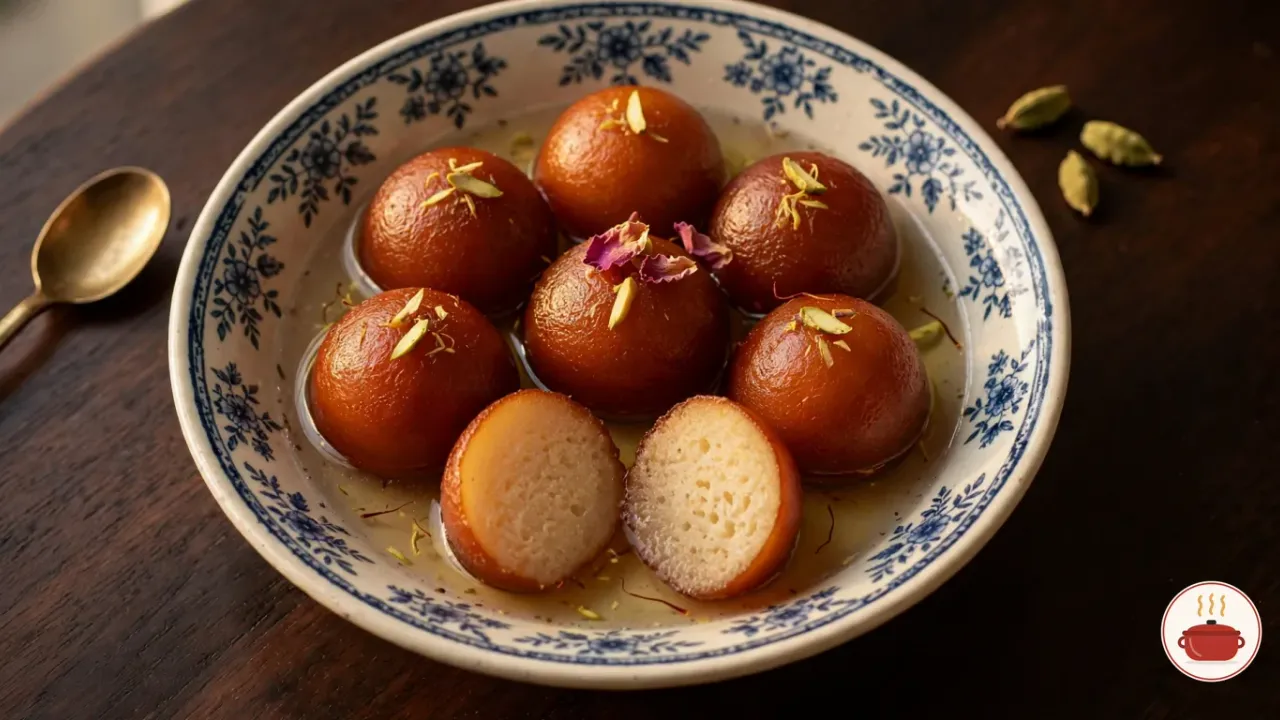
Gulab jamun are one of India’s favourite festival sweets: soft balls of milk dough, fried slowly until deep golden brown, then soaked in a warm syrup scented with cardamom and rose water. This recipe uses khoya, milk cooked down to soft solids, and makes 20 pieces. It takes about 1¼ hours of work, plus 2 hours of soaking.
What gulab jamun is
Milk, flour and syrup
The dough is mostly khoya, also called mawa. A little flour holds it together, and a pinch of baking powder makes it light. “Gulab jamun are made by adding a little maida to mawa,” writes the Hindi cookery author Nisha Madhulika. Fried and soaked, each ball turns soft and spongy right to the centre.
India’s food regulator, FSSAI, even describes the ideal in its guidance on milk sweets. A good one is “soft and spongy, free from lumps and hard central core”, with a “soft and thin crust”.
Khoya or milk powder
Khoya takes hours to make at home, so many cooks use milk powder. “Many of us make them with dried milk powder instead,” writes the cookery writer Anjum Anand. Both work. Khoya is the traditional base, and milk powder is easier to find outside India. Our method uses khoya, and a milk-powder version follows below.
The family of syrup sweets
Gulab jamun have close cousins in India. Kala jamun are fried longer until almost black and often stuffed with nuts. In Kolkata, ledikeni are made from chhena, fresh curd cheese, “unlike gulab jamun which is made from khoya”, notes Live History India.
Where gulab jamun comes from
Rose water and a fruit
The name is a description. Gulab comes from the Persian for rose water, gul (rose) plus āb (water). The jamun is a dark purple fruit of India, the Java plum. John Platts’s 1884 Urdu and Hindi dictionary lists gulāb-jāman as “a kind of sweetmeat (which has the shape of the fruit jāman)”. You can search it at the University of Chicago’s Digital South Asia Library.
Older dictionaries we checked give the word only for a fruit tree, the rose-apple. Platts is the first of them to add the sweet. That doesn’t prove it is the first use, only that the sweet sense reached the dictionaries by the 1880s.
Bihar, 1885
The earliest description of the sweet we could read comes from George Grierson’s Bihar Peasant Life, printed in Calcutta in 1885. He lists “gulab jamun,—a long sweetmeat made of dry curds”, meaning chhena. It is on archive.org. His was long, not round, and made with fresh curd rather than khoya.
Stories to take lightly
You will often read that a Persian cook made gulab jamun by accident for the Mughal emperor Shah Jahan. No early source backs it up, and it reads like a legend.
Writers also link the sweet to the Arab luqmat al-qadi, fried dough in syrup. The food historian Michael Krondl doubts a direct line: the two doughs “are made entirely differently”, he writes. The only link may be the rose-water syrup.
Gulab jamun for Diwali 2026
Sunday, November 8
This year the festival of lights lands on Sunday 8 November, according to the Indian government’s list of central holidays for 2026. Hebbar’s Kitchen, an Indian recipe site, calls it a sweet “made for occasions and festival celebrations”.
Checks on khoya this season
Festival demand brings fake and stale khoya to market. On September 29, 2026, FSSAI asked every state to run a special drive against unsafe food over Navratri and Diwali, Business Standard reported. It named ghee, khoa and paneer among the foods that see demand “rise sharply”.
The raids followed. On October 25, Delhi’s food safety officers destroyed 520 kg of “abandoned and rotten khoya and chhena” at the Mori Gate khoya market, ANI reported. On October 30, Punjab officials in Barnala seized 300 kg of khoya and 910 kg of suspected milk cake, the news agency UNI reported.
Dearer sugar and milk
Sugar has been tight in India this year. On August 26, the average retail price reached 65.05 rupees per kg, from about 48 rupees a month earlier. The figures are Department of Consumer Affairs data, cited by The Tribune. Delivery apps capped sugar orders; one listing allowed two 1-kg packs per order. The government has since released extra sugar for sale ahead of Diwali and cut how much dealers may hold.
Milk costs more too. Amul and Mother Dairy raised fresh milk prices by 2 rupees a liter from May 14, 2026, The Hans India reported. Khoya is milk cooked down to a fraction of its volume, so the rise reaches the sweet shop.
How popular it is
Swiggy, India’s food delivery app, counted 4.5 million gulab jamun orders in 2025. In its year-end report, only two chocolate cakes sold more among desserts. That made it the most-ordered Indian sweet on the app that year. We found no 2026 sales figure for gulab jamun itself.
What 33 gulab jamun recipes agree on
We read 33 recipes start to finish, one with two versions, so 34 in all. Twenty-four come from Indian cooks and outlets, five in Hindi. They include Veg Recipes of India, Hebbar’s Kitchen, Ranveer Brar, Sanjeev Kapoor, Nisha Madhulika and Aaj Tak. The rest come from BBC Food, SBS, King Arthur Baking and other outlets.
Cardamom, rose and saffron
Cardamom flavours the syrup in 31 of the 34 versions. Rose water or rose essence appears in 25 and saffron in 21. Ten add a little lemon juice to the syrup, which stops the sugar from crystallising.
Mix, don’t knead
Almost every Indian recipe says to bring the dough together gently. Dassana Amit of Veg Recipes of India explains why: kneading forms gluten “which will make the jamun dense and heavy”. Dense balls also soak up less syrup.
Every recipe warns about cracks too. A cracked ball can split open in the hot fat.
Low heat, and a thermometer only abroad
All 34 fry on low or medium-low heat. Only 5 give a temperature, and none of them is Indian. Indian cooks judge the fat by a test ball instead: it should rise slowly without changing colour. Those that give a number land between 265 and 300°F (130 and 150°C).
BBC Food warns not to let the oil “go above 165C”. For King Arthur Baking, a “precise oil temperature is important”.
Indian recipes split three ways on the fat: 7 use ghee, 6 oil and 11 say either. Frying in ghee “gives good flavour”, says Hebbar’s Kitchen.
Syrup short of a thread
Indian sweet makers test sugar syrup by the “string” it pulls between finger and thumb. In 27 of the 34 versions, the syrup stays short of one string. It should “not reach 1 string consistency”, says Swasthi of Indian Healthy Recipes, or the jamun won’t absorb it. Aaj Tak’s 2026 guide, in Hindi, asks for a slight honey-like stickiness.
The numbers
Per 250 g of khoya, the median recipe uses 35 g of flour and soaks the balls for 90 minutes. Seven of the 17 khoya versions use no raising agent at all; the rest use baking powder or soda. Five add a little paneer for softness. We used the median flour, a small amount of baking powder and a 2-hour soak.
Tips for soft, round gulab jamun
- Use soft khoya. Indian shops sell a moist type for sweets, called chikna or dhap khoya. Ask for it by name.
- Rub out every lump. Lumps in the dough become hard specks or cracks.
- Go easy on the raising agent. Too much soda makes the balls break in the fat.
- Roll small. The balls double in size as they fry and soak.
- Swirl, don’t poke. Aaj Tak’s guide tells you to move the fat, not the balls, until they firm up.
- Fry a shade darker than you want. The jamun turn a little lighter once they soak, notes the recipe site Foodviva.
- Warm syrup, not boiling. Boiling syrup can shrink them, and cold syrup leaves them hard inside.
Gulab jamun with milk powder
For about 16 pieces, mix 1 cup (120 g) of full-fat milk powder, ⅓ cup (40 g) of all-purpose flour and ½ teaspoon of baking powder. Rub in 1 tablespoon of soft ghee. Add 2 tablespoons of plain yogurt, then milk a spoonful at a time, until the dough is soft and a little sticky. Rest it for 10 minutes and roll it with greased palms.
Fry and soak exactly as above. These cook a little faster, in about 5 to 7 minutes.
Serving gulab jamun
Serve 2 or 3 warm in a small bowl with a spoonful of syrup. Pistachio slivers and rose petals are the usual garnish, and festive plates add a scrap of edible silver leaf. Many people like them with a scoop of vanilla or pistachio ice cream.
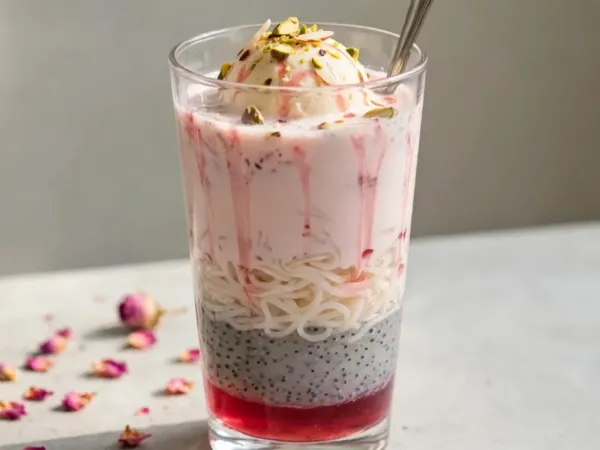
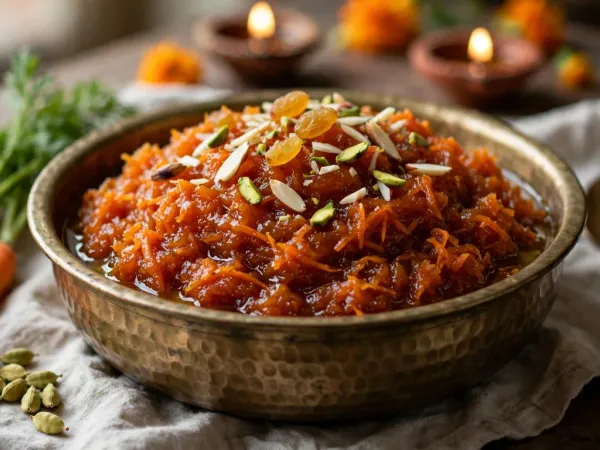
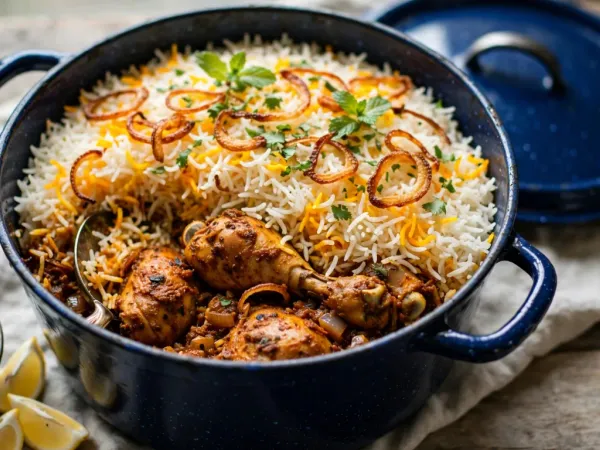
For a Diwali table, set them beside a pan of gajar ka halwa, the carrot pudding of North Indian winters. After a chicken biryani, two gulab jamun make a fine end to the meal. In summer, the rose-scented falooda is the cooler choice.
Safety, storing and nutrition
Frying with syrup nearby
Keep the syrup pan well away from the fryer. Water hitting hot fat “vaporizes instantaneously” into steam, says the USDA’s guide to deep fat frying. So never drip syrup or a wet spoon into the ghee.
If the fat catches fire, cover the pan with a metal lid and turn off the heat; never use water. Stay with the pan the whole time. “Stand by your pan,” the US Fire Administration advises.
Buying khoya
Buy khoya from a dairy or sweet shop you trust, and smell it: it should smell fresh and milky, never sour. FSSAI’s guidance on milk sweets gives a home test for starch, a common adulterant. Boil a little khoya with water, cool it and add a few drops of iodine. A blue colour means starch.
How long they keep
Sweets made with milk have a short shelf life of 1 to 4 days, FSSAI’s guidance says. Once soaked, cover the gulab jamun and keep them in the fridge, in their syrup, within 2 hours. Eat them within 3 days.
Warm them for a few seconds in the microwave before serving. Some recipes promise a week or more; we wouldn’t push it.
Allergens
Gulab jamun contain milk, from the khoya and ghee, and wheat, from the flour. Pistachio or almond garnishes add tree nuts. All three are among the 14 allergens on the UK Food Standards Agency list. As written, the recipe is not gluten-free.
Nutrition
A serving of two pieces with a little syrup comes to about 200 calories. It carries about 5 g protein, 9 g fat and 27 g carbohydrate, mostly sugar. We estimated this from the USDA’s FoodData Central. Khoya is missing from that database, so we used whole milk powder adjusted for moisture. We also guessed that each piece takes up about 2 g of fat and 18 g of syrup, since no study measures it.
Fixes for cracked, hard or flat gulab jamun
- They cracked in the fat: the dough was dry or lumpy, or the balls had seams. Add a little milk and roll them smoother.
- They broke apart: too much baking soda, or the dough was too soft. Add a spoon of flour.
- Dark outside, raw inside: the fat was too hot. Fry the next batch lower and slower.
- Hard in the middle: they were kneaded, under-fried, or the syrup was cold or too thick. Warm them gently in thinner syrup.
- They shrank and wrinkled: the syrup was boiling hot. Let it cool a little next time.
- They flattened on one side: they sat on the bottom of the pan. Swirl the fat so they float free.
Substitutes for missing ingredients
- Khoya: use the milk-powder dough above.
- Ghee for frying: neutral oil, such as sunflower or peanut oil.
- Rose water: a drop of rose essence, or leave it out and add more cardamom.
- Baking powder: a small pinch of baking soda, no more.
- Saffron: leave it out. The syrup will be paler, which doesn’t matter.
Frequently asked questions
Why are my gulab jamun hard?
Usually the dough was kneaded, the khoya was dry, or the syrup was too thick or too cold. Soft khoya, gentle mixing and warm, light syrup fix it.
Can I make gulab jamun ahead for Diwali?
Yes. Make them up to 2 days ahead, keep them chilled in their syrup and warm them before serving.
Ghee or oil for frying?
Either works, and the Indian recipes we read split almost evenly between them. Ghee adds its own nutty flavour.
How are gulab jamun and kala jamun different?
Kala jamun are fried longer, until nearly black, and are often stuffed with nuts. Gulab jamun stay golden to mahogany brown.
How do I stop the syrup from crystallising?
Add a little lemon juice once it has boiled, as 10 of the 34 recipes we read do.
Are gulab jamun vegetarian?
Yes, most are, since the classic dough has no egg. A few home recipes add one, so check if you buy them.