The Sunday Potthesundaypot.com/recipes/ackee-and-saltfish/
Ackee and Saltfish: How to Make Jamaica's National Dish
By The Sunday Pot Kitchen Updated
- • One 19-oz (540 g) can of ackee to 8 oz (225 g) of salt fish, the median of 28 recipes
- • Desalt the fish: soak overnight, boil twice for 10 minutes, or both
- • Fold canned ackee in last and heat it for only 2 to 3 minutes
- • Buy canned ackee from a processor on the FDA's Green List
- • Never cook unripe ackee: heat does not destroy its toxin
Ingredients
4 servingsInstructions
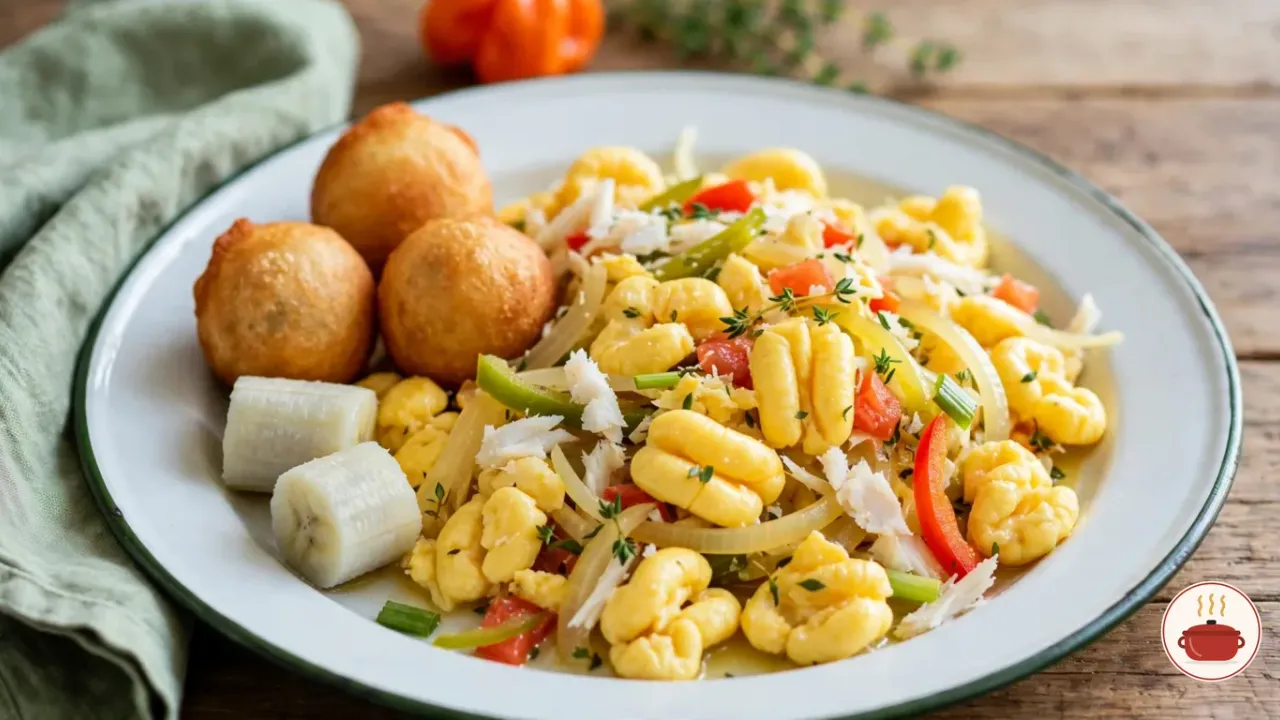
Ackee and saltfish is Jamaica’s national dish: desalted salt cod sautéed with onion, peppers, thyme and Scotch bonnet, with soft yellow ackee folded in at the end. It looks like scrambled egg and tastes mild, buttery and salty. With canned ackee it takes about an hour, and Jamaicans eat it for breakfast with dumplings.
What ackee and saltfish is
A fruit from West Africa
Ackee is a tree fruit, Blighia sapida. It is not native to Jamaica. The Jamaica Information Service says it came from West Africa, “probably on a slave ship”. The name comes from ankye, a word in the Twi language of Ghana.
Sources disagree on the year it arrived. The US Centers for Disease Control and Prevention gives 1778. The government service gives that year for something else: a Dr Thomas Clarke began spreading the tree through Jamaica’s eastern parishes then. The botanical name honors Captain William Bligh, who took ackee plants from Jamaica to England in 1793.
When the red pods ripen, they split open. Inside are shiny black seeds, each sitting on a cream or yellow fleshy lobe called the aril. Only the aril is eaten. Jamaicans know two kinds: soft yellow “butter” ackee and firmer, cream-colored “cheese” ackee.
Salt fish from the cod trade
Salted cod reached the Caribbean through the Atlantic trade. In the 18th century, New England sold its best cured cod to Spain and Italy. The badly cured and oversalted “refuse” fish went to feed enslaved people on Caribbean plantations, the Massachusetts Historical Society wrote in April 2026.
The British-Jamaican food writer Melissa Thompson tells the same story in her book Motherland. She calls this poorer grade “West India Cure” or “Jamaica Cure”. Today most salt fish sold in Jamaica is not even cod. It is “principally saithe, a member of the cod family”, mostly from Norway, the Jamaica Observer reported in 2022.
The national dish
The Office of the Prime Minister calls ackee the national fruit and “a component of the national dish”. No law names a national dish, though, and some Jamaican writers say it holds the title by consensus. Either way, it is the plate most Jamaicans would name first.
Why ackee is in the news in 2026
Hurricane Melissa and the price of a can
Hurricane Melissa struck Jamaica’s southwest on 28 October 2025, a year ago this month. The storm flattened farms in the island’s food basket, ackee trees among them. In February 2026, Agriculture Minister Floyd Green said Jamaica “would have lost a lot of ackee trees, especially in the west”.
In the US, the shortage showed up on the shelf. A can of ackee was selling for US$16 “when available”, up from US$9 to US$12.99 before the storm, the Sunday Gleaner reported in March. One New York importer who usually brings in 500 to 1,000 cases a month could get only a few.
A big crop, but not enough cans
Ackee exports earned about US$26 million in 2023 and US$18 million in 2024, the Gleaner reported in April 2026. Figures for 2025 were not out yet. Growers and the government are now planting new orchards, and the ministry gives away seedlings.
By summer the trees had recovered. Processors reported one of the strongest crops in years in the June-to-October season, but ran out of cans. More than 100 workers at one processor were sent home, the Financial Gleaner reported in August. Its chairman expected ackee prices to fall once the lids arrived.
What no one has measured
Nobody has published a 2026 number for ackee and saltfish itself: no sales count, no menu survey, no search data. Salt fish has no 2026 price on record either. The year’s story is the fruit, its trees and its cans.
What goes into ackee and saltfish
We compared 28 published recipes. Fifteen come from cooks in Jamaica or of Jamaican heritage. Among them are Grace Foods, Visit Jamaica, the McAnuff brothers of Original Flava, Melissa Thompson and Levi Roots. The rest come from British, American and other Caribbean cooks. A few copy one another, so we counted each list only once.
Canned ackee, almost always
Twenty-six of the 28 recipes use canned ackee. “While abroad, most Jamaicans have to rely on the canned version”, the Jamaican scholar Kemesha Kelly wrote for Chevening. The standard can holds 19 oz, or about 540 g, which drains to roughly 12 oz (340 g) of ackee.
How much salt fish
The median recipe uses 8 oz (227 g) of salt fish per 540 g can, and 16 recipes give exactly that amount. The range runs from 4 oz to 1 lb. Boneless fish saves work, but only 8 recipes ask for it.
The seasonings
Every recipe uses onion, and 27 of 28 add Scotch bonnet or another hot pepper, a median of half a pepper per can. Tomato appears in 24, black pepper in 26, and scallion and garlic in 21 each. Sweet pepper goes into 20 recipes and thyme into 18. Only 3 use pimento, Jamaica’s allspice, and 4 add paprika.
Oil
Most cooks use vegetable oil, a median of 2 tablespoons per can. Six use coconut oil and five use butter. Three start with bacon.
How to make ackee and saltfish
Take out the salt first
Salt fish is cured hard. Traditional salted cod holds 200 to 250 g of salt per kilo, and needs desalting to about a tenth of that before eating, a 2022 study notes. The recipes split three ways: 12 soak and then boil, 10 only boil, and 4 only soak.
Soaks run from an hour to overnight, and boils from one to three. The McAnuffs boil theirs for 5 minutes three times, while Levi Roots boils twice for 10 minutes. Nobody gives a salt reading, so taste a flake and decide. Under-soaked fish makes the whole pan too salty, because the dish gets no other salt.
Cook the vegetables, not the ackee
The onion, peppers and thyme do the cooking. Soften them gently, add the tomato, then warm the fish through. Canned ackee is heated in the can when it is processed, so it goes in last.
Fold it gently
Eighteen recipes warn you to handle the ackee gently. “Nobody likes mushy ackee,” the McAnuff brothers write. The median recipe heats the ackee for about 3½ minutes once it is in the pan. Grace Foods tosses it lightly, covers the pan and leaves it on low heat for about 2 minutes.
WeightWatchers’ coach Chloe folds it no more than three times. Lift from the bottom with a wide spatula and stop as soon as it is hot.
Whole or chopped Scotch bonnet
A whole Scotch bonnet, lifted out at the end, gives perfume and gentle heat. Chopped, half a pepper makes the dish properly hot. Wear gloves to cut it, and keep your hands away from your eyes.
Is ackee safe to eat?
Unripe ackee is poisonous
Unripe ackee holds hypoglycin A, a toxin that can drop blood sugar dangerously. The FDA says the ripe, properly processed aril is safe. Unripe fruit, and the seeds and rind even of ripe fruit, never are. “Cooking an unripe fruit will not reduce the level of hypoglycin A,” the agency warns.
A 1992 CDC report on poisonings in Jamaica named three risks. They were cooking unripe ackee, buying pods that someone had forced open, and reusing the water unripe ackee had cooked in.
Canned ackee in the United States
Ackee is not banned in the US. Every shipment can be held at the border unless its processor is on the Green List of FDA Import Alert 21-11. In 2026 that list held 13 Jamaican processors, one in Belize and one in Haiti. Look for a brand made by one of them; the FDA suggests checking the list.
Fresh ackee
Fresh ackee is rare outside the tropics. Jamaica’s Ministry of Health tells cooks to pick only pods that have opened fully on the tree. Remove the seeds and the pink membrane, wash the lobes and boil them, then pour the water away. The FDA’s advice for everyone else is shorter: don’t prepare raw ackee unless someone has trained you.
Serving ackee and saltfish
In Jamaica it is above all a breakfast dish. Fried dumplings are the most common side, named in 15 of the 28 recipes. Bread, roast breadfruit, boiled green bananas, yam, fried plantain and callaloo follow. Some cooks serve it with rice for dinner.
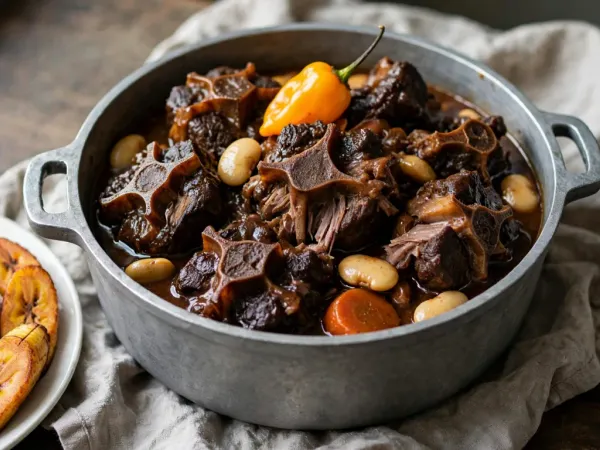
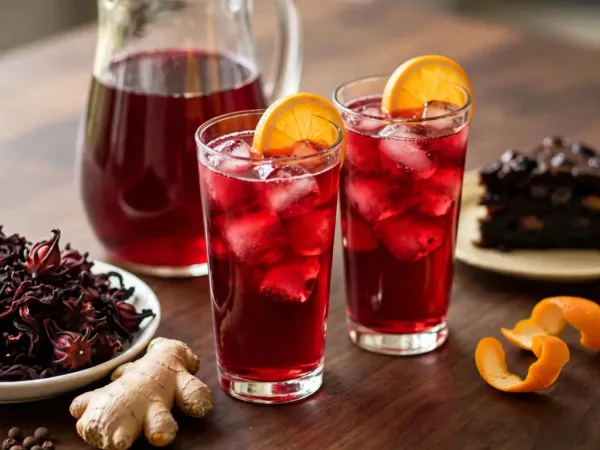
For a Jamaican Sunday, have ackee and saltfish for breakfast and Jamaican oxtail with rice and peas later. In December, pour a glass of Jamaican sorrel, the spiced hibiscus drink. For another salt-and-sea dish from the tropics, try Philippine kinilaw.
Storing, nutrition and allergens
Leftovers
Ackee and saltfish is best eaten the day it is made, because the ackee softens as it sits. Chill leftovers within 2 hours in a covered container. The USDA’s guide to leftovers gives cooked dishes up to 4 days in the fridge. Warm them gently in a covered pan until steaming hot.
Calories and salt
A quarter of the pan has about 275 calories, 18 g of protein, 15 g of fat and 17 g of carbohydrate, before any sides. These are our estimates. The ackee figures come from a manufacturer’s label, because USDA FoodData Central has no analysis of ackee. The fish is counted as desalted salt cod.
Sodium depends on how long you soak the fish. We put it near 850 mg a serving, more than a third of the FDA’s daily value of 2,300 mg. Hard-dried salted cod holds 7,030 mg of sodium per 100 g before soaking, USDA data show.
Allergens
Salt fish is a fish, one of the major food allergens in the US. The dish has no wheat, dairy, egg or nuts, but the sides may: fried dumplings are made with wheat flour.
Fixes for salty, mushy or watery ackee and saltfish
- Too salty: the fish needed a longer soak. Add more ackee or vegetables if you have them, and soak the fish longer next time.
- Mushy ackee: it was stirred or cooked too long. Fold it in last, over low heat, and stop when it is hot.
- Watery: the ackee went in wet, or the tomato was very juicy. Drain the ackee well and cook the tomato down first.
- Bland: too little pepper or thyme. Add black pepper and a little chopped Scotch bonnet, and let the vegetables soften fully.
- Bones in the fish: bone-in salt fish hides pin bones. Flake it with your fingers, or buy boneless fillets.
Substitutes for hard-to-find ingredients
- Salt fish: any boneless salted cod, pollock or saithe. Fresh cod poached for 5 minutes works too, with a pinch of salt.
- Scotch bonnet: a habanero, which has a similar fruity heat.
- Fresh thyme: ½ teaspoon of dried thyme.
- Sweet peppers: leave them out, or use one color.
- Ackee: there is no real substitute. Wait until you can find a can.
Frequently asked questions
What does ackee taste like?
Mild, creamy and a little nutty, with a soft texture like scrambled egg. On its own it is gentle; the salt fish, pepper and thyme give the dish its flavor.
Is ackee legal in the United States?
Yes, canned and frozen ackee from processors on the FDA’s Green List. Shipments from other processors can be held at the border.
Do I have to soak salt fish overnight?
No. Boiling it twice for 10 minutes in fresh water also removes enough salt. Soak it overnight first if you have time, for a milder fish.
Is canned ackee already cooked?
Yes. Canned ackee is heat-processed in brine, so it only needs warming through for 2 to 3 minutes.
Can I use fresh ackee?
Only from pods that opened on the tree. Remove the seeds and the pink membrane, boil the lobes, and pour the water away. Never use unripe or forced-open pods.
What is the difference between ackee and saltfish and ackee and codfish?
None. Salt fish is the Jamaican name for salted cod and its relatives, so the two names describe the same dish.
What do you eat with ackee and saltfish?
Fried dumplings, boiled green bananas, yam, breadfruit, fried plantain, callaloo or hard dough bread.
Why is ackee so expensive in 2026?
Hurricane Melissa destroyed many ackee trees in October 2025, and US prices reached US$16 a can in March 2026. Processors expected prices to fall after a strong summer crop.