The Sunday Potthesundaypot.com/recipes/koshary/
Koshary: Egyptian Rice, Lentils and Pasta with Crisp Onions
By The Sunday Pot Kitchen Updated
- • Simmer whole brown or black lentils for 15 minutes, until just tender
- • Fry floured onion slices until deep brown and crisp, and keep the oil
- • Toast vermicelli in that oil, then cook it with rice, lentils and cumin
- • Boil short pasta, and simmer a garlic, cumin and vinegar tomato sauce
- • Layer rice, pasta and chickpeas, then add sauce, garlic vinegar and onions
Ingredients
6 servingsInstructions
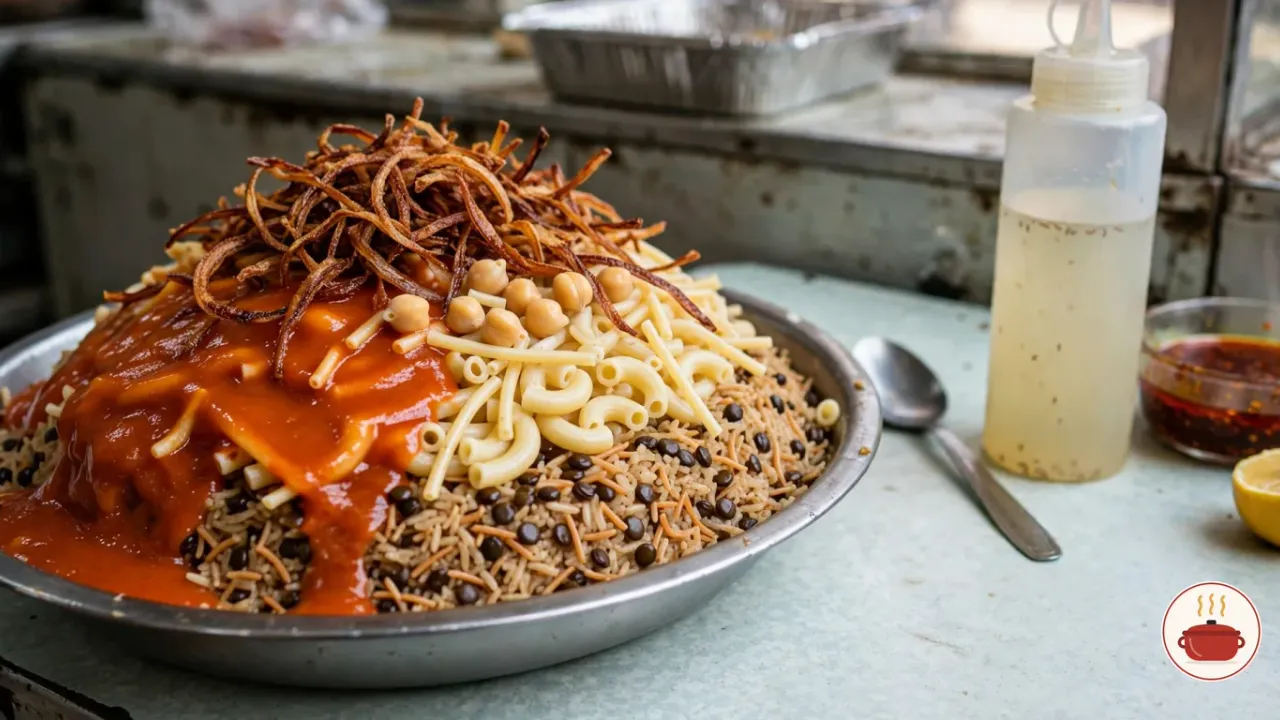
Koshary is Egypt’s best-known street food. The base is rice cooked with lentils and toasted vermicelli. On top go macaroni, chickpeas, a garlicky tomato sauce, a sharp garlic vinegar and a heap of crisp fried onions. It costs little, fills you up and contains no meat. This recipe serves 6 and takes about 1½ hours.
What koshary is
A bowl built in layers
UNESCO describes koshary as “a popular dish made from simple, affordable ingredients such as rice, pasta, black lentils and fried onions”. Cooks make every part on its own, then pile them up in the bowl. You mix it all together with a spoon as you eat.
In Egypt you buy it in specialist shops, in takeaway foil boxes and from street carts, especially near schools. People also make it at home. The spelling varies, from koshary and koshari to kushari, all from the Egyptian Arabic كشري.
The dressings make it
Two dressings turn it from plain carbs into a meal people queue for. The tomato sauce is thin and tart, with garlic, cumin and a splash of vinegar. The dakka is a garlic vinegar with cumin, sprinkled over at the table. Most shops also put out shatta, a red chili oil. In 8 of the 9 Egyptian recipes we read that mention it, the dakka comes as a separate dressing.
Black lentils or yellow
Cairo and Upper Egypt use whole black or brown lentils, which keep their shape. Some coastal towns, including Alexandria, use yellow lentils instead, the nomination file sent to UNESCO says. Some regions serve it with boiled eggs. The food historian Anny Gaul has also seen versions topped with chicken livers.
Where koshary comes from
A clue from Suez, 1853
In India, rice and lentils cooked together are called khichdi. In 1853 the British traveller Richard Burton stopped at Suez. There, he wrote, the winter breakfast was “a mixture of lentils and rice” with clarified butter. In a footnote he explains: “This mixture, called in India Kichhri, has become common in Al-Hijaz as well as at Suez.” Locals called it “Al-Kajari”.
You can read his Personal Narrative of a Pilgrimage on Project Gutenberg. His dish had no pasta and no tomato. It is the earliest dated description we found of the name in Egypt.
Soldiers, pilgrims and Italian pasta
Many accounts say Indian soldiers brought the dish when Britain occupied Egypt in 1882. Gaul, a cultural historian at the University of Maryland, calls these “popular accounts”. She thinks the link is older and wider, along the pilgrim and trade routes of the Red Sea. Burton’s footnote, written decades before 1882, fits her view.
The pasta and tomato came later. Gaul credits the large Italian communities of Cairo and Alexandria. By 1941, Egypt’s best-known cookbook, Kitab Abla Nazira, printed two koshary recipes, she writes, one with yellow lentils and one with brown.
Stories to take lightly
You will read that koshary goes back to the pharaohs, or to an ancient food called “Koshir”. Even Egypt’s UNESCO file says the dish appears on temple walls. Rice, tomatoes and pasta reached Egypt much later, so treat that as legend. So is the idea that the name comes from the word “kosher”.
Carts and shops
Koshary began as street food sold from carts. Its makers decorate those carts with traditional motifs, and UNESCO counts the craftspeople among the dish’s keepers. The best-known shop is Abou Tarek, in downtown Cairo. In 2016 The Guardian found its four floors “packed with locals and tourists”. Egyptian Streets says the founder started with a cart in 1963; the restaurant itself now claims a much longer family history.
Why koshary matters this year
A year on UNESCO’s list
On December 10, 2025, UNESCO added “Koshary, daily life dish and practices associated with it” to its Representative List. The decision, 20.COM 7.B.16, came at the committee’s meeting in New Delhi. Koshary is the first Egyptian dish on the list and Egypt’s 11th entry, Africanews reported. The first anniversary falls on December 10, 2026.
Food prices in Egypt
Koshary is a cheap meal in a country watching its food bills. Egypt’s annual urban food inflation rose to 7.2% in September 2026, from 6.3% in August. The Central Bank of Egypt published the figures, reported by Daily News Egypt on October 19. Headline urban inflation was 13.9%.
Rice is the base of the bowl, and Egypt rations the water to grow it. For 2026 the government allowed rice on 724,200 feddans in 9 provinces, about 750,000 acres. The water minister, Hani Sweilam, gave the figure to Youm7 in April, in Arabic.
Lentil bowls in the trend reports
For 2027, Whole Foods Market’s trend council predicts a “Bean Boom”. Its forecast, out October 14, 2026, mentions “crispy chickpeas” and “lentil-forward bowls”. It doesn’t name koshary or Egyptian food, but koshary has been a lentil bowl with chickpeas for generations.
What nobody has counted
No one publishes how many plates of koshary Egypt eats, or what a bowl costs this year. Not a single 2026 number exists for the dish that we could check. None of the 2027 forecasts we read names Egypt or North Africa either.
What 25 koshary recipes agree on
We went through 25 published recipes, start to finish. Eleven are Egyptian, in Arabic, from Youm7, Masrawy, El Watan, Sada El Balad’s TV chefs and Cookpad Egypt. Fourteen are in English, including recipes by Suzy Karadsheh of The Mediterranean Dish, Nermine Mansour, Egyptian Streets and America’s Test Kitchen.
Garlic, cumin and short pasta
Garlic goes into the tomato sauce in 23 of the 24 recipes that give one. Cumin appears in 22 of 25; it is the spice of koshary, with coriander a distant second. Twenty use short pasta such as elbow macaroni. Chickpeas appear in 18.
Lentils with the rice
In 17 of 24 recipes, the lentils finish cooking with the rice. Shops keep them apart and layer them, and some Egyptian recipes copy that “shop style”. Every recipe uses whole lentils, mostly brown, with black ones in Egyptian kitchens. None uses split red lentils.
The Egyptian touch: vermicelli and onion oil
Eight of the 11 Arabic recipes brown vermicelli in fat before the rice goes in, against 4 of the 14 English ones. Many Egyptian cooks then use the onion-frying oil for everything else. “استخدمى زيت قلى البصل، لتحمير الشعرية ثم ضيفى الأرز,” says Youm7’s recipe: use the onion oil to brown the vermicelli, then add the rice.
The numbers
The Egyptian recipes use about twice as much rice as lentils by weight, so we did too. English ones use more lentils. The median recipe takes 90 minutes from start to finish. Half the recipes coat the onions in flour or starch before frying, which helps them crisp.
Tips for crisp onions and fluffy rice
- Slice the onions thin and even. Uneven slices burn at the edges while the thick ones stay soft.
- Fry in batches. A crowded pan cools the oil and the onions steam.
- Pull them early. They keep darkening after you lift them out. Stop at deep brown, never black.
- Keep the oil. It carries the onion flavor into the rice, the pasta and the sauce.
- Rest the rice. Ten minutes off the heat, lid on, lets it finish steaming.
- Keep the sauce thin. It should run into the gaps, not sit on top like a paste.
Serving koshary
Serve it hot, with the sauce, dakka and chili in jugs and small bowls on the table. Each person adds them to taste, then stirs everything together. In Cairo, shops near koshary sellers often serve rice pudding for dessert, UNESCO notes.
It needs no side dish. For a lighter Middle Eastern cousin with no pasta, try Lebanese mujadara. On a cold evening, a bowl of Turkish mercimek çorbası, red lentil soup, makes a good start.
Koshary is vegan when you fry in vegetable oil, so it suits Lent and other meat-free fasts. Egypt’s UNESCO file notes that it is “suitable for Christian fasting”.
Safety, storing and nutrition
Hot oil
Frying onions is the one risky step. Use a deep pan no more than a third full, dry the onions before they go in and never leave the pan alone. Keep a metal lid close: if the oil catches fire, cover the pan and turn off the heat. Never throw water on burning oil, the USDA warns. For a burn, the NHS says to hold it under cool running water for 20 minutes, as soon as you can.
Leftover rice and pasta
The bacterium Bacillus cereus lives in uncooked rice as spores, and they survive the pot. Britain’s Food Standards Agency says to get cooked rice into the fridge fast, ideally within an hour, and to eat it within 24 hours. It adds that you should “never reheat rice more than once”. Apply the same care to the pasta. Spread leftovers on a tray to cool quickly, rather than leaving them in the warm pot.
Storing
Store the parts apart. Eat the rice and the pasta within 24 hours. Chilled and covered, the tomato sauce and the dakka last up to 4 days. The fried onions stay crisp for a day or two in an airtight jar at room temperature. Reheat rice and pasta until they steam all the way through.
Allergens
Koshary contains wheat and gluten from the pasta, vermicelli and flour. The vinegar and tomato paste may contain sulphites, one of the 14 allergens the UK’s Food Standards Agency lists. For a gluten-free bowl, use gluten-free pasta, skip the vermicelli and coat the onions with cornstarch.
Nutrition
One bowl, a sixth of the recipe, has about 730 calories. It has about 22 g of protein, 15 g of fat, 125 g of carbohydrate and 12 g of fiber. We estimated these from the USDA’s FoodData Central figures for the raw ingredients. We assumed the bowls keep about 2½ oz (75 g) of the frying oil in all, so the fat depends on how well you drain the onions.
Fixes for soggy onions, mushy rice and bland sauce
- The onions went soft: the oil was too cool, or the pan too full. Fry smaller batches and give the oil time to recover.
- The onions taste bitter: they went too dark. Lift them out at deep brown.
- The rice is mushy: too much water, or the lentils were overcooked. Use firm lentils and the lowest flame.
- The rice is hard: add 3 tablespoons of boiling water, cover and steam 5 minutes more.
- The bowl tastes flat: add more dakka. Its sharp vinegar is what brings koshary together.
Substitutes for missing ingredients
- Brown or black lentils: green lentils work. Avoid red or split lentils, which turn to mush.
- Vermicelli: broken angel-hair pasta, or leave it out.
- Medium-grain rice: long-grain rice, with a little less water.
- Passata: canned crushed tomatoes, blended smooth.
- Canned chickpeas: ½ cup (100 g) dried, soaked overnight and boiled until tender.
- Fried onions: shop-bought crisp onions save time, though homemade taste better.
Frequently asked questions
Is koshary vegan?
Yes, when you fry in vegetable oil. Some Egyptian cooks use ghee, which is not.
What does koshary mean?
Most writers tie the name to khichdi, India’s dish of rice and lentils. Burton recorded the Arabic form “Al-Kajari” at Suez in 1853.
How is koshary different from mujadara?
Both have rice, lentils and fried onions. Koshary adds pasta, chickpeas, tomato sauce and the garlic vinegar.
Can I make koshary ahead?
Make the onions, sauce and dakka a day ahead. Cook the rice and pasta on the day, for safety and texture.
What lentils are best for koshary?
Whole brown or black lentils. They hold their shape after cooking.
Is koshary healthy?
It is filling and high in fiber, with protein from the lentils and chickpeas. It is also high in carbohydrates, so the portion size matters.