The Sunday Potthesundaypot.com/recipes/kimchi-jjigae/
Kimchi Jjigae: Korean Kimchi Stew with Pork Belly and Tofu
By The Sunday Pot Kitchen Updated
- • About 1 hour 5 minutes in one Dutch oven: 8 minutes to render the pork, 7 to fry the kimchi, 25 to simmer, 5 for the tofu
- • 1½ lb (680 g) of sour kimchi, 12 oz (340 g) of pork belly, ½ cup (120 ml) of kimchi brine and 4 cups (950 ml) of stock or water
- • Use old, sour kimchi; fresh kimchi turns sour in about 2 days on the counter
- • Fry the kimchi with the pork before the liquid goes in, and keep 1 cup of kimchi back for the end
- • Medium-firm or firm tofu holds its shape; add it for the last 5 minutes
- • Chill leftovers within 2 hours, eat them within 3 to 4 days and reheat them to a rolling boil
Ingredients
4 servingsInstructions
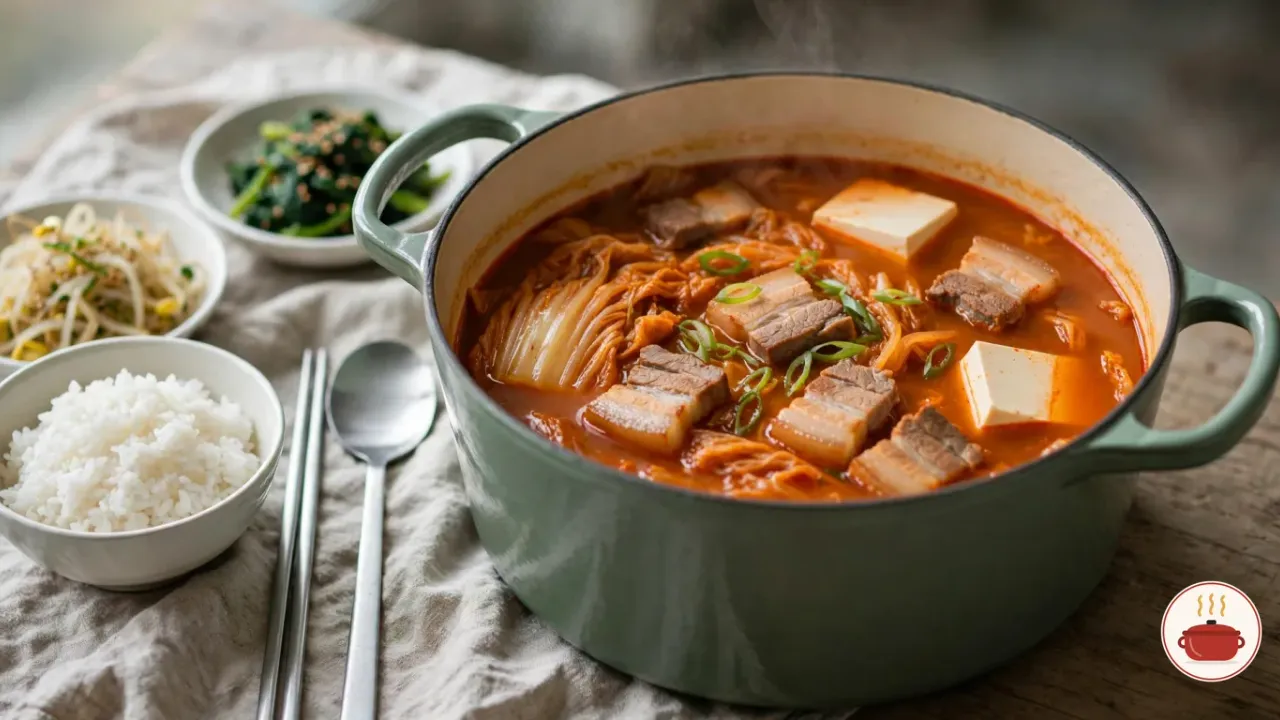
Kimchi jjigae is Korea’s everyday kimchi stew: sour, well-fermented kimchi simmered with pork belly and tofu in a spicy red broth. This version uses one Dutch oven. Render the pork for 8 minutes, fry the kimchi for 7, simmer for 25, then add the tofu for 5. It serves 4 in about 1 hour 5 minutes.
What kimchi jjigae is
Kimchi jjigae is a stew of kimchi, pork and tofu, eaten with rice. It is one of the most popular stews in Korea, says the Korea Tourism Organization. For many Koreans it is the taste of home cooking, as Korea.net puts it.
Korean soups come in several kinds. Guk is a thin soup, about 7 parts liquid to 3 parts solids, the MICHELIN Guide explains. A jjigae holds more solids, at about 4 parts liquid to 6. It is common for a family to share one pot of it.
Old, sour kimchi is the point
This stew is how Koreans use up kimchi that has grown sour. The Korea Tourism Organization calls for aged kimchi more than 6 months old, not fresh kimchi. The longer the stew boils, it adds, the richer it tastes.
Korean has words for every age of kimchi. Geotjeori is fresh kimchi, eaten almost at once like a salad. Mugeunji is kimchi aged for more than a year, as Korea JoongAng Daily explains. Old kimchi is the usual choice for fried rice, soup and stew. Korean markets even sell packaged old kimchi for the pot, Korean Bapsang notes.
Chili came late to kimchi
Kimchi was not always red. Historians have long held that chili peppers reached Korea from Japan at the end of the 16th century, Korea JoongAng Daily reports. The scholar Yi Su-gwang described the foreign pepper in his encyclopedia of 1614.
Red kimchi took a long time to follow. In a cookbook from 1670, only one of many kimchi recipes uses chili. By 1809, most kimchi in a household manual held shredded chili, not powder. The same article reports that some Korean researchers argue for an earlier native pepper.
Kimjang, the autumn kimchi making
Kimchi itself is a family project. In late autumn, usually in November, families gather to make enough kimchi for the winter. This is kimjang, as Korea’s Ministry of Culture describes it. UNESCO added kimjang to its list of the intangible cultural heritage of humanity in 2013.
UNESCO describes kimchi as vegetables preserved with spices and fermented seafood. Most of it is made with napa cabbage. That kind, baechu kimchi, is over 70% of the kimchi on the Korean market, a 2022 review in the Journal of Ethnic Foods notes.
A stew with offshoots
Kimchi jjigae is usually made with pork or canned tuna, the Korea Tourism Organization says. It also gave rise to budae jjigae, the army base stew. After the Korean War, cooks near the US bases at Uijeongbu added sausages, ham and canned beans to a stew of aged kimchi. The Korea Tourism Organization tells the story.
Why kimchi jjigae is having a moment
Korean food keeps showing up on trend lists. In September 2026, The Food Institute listed Korean street food among its 27 food trends to watch in 2027. It singled out gochujang and kimchi. The same list called pork the next impactful protein.
The stew itself ranks high. In its 2025/26 rankings, the TasteAtlas food guide put kimchi jjigae 13th among the world’s best stews. It was the highest-ranked Korean dish, Stripes Korea reported in December 2025.
Exports tell the same story. Korea’s food and farm exports set a record of $13.62 billion in 2025, Korea’s agriculture ministry said, as The Korea Times reported. In 2026, Korean food exports passed $10 billion in only 253 days, the fastest pace on record. The state trade agency aT gave the figure to The Korea Herald.
Kimchi exports hit a record of about $164 million in 2025, to more than 100 countries for the first time. The figures come from the agriculture ministry, as The Asia Business Daily reported in July. In the first half of 2026, shipments to North America rose 15.3%, to $31 million, says The Herald Business.
Fermented cabbage is in the air too. Pinterest Predicts 2026, released in December 2025, named a Cabbage Crush trend. Searches for fermented cabbage rose 35% in the year to August 2025, and searches for golumpki soup rose 95%.
Screens help. After the Netflix film KPop Demon Hunters, transactions by foreign customers at CU, Korea’s largest convenience store chain, rose 185%. Gimbap purchases by foreigners rose 231% in July and August 2025, The Korea Herald reported. In December 2025, the cooking contest Culinary Class Wars season 2 reached No. 1 on Netflix’s global chart of non-English TV shows.
November brings two dates. It is kimjang season, and 22 November is Kimchi Day. South Korea celebrates it, and California, Hawaii, New Jersey, Maryland and Virginia have passed resolutions for it, a Washington State bill report notes.
What you need for kimchi jjigae
Sour kimchi
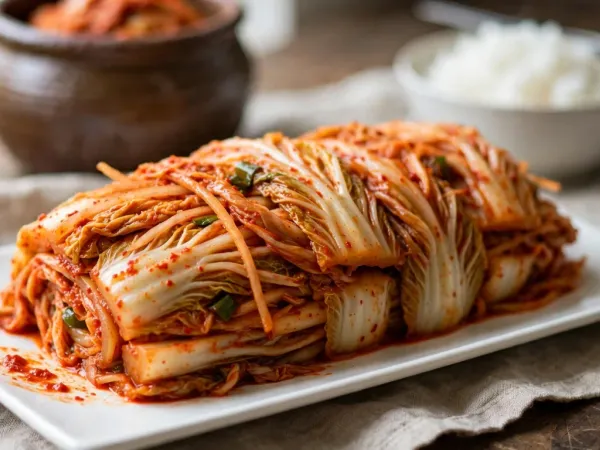
Use napa cabbage kimchi that is sour and well fermented. Korean Bapsang says the older the better. Most recipes ask for kimchi aged at least 2 to 3 weeks. The chef Hooni Kim uses kimchi fermented for at least 3 weeks.
If your kimchi is fresh, leave the amount you need in a closed jar on the counter. It turns pleasantly sour in about 2 days, Maangchi says. Oregon State University Extension advises only a few days at room temperature, then the refrigerator. Kimchi keeps fermenting there, slowly.
Kimchi brine
Keep the red juice in the jar. Korean Bapsang says it adds lots of flavor to the broth. Joanne Molinaro of The Korean Vegan calls it gold. This pot takes ½ cup (120 ml).
Pork belly or shoulder
Fatty pork is the favorite for kimchi jjigae in Korea, Korean Bapsang says. Pork belly melts into the broth and rounds out the sour kimchi. Maangchi uses pork shoulder, which is leaner and still tender. Buy 12 oz (340 g) of either, without the skin.
Tofu
Use medium-firm or firm tofu. Milk Street found soft tofu too fragile and extra-firm tofu too chewy. One block of 14 to 16 oz (400 to 450 g) is enough.
Gochugaru and gochujang
Gochugaru is Korean chili flakes, and gochujang is a fermented chili paste. This pot takes 1 tablespoon of each. Many cooks use no gochujang at all, including Hooni Kim and Korean Bapsang. Leave it out for a cleaner, more sour broth.
Stock or water
Anchovy stock is the usual base, The Korean Vegan says. Korean Bapsang uses the water from rinsing rice, which thickens the broth a little. Plain water works too, because the kimchi and pork bring the flavor. You need 4 cups (950 ml).
A pot
A 4- to 5½-quart (3.8 to 5.2 liter) enameled Dutch oven does every step. Korean cooks also use a ttukbaegi, a clay pot glazed inside. It keeps the stew hot at the table, The Korea Herald notes.
How to make kimchi jjigae in one Dutch oven
Some cooks put everything in a cold pot and bring it to a simmer. Others fry the pork and kimchi first. Both ways take about half an hour, Milk Street explains. This recipe fries first, for a deeper broth.
Render the pork
Sear the pork over medium-high heat for 2 to 3 minutes, then lower the heat for 5 minutes. Hooni Kim does the same, so some of the fat melts out. That fat then fries the kimchi.
Fry the kimchi
Add three-quarters of the kimchi with the gochugaru. Cook it for 5 to 7 minutes, until it softens and its edges brown. Korean Bapsang says this step develops extra flavor. Hooni Kim cooks his kimchi until lightly caramelized.
Simmer for 25 minutes
Add the brine and the stock, then cover the pot. Simmer for 25 minutes. The pork turns tender and the broth takes on the kimchi’s sourness.
The pork is safe long before that. The USDA sets 145°F (62.8°C) for whole cuts of pork, with a 3-minute rest. The stew simmers well past it.
Season boldly
Taste the broth before the tofu goes in. Very sour kimchi needs 1 or 2 teaspoons of sugar, Korean Bapsang says. A flat broth needs fish sauce or salt. Hooni Kim reminds cooks that the stew is eaten with rice. Season it boldly enough to balance plain white rice.
Keep some kimchi for the end
Add the last cup of kimchi with the tofu. It stays crisp and bright against the soft kimchi in the broth. Hooni Kim holds back a quarter of his kimchi, and Milk Street half.
Variations: tuna, Spam or vegan
Tuna kimchi jjigae
Chamchi kimchi jjigae uses canned tuna in place of pork. Korean Bapsang adds one can of tuna, with its oil, along with the brine and water. Then it boils the stew for 10 to 15 minutes.
Spam, and noodles
Pork belly, Spam and tofu are all common in kimchi jjigae, Eric Kim writes for NYT Cooking. For a nod to budae jjigae, add a block of instant ramyeon noodles for the last 3 to 4 minutes. Noodles overcook quickly and soak up the broth, so add them just before serving.
Vegan kimchi jjigae
Kimchi often holds fish sauce or fermented seafood, so check the label. Vegan kimchi is sold too. The Korean Vegan skips the pork and makes the broth with vegetable stock and dried kelp. Add mushrooms for body.
Serving and storing kimchi jjigae
Bring the pot to the middle of the table while it is still bubbling. Serve it with bowls of short-grain rice and a few small side dishes, such as seasoned bean sprouts and spinach.
If cabbage is your weakness, golumpki soup is the Polish cabbage roll in a pot. For another stew with a bold sauce, try ají de gallina from Peru. Finish with a bowl of black sesame soup.
Leftovers
Kimchi jjigae keeps well. Joanne Molinaro of The Korean Vegan finds it tastes better the next day. Follow the USDA’s advice on leftovers:
- Refrigerate the stew within 2 hours of cooking.
- Divide a full pot into shallow containers, so it cools quickly.
- Eat it within 3 to 4 days, or freeze it for 3 to 4 months.
- Reheat soups and stews by bringing them to a rolling boil.
The tofu turns a little spongy after freezing, but it still tastes good.
Calories and sodium per serving
One serving, a quarter of the pot, has about 585 calories, 20 g of protein and 13 g of carbohydrate, by USDA figures. It has about 51 g of fat, most of it from the pork belly. That includes about 17 g of saturated fat. The NHS advises no more than 30 g a day for men and 20 g for women. Pork shoulder makes a much leaner pot.
Kimchi is salty. USDA puts cabbage kimchi at 498 mg of sodium per 100 g. Store-bought kimchi in Korea averaged 570 mg, in tests of 15 brands by Consumers Korea reported by Korea JoongAng Daily. One serving of this stew has about 1,150 mg of sodium, before any extra salt. The FDA sets the Daily Value for sodium at less than 2,300 mg.
Allergens
The stew holds soy, in the tofu, and often fish and shellfish, in the kimchi and anchovy stock. All three are among the major food allergens the FDA lists. Gochujang and soy sauce can hold other allergens, so check the labels.
Fixes for flat, sour or thin kimchi jjigae
- Flat, dull broth: the kimchi was too young. Add 1 to 2 tablespoons (15 to 30 ml) more brine, or a little fish sauce.
- Too sour: stir in 1 to 2 teaspoons of sugar, and simmer for 2 minutes.
- Too salty: add ½ cup (120 ml) of water and more tofu.
- Too spicy: leave out the gochujang next time, and use half the gochugaru.
- Thin broth: simmer uncovered for 5 to 10 minutes. Rice-rinsing water also gives a fuller broth.
- Tough pork: simmer for 10 minutes more, covered.
- Broken tofu: use medium-firm or firm tofu, and do not stir once it is in.
Substitutes for missing ingredients
- Sour kimchi: fresh kimchi with a splash of vinegar, as Korean Bapsang suggests. It is not as good, but it helps.
- Gochugaru: gochujang, The Korean Vegan suggests, or leave it out.
- Gochujang: doenjang or miso, or simply leave it out.
- Pork belly: pork shoulder, 4 oz (115 g) of bacon, as Bon Appétit suggests, or canned tuna.
- Anchovy stock: chicken broth, vegetable broth or rice-rinsing water.
- Medium-firm tofu: firm tofu. Soft tofu works if you add it gently.
- Dutch oven: any heavy pot with a lid.
Frequently asked questions
What does kimchi jjigae taste like?
It tastes sour, spicy and savory. The aged kimchi gives a sharp tang, the pork belly adds richness, and the tofu soaks up the red broth.
What is the difference between kimchi jjigae and kimchi soup?
A jjigae has more solids and less liquid than a guk, or soup. Kimchi jjigae is a thick stew, eaten with rice. Kimchi guk is a thinner soup.
Can I use fresh kimchi for kimchi jjigae?
Yes, but the stew will taste flat. Leave fresh kimchi on the counter for about 2 days to sour it, or add a splash of vinegar to the pot.
Is kimchi jjigae spicy?
It is medium-hot. Most of the heat comes from the kimchi and the gochugaru. For a milder pot, leave out the gochujang and use half the gochugaru.
Which tofu is best for kimchi jjigae?
Medium-firm or firm tofu. It holds its shape in the boiling broth and still tastes soft. Silken tofu breaks easily, and extra-firm tofu is chewy.
Can I make kimchi jjigae without pork?
Yes. Use canned tuna, as many Korean cooks do, or make a vegan version with vegan kimchi, vegetable stock and mushrooms.
Can I make kimchi jjigae ahead?
Yes. Cook it up to the tofu, then chill it within 2 hours. Bring it back to a rolling boil and add the tofu just before serving.
How long does kimchi jjigae keep?
Up to 3 to 4 days in the refrigerator, or 3 to 4 months in the freezer, as the USDA advises for leftovers.
What do you serve with kimchi jjigae?
A bowl of short-grain white rice for each person, and a few small side dishes, such as seasoned bean sprouts, spinach or a fried egg.